




Margaret Hamilton Passes Away at 90, Leaving Lasting Impact on Space Exploration
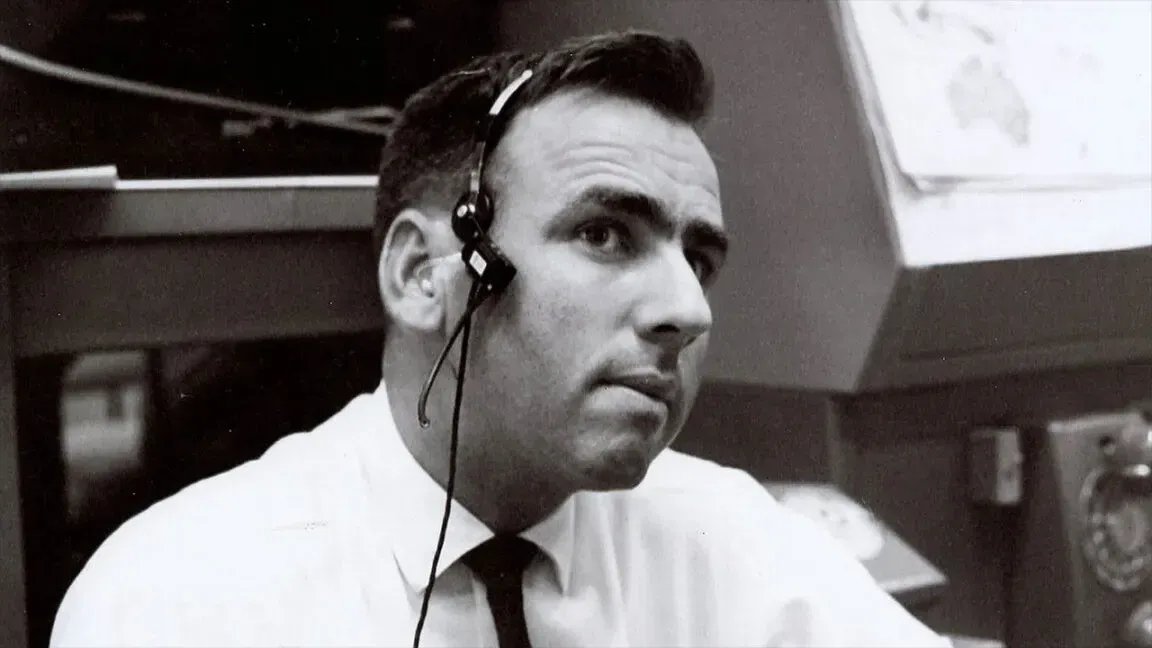
Margaret Hamilton, a trailblazing software engineer who left an indelible mark on space exploration, has passed away at the age of 90. Her contributions to NASA's Apollo program in the...
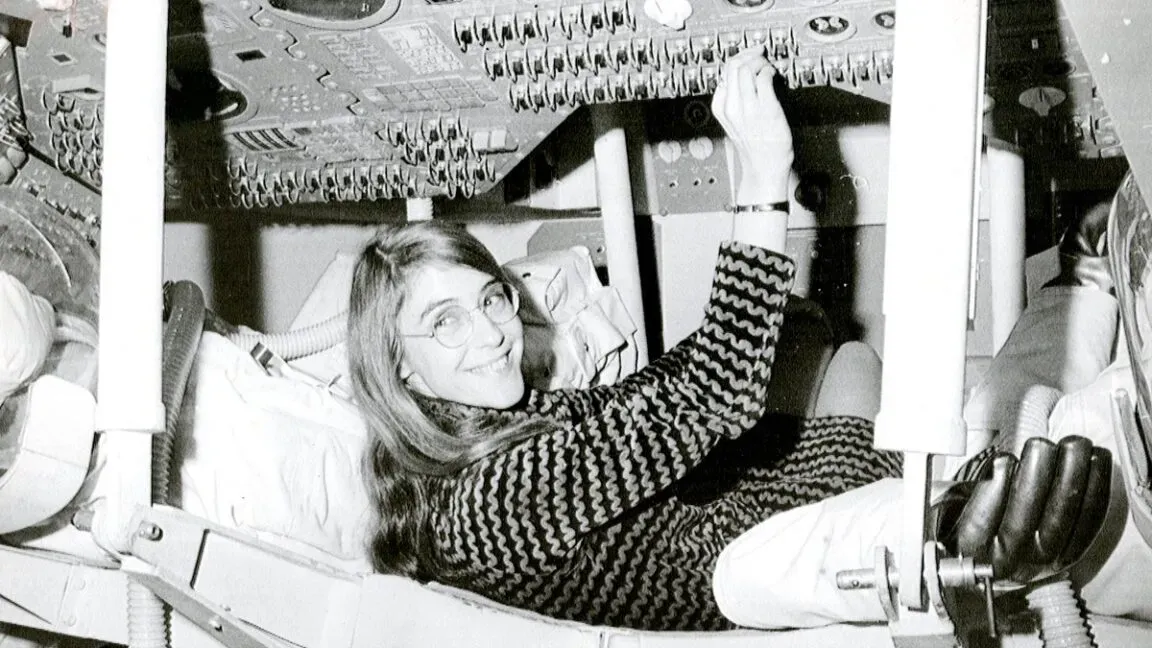
Margaret Hamilton, a trailblazing software engineer who left an indelible mark on space exploration, has passed away at the age of 90. Her contributions to NASA's Apollo program in the 1960s were instrumental in ensuring the success of one of humanity's most ambitious endeavors.
Hamilton is widely credited with coining the term "software engineering, a field that was still in its infancy when she began her work on the Apollo project. As one of the pioneers of this emerging discipline, she not only developed advanced code but also led a team in utilizing it to create one of the most complex systems humanity had ever achieved.
Born in 1936 in Paoli, Indiana, Hamilton's educational background laid the foundation for her future endeavors. She graduated from Earlham College in 1958 with a degree in mathematics and a minor in philosophy, reflecting her family ties, her father was a poet and her grandfather a headmaster.
Hamilton married James Cox Hamilton that same year, with plans to work until he completed his law degree. After which, she would have been supported through graduate school to earn a PhD in mathematics. This setup seemed to suggest a conventional path for the young couple, but it would not be long before Hamilton's career took an extraordinary turn.
Hamilton's work on the Apollo program was nothing short of groundbreaking. As Olivier de Weck, interim head of the MIT Department of Aeronautics and Astronautics, noted, she was a software engineer at a time when that field was in its infancy. Her expertise played a vital role in developing one of the most complex systems humanity had ever achieved.
The Apollo program remains an enduring testament to human ingenuity and collaboration. Hamilton's contributions were instrumental in ensuring its success, and her legacy will undoubtedly continue to inspire future generations of engineers and scientists.
At MIT, Margaret Hamilton worked under the guidance of Edward Lorenz, who was attempting to create a mathematical model of the weather using differential equations that represented changes in temperature, pressure, wind velocity, and other factors.
Lorenz's work on the LGP-30 computer led to a groundbreaking discovery in 1961: even small variations in initial conditions could result in drastically different outcomes. This sensitivity to initial conditions is a fundamental concept of chaos theory, along with the presence of strange attractors. Hamilton was instrumental in programming the LGP-30.
Despite having no prior experience with programming, both Lorenz and Hamilton taught themselves how to use the computer. A 2019 article noted that Lorenz found her approach to debugging unusual, as she would often roll out paper tape down the hallway and manually edit binary code using a pencil.
Hamilton would poke holes in the tape for ones and cover up others with Scotch tape, creating makeshift changes to the code. After working on this project, Hamilton moved on to another endeavor in 1961, but not before training her replacement: Ellen Fetter, a recent math graduate from Mount Holyoke.
Lorenz acknowledged the significant contributions of both women in his research papers, recognizing their crucial roles in advancing his work on the LGP-30.
Margaret Hamilton's work on the SAGE project at MIT in 1961 marked a significant shift towards her focus on software reliability. Her task was to decipher a complex program that had stumped others, and she eventually succeeded, even noting with amusement that it printed out answers in Greek and Latin.
The success of this endeavor likely influenced Hamilton's subsequent interest in the issue of software reliability. By 1965, she was preparing to attend graduate school as planned when her husband brought home a newspaper ad from MIT's Instrumentation Lab looking for programmers to develop onboard guidance computer software for NASA's Apollo program.
This chance discovery led to Hamilton becoming the first programmer and first woman hired by MIT's Instrumentation Lab to work on the Apollo program. She was involved in developing software for six lunar landing missions between 1969 and 1972.
As part of this effort, Hamilton oversaw the creation of long ropes containing binary code made from copper wires wound around cores. A 1 represented a wire passing through a core, while a 0 signified a wire bypassing it. To assemble these complex structures, New England textile workers were brought in to weave them together.
Hamilton's role in managing this process earned her the nickname rope mother, reflecting her responsibility for overseeing the production of these critical components.
The significance of Hamilton's contributions during this period cannot be overstated, as she played a crucial part in advancing the work on the Apollo program's onboard guidance computers.
Margaret Hamilton's daughter often accompanied her to work at the lab, and one day the child's random button-pressing caused a simulator system to crash unexpectedly. The sequence that triggered the failure was P01, which was also a pre-launch sequence used in actual missions. This incident raised concerns about potential errors, but Hamilton's suggestion to add a safeguard was initially dismissed by NASA officials.
The idea for this safeguard had been forming in Hamilton's mind since she became assistant director of the Command and Service Module team in 1968. She proposed incorporating a failsafe into the system software's priority display" interface routines, which would help prevent overloading of the onboard guidance computer during critical missions.
This safety measure proved crucial during the Apollo 11 mission in 1969. As the Eagle lunar module descended towards the Moon, Buzz Aldrin entered codes to display altitude and other relevant data on the screen. However, the onboard computer began flashing alarms, prompting Mission Control to consider aborting the landing.
The situation was critical, but thanks to Hamilton's foresight, the computer prioritized essential tasks and cancelled nonessential ones. The alarm was intended as a warning for the astronauts that this was happening, ensuring they remained aware of the situation.
Hamilton's failsafe ultimately played a key role in saving the Apollo 11 mission from potential disaster.
The Apollo software developed by Margaret Hamilton and her team was designed to be robust enough to handle unexpected situations.
In a remarkable instance of foresight, the computer system was programmed to recognize when it was being asked to perform too many tasks at once.
When this happened, the computer sent out an alarm signal, alerting the astronauts that they needed to take action to prevent a crash.
The software's built-in recovery programs kicked in, automatically eliminating lower-priority tasks and re-establishing the more critical ones necessary for landing.
This clever design ensured that the Apollo 11 mission could continue even if errors or malfunctions occurred, ultimately saving the day.
Hamilton's work on error prevention and fault tolerance laid the foundation for her later career as a software developer.
Margaret Hamilton's legacy extends far beyond her groundbreaking work in software development. Her family will remember her for years to come, with a loving presence still felt through her daughter Lauren, son-in-law Richard Selesnick, two grandsons, and four great-grandchildren.
In addition to her personal life, Hamilton is also survived by her siblings John, David, and Kathryn, each of whom had the opportunity to share in her remarkable story. Her passing leaves a void that will be deeply felt by all who knew her, but her lasting impact on the world of technology remains an enduring testament to her legacy.
Facts based on reporting originally published by Ars Technica.
You may republish this story, in full or in part, if you credit Noti Group and link to it (licence CC BY 4.0). Photos are not included.