





Vulcan Rocket Failure Root Cause Identified as Inadequate Fuel Supply
Preliminary indications suggest that inadequate fuel supply was the root cause of the low booster thrust during the recent Vulcan rocket launch attempt.
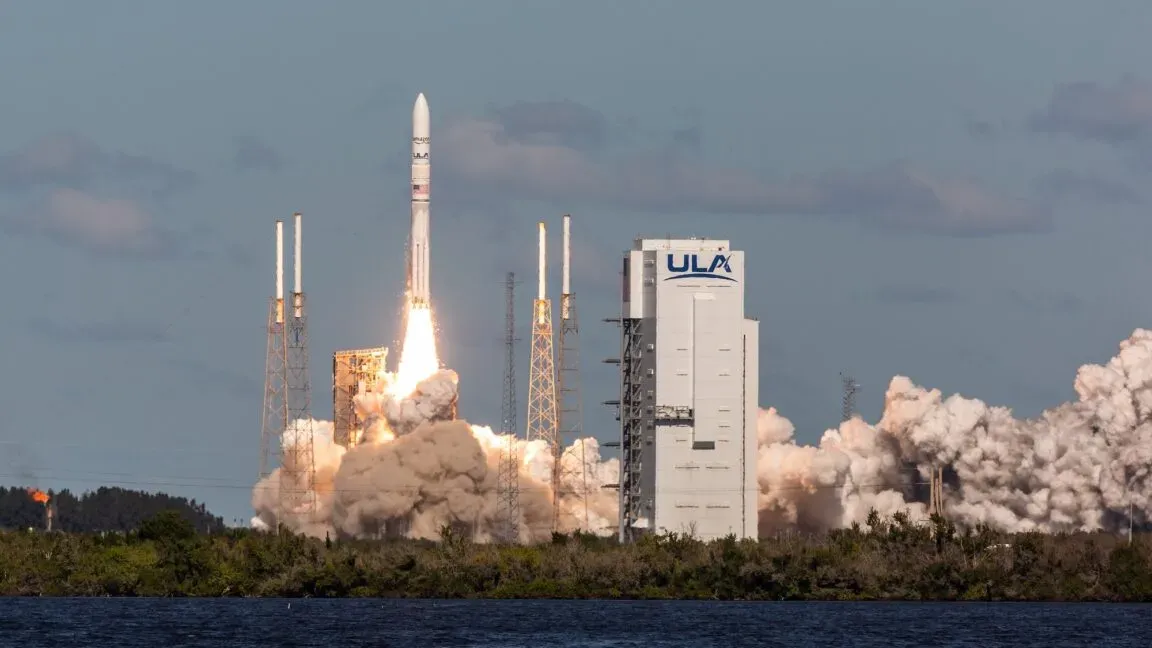
The United Launch Alliance (ULA) has released new information regarding the failure of its Vulcan rocket during a launch attempt on Sunday. According to ULA, preliminary indications suggest that inadequate fuel supply was the root cause of the low booster thrust.
In a statement issued by the company, ULA confirmed that an initial review of flight data had been completed and pointed to a specific issue with the fuel supply as the likely culprit. This finding contradicts previous reports suggesting that the main engines were at fault.
The BE-4 engine, which is used in both the Vulcan rocket and Blue Origin's New Glenn rocket, was initially suspected to be the source of the problem. However, ULA has now shifted the focus towards the fuel supply system, stating that it was not performing as expected.
This revelation is a significant development for Blue Origin, as the BE-4 engine is also used in its New Glenn rocket. A similar failure occurred during a ground test of the New Glenn in May, and the root cause was attributed to a main oxygen valve on one of the BE-4 engines.
The fact that ULA has pointed towards inadequate fuel supply as the cause of the Vulcan's failure may provide some relief to Blue Origin and NASA, who were concerned about potential issues with the BE-4 engine. However, further investigation is needed to confirm this finding and determine the exact cause of the malfunction.
A crucial detail has emerged in the investigation into the Vulcan launch anomaly: inadequate fuel supply to the BE-4 engines was the root cause of the malfunction.
According to a statement from Blue Origin, the company worked closely with ULA to review flight data and support the investigation following the anomaly. In doing so, they identified that low booster thrust resulted not from engine performance but from insufficient fuel supply from the vehicle to the engines.
The finding is significant as it clears the way for Blue Origin's return-to-flight mission with New Glenn, which could take place as early as January. This development comes as a welcome relief to satellite operators facing a worsening US launch crunch.
ULA and Blue Origin have been collaborating closely on the investigation, with ULA's valued partnership being acknowledged by Blue Origin in their statement. The Centaur V upper stage was also found not to have contributed to the failure, which is particularly important given NASA's recent contract with ULA to use it as its new upper stage for the Space Launch System rocket.
NASA stands to benefit from this confirmation, especially considering its plans for lunar missions and human landings on the Moon in the coming years. The heavy-lift capabilities of New Glenn are expected to play a significant role in these endeavors, making it an essential asset for NASA's future goals.
The latest update from ULA has brought more challenges as the company struggles to stay relevant in a competitive US launch industry dominated by SpaceX and newer entrants like Blue Origin.
Vulcan, ULA's flagship rocket, represents the company's best hope for staying afloat, but its recent mission failure on Sunday has put it further behind schedule. With Vulcan sidelined, other companies are poised to take advantage of the opportunity, including Relativity Space, Rocket Lab, and Stoke Space.
The issues plaguing Vulcan have been ongoing for three years, with two previous launches experiencing problems related to the solid rocket boosters' nozzle. A successful launch on Sunday could have marked a turning point for the company, enabling it to achieve a monthly launch cadence next year.
However, ULA now faces another significant hurdle: managing propellant delivery and plumbing complexities that affect the BE-4 engines. This setback will keep Vulcan offline for several months, further delaying its return to operations.
Facts based on reporting originally published by Ars Technica.
You may republish this story, in full or in part, if you credit Noti Group and link to it (licence CC BY 4.0). Photos are not included.