






Conflict in Sudan Leads to Surge in Youth Addiction
The war in Sudan has left millions of people displaced, including young people who have turned to drug addiction as a coping mechanism.
Sudan's war has left a trail of devastation and trauma in its wake, leading to a surge in drug addiction among young people like Mohammed Awad who were forced out of school and into displacement.
War broke out in Khartoum in April 2023 when Awad was just 17 years old, an event that shattered his life and set him on a path from which he struggled to recover. Displaced and accompanied by his cousins, he moved from one state to another in search of safety and refuge from the horrors of war.
The displacement had become routine, as millions of people in Sudan experienced one of the world's worst humanitarian crises. The conflict between the Sudanese armed forces (SAF) and Rapid Support Forces (RSF) paramilitary group turned Khartoum into an epicentre of violence and power struggle.
For Awad, the trauma of witnessing his friends and cousin being killed before his eyes was overwhelming, driving him to seek solace in drugs. "I started taking drugs to forget what I have seen," he said, reflecting on the darkest moments of his life.
As he tries to recover from the devastating effects of war, Awad's ultimate goal is to resume his education and rebuild his life.
The war in Sudan has ravaged entire communities, leaving deep scars on the lives of those who have been displaced. For millions of people fleeing fighting elsewhere in the country, areas previously controlled by the Rapid Support Forces (RSF) have become a refuge. However, these regions are now notorious for their high levels of drug manufacturing and trade.
The situation has spiralled out of control, with poverty and insecurity creating an environment ripe for the proliferation of illicit substances. Areas under RSF control have seen a surge in the production and distribution of highly addictive amphetamine Captagon. Government officials confirm that this is a pressing concern.
For individuals like Awad, caught in the midst of displacement and without access to support systems, drugs have become a coping mechanism. "I entered rehabilitation centres many times," he said, "and I quickly returned to addiction." He continues to struggle with pills and weed, unable to shake off his dependence despite his desire to quit.
The war has had far-reaching consequences for Sudan's social fabric. Entire communities have been torn apart, leaving behind a trail of trauma and devastation. With limited options available, it is little wonder that many are turning to drugs as a way to deal with their unbearable reality.
Government officials acknowledge the gravity of the situation, highlighting the link between poverty, insecurity, and the rise in drug production. Areas previously under RSF control remain a particular concern, with Captagon being a major worry.
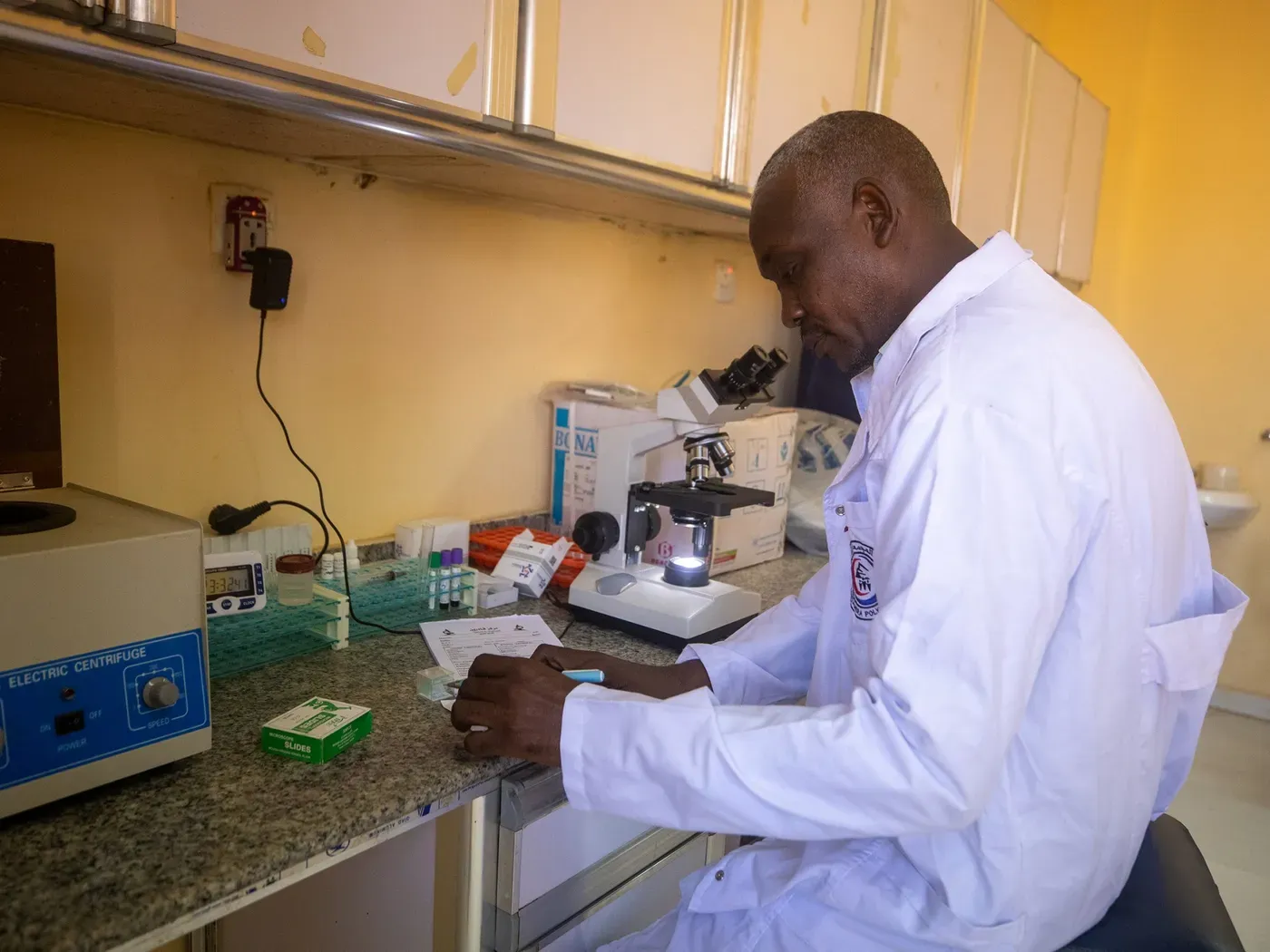
The Qadreen Center for Addiction Treatment in Khartoum is one of the few charitable institutions addressing the growing problem of drug addiction in Sudan's capital. As a result, doctors at the centre have reported an increasing demand for their services since the outbreak of war.
According to Lubna Ali, director of the centre, the institution has continued to provide medical care before and after the conflict began. In fact, it has witnessed a significant surge in the number of patients seeking treatment, particularly those requiring mental health and addiction recovery services.
The centre's statistics reveal that since the war broke out, it has treated over 10,100 cases, ranging from individuals struggling with war-related trauma to those suffering from drug addiction. Among them, Ali said, are 135 people who have made significant progress in their recovery journey.
Young people are disproportionately affected by the conflict, having witnessed horrific violence, displacement, loss of loved ones, disrupted education, and scarce job opportunities. The cumulative effect of these traumas has left many vulnerable to substance abuse.
The war's impact on Sudan's institutions has also had a devastating effect on oversight efforts and health services' ability to tackle the addiction crisis. Weakened institutions and a deteriorating security situation have hindered the provision of effective support for those struggling with addiction.
Some areas of Sudan are more severely affected by the drug problem than others, according to Dr Aisha Almobasher, a psychiatrist at the Bitmakaly National Organization. She noted that many individuals struggling with addiction hail from regions previously controlled by the Rapid Support Forces, where the availability and trafficking of drugs have reportedly increased following their withdrawal.
The Sudanese conflict has created an environment conducive to the proliferation of illicit drug production and trafficking. According to a report by the Sudan Transparency and Policy Tracker, there was a significant surge in seizures and manufacturing facility closures from 2015 to 2025.
A notable trend observed is that many incidents occurred after the outbreak of war, indicating a correlation between conflict and increased drug-related activities. The figures provided are based on actual seizures and estimated production capacity, rather than consumption rates, but they do suggest the scale of the issue in Sudan's illicit drug trade.
Major-General Mohamed Al-Moatasim Okasha has stated that his teams have encountered an uptick in drug manufacturing since the war began. They have discovered advanced facilities in areas retaken by the SAF from the RSF, including locations near Khartoum.
Advanced production equipment has also been found in El-Radom, a region in South Darfur State where cannabis is grown on a large scale. The area remains under RSF control but is expected to be regained by the Sudanese armed forces soon.
The discovery of a massive facility for manufacturing Captagon pills has shed light on the alarming scale of industrial-scale drug production in areas previously under RSF control.
Located north of Khartoum, close to an oil refinery that was formerly held by the RSF, the facility was found to be equipped with machinery valued at approximately $3 million.
The equipment's potential output is staggering, capable of producing 100,000 Captagon pills per hour and up to 700 million pills using its raw materials.
These findings are not merely indicative of illicit activities but rather evidence of a well-organized and large-scale operation, according to Okasha.
Captagon has become a major concern in the region, with facilities operating in Syria during Bashar al-Assad's rule contributing to a regional problem.
Efforts to combat Captagon production are being hindered by its widespread presence in southern Syria, where facilities operated during Bashar al-Assad's rule are still functional.
The situation is compounded by the ongoing conflict in Sudan, where authorities are trying to address a growing threat through nationwide coordination and disruption of smuggling networks. Okasha noted that combating drugs has become a national security priority for Sudan, with the goal of protecting its youth and safeguarding future generations from the spread of narcotics.
Facts based on reporting originally published by Al Jazeera.
You may republish this story, in full or in part, if you credit Noti Group and link to it (licence CC BY 4.0). Photos are not included.