







Iranian Officials Criticize New York Times Report on Dams
A recent report by The New York Times on Iran's dams has sparked controversy among Iranian officials and experts.
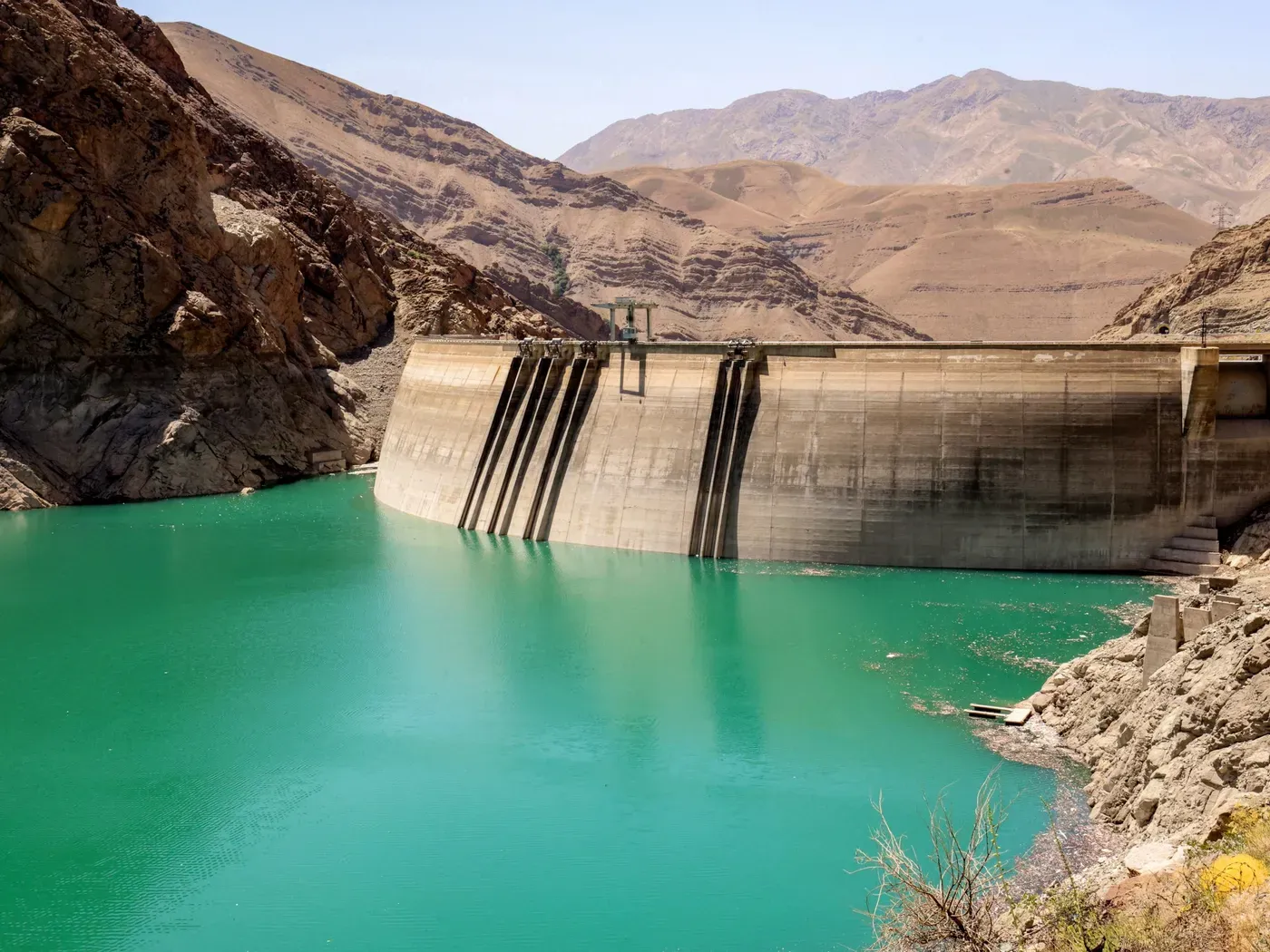
A recent New York Times report on Iran's dams has sparked a fierce backlash from Iranian officials and experts, who claim the story is based on baseless allegations aimed at justifying further attacks on civilian facilities.
The controversy comes amid renewed threats of military action against Iran by Washington, following months of war that have already caused significant damage to the country's energy infrastructure, bridges, water systems, and other critical sites.
Iranian Foreign Ministry spokesperson Esmaeil Baghaei accused the New York Times of manufacturing propaganda and security pretexts to justify attacks on vital Iranian infrastructure, warning that such allegations could have disastrous consequences for civilians.
The newspaper has defended its reporting, asserting that it accurately represented the views of its experts. However, several of these experts have since publicly challenged the implications of the investigation, questioning the evidence behind a proposed link between dams and military installations in Iran.
Several experts quoted by the New York Times have disputed the report's findings, arguing that the link between dams and missile bases is not supported by credible evidence and could be used to justify further attacks on Iranian civilian targets.
The recent report by a prominent publication has sparked intense debate over the purpose of Iran's extensive network of dams and water infrastructure.
Researchers have pointed out geographical similarities between the locations of dams and sites targeted by US and Israeli air strikes, raising questions about the potential connection between the two.
According to some experts, Iran's ambitious water infrastructure project may have been developed to support its military buildup, but any such link remains speculative due to the secrecy surrounding the country's missile program.
The report has also highlighted concerns that portraying dams as potentially serving military purposes could provide a justification for attacking essential civilian infrastructure, which has already suffered significant damage in recent attacks.
Critics warn that the attack on Iran's infrastructure will disproportionately affect millions of civilians, and that the NYT report may have inadvertently provided a pretext for further military action.
The US President has repeatedly threatened to destroy key Iranian infrastructure within three days, sparking fears about the potential consequences for civilians.
Critics of a recent New York Times report on Iran's dams have accused the publication of engaging in speculative and unreliable journalism.
The report's methodology has been questioned by experts cited in the story, who claim that it relies too heavily on conditional language rather than concrete evidence. According to these critics, this approach is indicative of a broader problem with mainstream journalism.
Kaveh Madani, director of the United Nations University's water institute and a former senior Iranian environmental official, has taken issue with the report's reasoning. He argues that speculation and spatial proximity do not necessarily imply causality, and that the article's sensational narrative is irresponsible and potentially dangerous.
Madani also disputes the newspaper's claim to have consulted seven experts in support of its analysis. In fact, he claims that his own comments were misused in the article, and had nothing to do with the dams or missiles that are at the center of the controversy.
Clarifications have been issued by two researchers whose work was featured in an investigation into Iran's dams, which has sparked intense debate and criticism.
Nima Shokri, a water-security expert at Hamburg University of Technology, took to social media platform X to clarify his stance on the matter. He emphasized that the proximity of dams to military targets does not provide justification for attacks on them.
In fact, Shokri's comments were echoed by another researcher who was also quoted in the article. Amir Aghakouchak, a water expert at the University of California, Irvine, expressed his full agreement with Shokri's views and highlighted the importance of protecting critical resources like dams and water infrastructure.
The researchers' clarifications come as the newspaper behind the investigation faces accusations that its report could be used as a pretext for military attacks. The publication has rejected these claims, insisting that its journalists sought to provide an accurate explanation of Iran's infrastructure investment and the effects of US and Israeli attacks on civilians.
The controversy surrounding the New York Times' report on Iran's dams has escalated, with some critics accusing the publication of promoting a biased narrative.
Sanam Mahoozi, one of the story's co-authors, took to X to clarify that neither she nor her colleagues endorse or justify attacks on infrastructure. In fact, their intention was to provide an accurate explanation of Iran's investment in dams and the consequences of US and Israeli strikes on civilians.
Iranian Foreign Minister Abbas Araghchi has dismissed the allegations as baseless "rubbish. He accused pro-Israel media outlets of promoting narratives reminiscent of the prelude to the 2003 invasion of Iraq, complete with familiar propaganda tactics.
The Iranian parliament's speaker and chief negotiator, Mohammad Bagher Ghalibaf, has also weighed in on the controversy. In a post on X, he claimed that the newspaper is laying the groundwork for further attacks on civilian infrastructure by labeling dams and other facilities as dual-use.
The legacy of past reporting mistakes continues to haunt major newspapers, with a recent report on Iran's dams sparking widespread criticism and accusations of bias.
In 2002, a New York Times report co-authored by Judith Miller claimed that Iraq was intensifying its pursuit of nuclear weapons, citing US officials who alleged that Baghdad was seeking aluminium tubes for uranium enrichment. This claim was later discredited, but not before it was used to bolster the Bush administration's case against Iraq.
The New York Times itself acknowledged serious shortcomings in its reporting on the build-up to war with Iraq, including a reliance on Iraqi defectors and exiles who had an interest in regime change. The newspaper stated that we have found a number of instances of coverage that was not as rigorous as it should have been", highlighting the need for more cautious and nuanced reporting in the future.
Facts based on reporting originally published by Al Jazeera.
You may republish this story, in full or in part, if you credit Noti Group and link to it (licence CC BY 4.0). Photos are not included.