





New battlefront emerges in Ukraine's conflict beneath old Soviet gas pipeline
Ukrainian forces have been living and fighting Russian troops inside an old Soviet gas pipeline for seven months.
A new battlefront has emerged in Ukraine's ongoing conflict, but it's not where you might expect: beneath the earth.
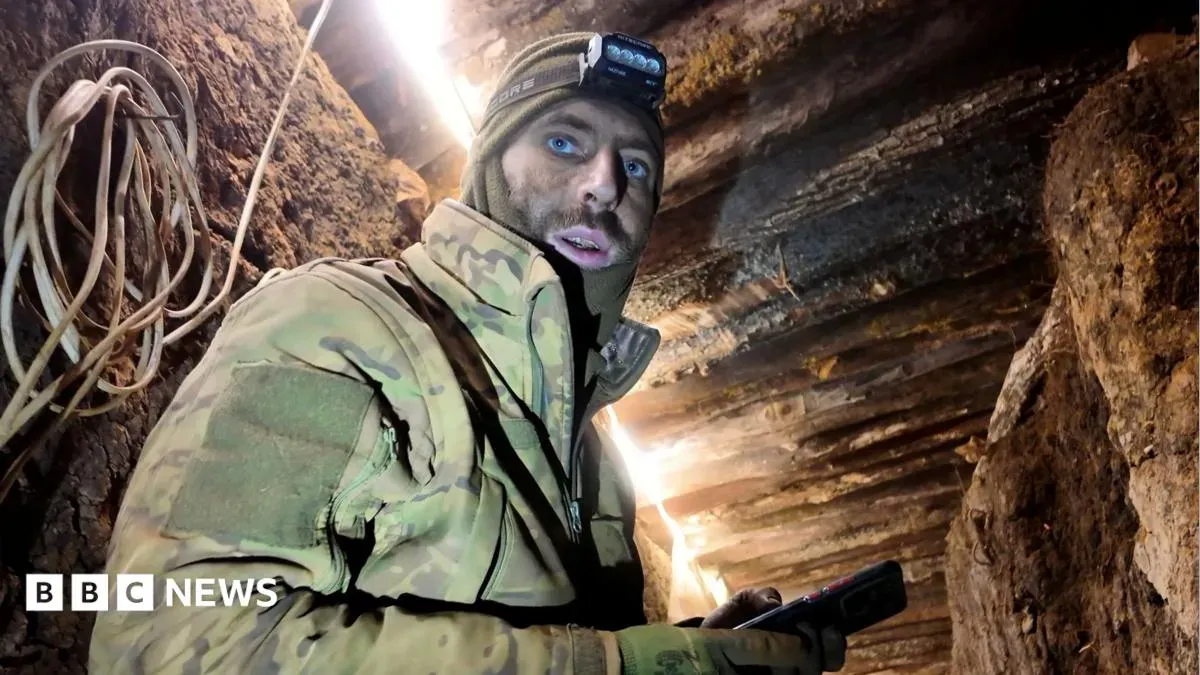
In the Kharkiv region, Ukrainian forces have been living and fighting Russian troops inside an old Soviet gas pipeline for seven months now. The pipeline's narrow diameter - just over a meter - means soldiers can only crawl through it, but it offers relative safety from aerial attacks by drones that now dominate the skies above the front line.
Drones have become a major obstacle to military progress on both sides, making it difficult for either Ukrainian or Russian forces to advance. In response, Ukrainian strategists like Zanuda have turned to an unconventional tactic: going underground.
The subterranean battlefield is "a new world of fighting, according to Zanuda, who has helped plan Ukraine's tunnel operation. However, he acknowledges that this approach comes with its own set of challenges - particularly the lack of maneuverability in such a confined space.
On the surface, soldiers have some room to react and adapt to changing circumstances, but underground they are forced to engage the enemy head-on, with little scope for evasive action.
The journey to reach this subterranean battleground was a harrowing experience. It involved a high-speed drive across open fields followed by a lengthy march through muddy terrain - accompanied by Ukrainian troops who were armed and ready to defend against incoming drones.
Ukrainian forces have discovered creative ways to counter Russian tactics in the ongoing conflict. They've found openings in the pipeline system that crisscrosses the area, allowing them to access underground tunnels where most of the fighting occurs.
The breaches in the ground were made using welding tools to break through the thick steel pipes. This has given Ukrainian troops a unique advantage over their opponents, who were initially able to exploit these vulnerabilities. The Russians had been using this approach since September 2025, when they first infiltrated the city of Kupyansk.
A specially designed electric cart transports troops and supplies through the pipeline, earning it the nickname the Kupyansk metro. This underground transportation system is a remarkable feat of engineering, but it's not without its drawbacks. The cart occasionally breaks down, leaving passengers to endure a 40-minute ride with heads bowed and legs crossed.
As we traveled on this austere fairground ride, the regular bumps from crossing welded sections of the pipe were a constant reminder of the makeshift nature of this transportation system. Our destination was a break in the pipeline where Ukrainian troops had built dug-outs to store ammunition and equipment.
The musician accompanying me on this journey has been living underground for three months now, occasionally venturing above ground to clean up or attend to personal needs.
As we descend deeper into the earth, the sounds of artillery rounds echo through the air, their thuds growing louder with each passing moment. The musician assures me that our current location is close to the line of contact, but the underground environment provides a sense of safety.
The cart continues its journey, disappearing into the darkness of the pipeline for about half an hour before returning with more troops covered in dust and dirt. Their faces bear the look of relief as they emerge from their ordeal on the surface.
It's more comfortable down here, says Vovochka, a soldier who has been fighting on the ground for three weeks, because drones don't fly here, and neither do artillery shells or glide bombs. His words are a testament to the makeshift shelter provided by the pipeline.
The operation to clear the pipeline has been ongoing since April, with Ukraine making steady progress along the 15km stretch. The work is painstaking and backbreaking, with the constant fear of encountering enemy forces hanging over the soldiers like a specter.
The Ukrainian troops have encountered makeshift barriers on their way forward, some of which were boobytrapped or piled with Russian bodies. The uncertainty surrounding these obstacles was a major concern for the soldiers, who had to navigate them without knowing what lay beneath. When we moved them or climbed over them, we had no idea what was underneath, says Chyzh, recalling the harrowing experience.
The constant threat of gunfire also took its toll on the troops. When they attempted to advance, the ricochets from bullets posed a significant danger, making it difficult for them to anticipate where the shots would land or how they would bounce. You never know where a bullet is going to go or how it will bounce, Chyzh notes.
The intensity of the fighting has left its mark on the soldiers, with some having to confront the aftermath of their battles. Kort recounts the gruesome scenes he encountered during the operation, including the presence of bodies and the need to sleep near them. Yes, there were bodies," he confirms. "I even had to sleep right next to them."
The commander's background as a miner has proven invaluable in preparing him for the physical and psychological demands of operating underground. From a command center on the surface, Biashym keeps regular contact with his men still in the pipeline, where they spend much of their time on their knees and face challenges such as abrasions and panic attacks due to the confined space.
The pipeline has become a battleground, with Ukrainian forces using it as a conduit for their operations. Foreign fighters have played a significant role in bolstering Ukraine's depleted ranks, and one Colombian fighter, known by his call sign Gecko, described the experience of clearing 500m of pipe.
"It was difficult, it was hot and I had fear inside the pipe," Gecko said, recalling the grueling process that took them 30 days to complete. Despite the challenges, he remained resolute, eventually coming to terms with the situation and pressing on. This determination has been crucial in the face of adversity.
Russian forces have also taken advantage of the pipeline's fortified positions, attempting to infiltrate Ukrainian strongholds by burrowing through the pipe. In a control room above ground, observers watched as Ukrainian drones targeted another Russian attempt to outflank their positions. The tactics employed by both sides reflect the shifting nature of warfare in this new front line.
The reality on the ground is that traditional surface operations are now nearly impossible due to the extensive fortifications and counter-attacks from opposing forces. For now, fighting has become a predominantly underground endeavor, with some battles still taking place on the surface or in the air as part of a combined operation.
The clearance of the pipeline has been a prolonged and arduous process, with Ukrainian forces facing harsh conditions and dangers at every turn.
Ukraine's President Volodymyr Zelensky has described the operation as a success, citing its role in retaking lost territory and boosting morale, though it hasn't altered the war's trajectory. After seven months of work, 15km of pipeline have been cleared, a significant achievement for Ukrainian forces.
Facts based on reporting originally published by BBC News World.
You may republish this story, in full or in part, if you credit Noti Group and link to it (licence CC BY 4.0). Photos are not included.