






SpaceX's Starship Returns to Launch Tower After Brief Flight Testing Period
The return of SpaceX's Starship has raised questions about the future of the company's rocket program and when humans will fly aboard.
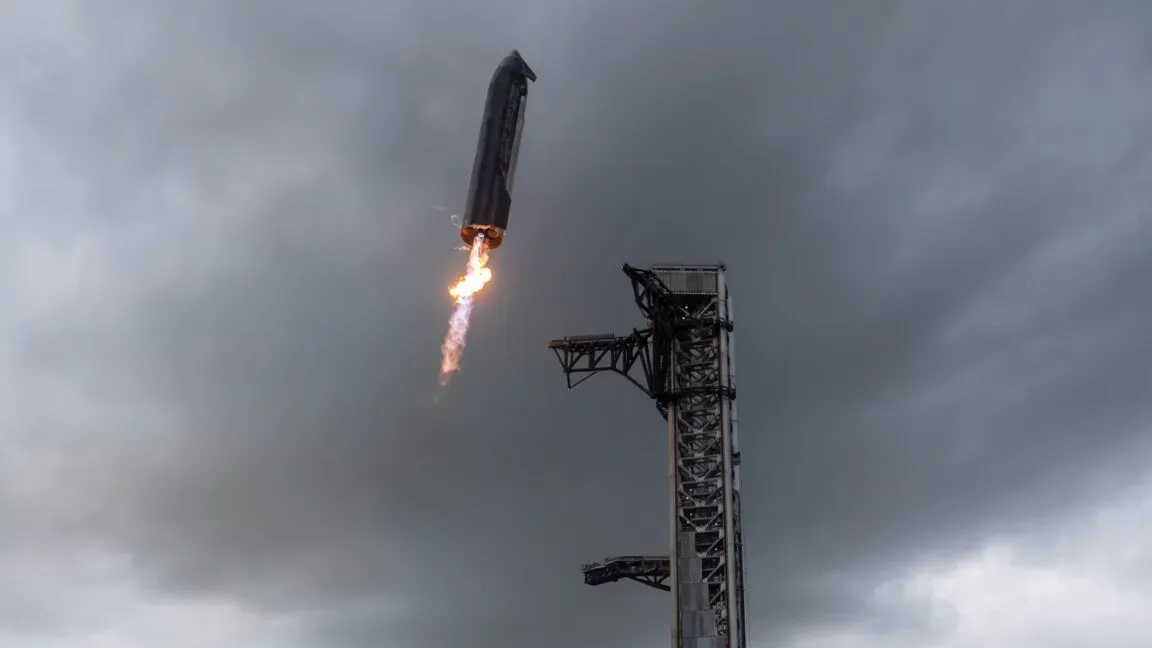
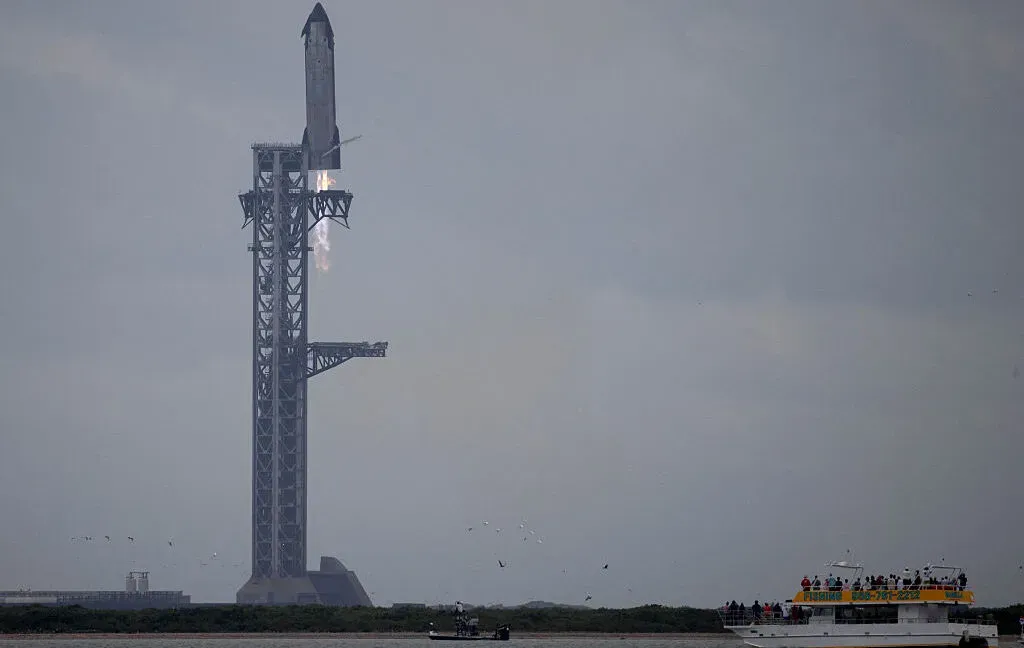
SpaceX's Starship has returned to a launch tower in South Texas after a brief stint in flight testing, raising questions about the future of the company's ambitious rocket program. However, one question on many minds is when humans will finally fly aboard this reusable vehicle.
The answer isn't straightforward, as it depends on what kind of human spaceflight is being considered. If SpaceX prioritizes putting people on Starship, it could happen relatively quickly. But if we're talking about landing on Earth, that's a different story altogether.
NASA's lunar astronauts are likely to be the first humans to fly on Starship, and they won't be launching or landing from Earth. This raises interesting questions about the timeline for human spaceflight on Starship and what it means to "fly" on this vehicle in the first place.
Putting humans on a space vehicle is a complex and time-consuming task, even without considering NASA's stringent requirements for its astronauts. As such, estimates of when humans will fly on Starship should be taken with a healthy dose of skepticism, including those mentioned here.
SpaceX has made significant progress with Starship, but human spaceflight is a major undertaking that requires careful planning and attention to detail. It remains to be seen how quickly the company can overcome the technical challenges involved in making this vision a reality.
A decade ago, SpaceX initially set its sights on launching humans on Starship in 2024 for a Mars mission. However, the company's plans have undergone significant revisions since then. In 2018, it announced a lunar flyby mission with a target launch year of 2023, known as the dearMoon mission.
This ambitious endeavor was eventually canceled in 2024, marking another setback for SpaceX's human spaceflight ambitions. The company has continued to explore opportunities for sending humans on Starship, including a collaboration with billionaire Dennis Tito announced in 2022. This partnership aims to send individuals on a lunar flyby mission later in the decade.
More recently, sources suggest that SpaceX is now telling interested parties that it could begin offering flights by 2029. While this date may seem optimistic, it's essential to approach any public launch targets with caution. The company's history of shifting timelines and canceling projects has raised concerns about its ability to meet ambitious deadlines.
The first humans to fly on Starship in space are likely to embark on a journey that involves launching from Earth inside the NASA Orion spacecraft. Once in orbit, they will dock with Starship before transiting to the Moon, where they will land using the spacecraft's capabilities. This lunar landing is a critical step towards establishing a sustainable presence on the Moon.
NASA has signed an agreement with SpaceX to develop Starship as part of its Human Landing System, with a targeted lunar landing in 2028. However, this deadline remains uncertain, and it's unclear whether the company will be able to meet its obligations under the agreement.
The success of Saturday's tower catch has given the Starship program a significant boost in terms of its launch cadence. This progress is crucial for lunar missions, which require a higher frequency of launches to be successful. As a result, it seems increasingly plausible that humans could land on the Moon inside Starship before the end of this decade.
SpaceX's ability to achieve this target will depend on its prioritization of various goals, including the development of a Human Landing System. While the company has made significant strides in recent years, its focus appears to be shifting towards revenue-generating activities such as launching Starlink satellites and eventually deploying Starmind data center satellites.
The lack of a launch abort system on Starship has raised concerns about safety, particularly when compared to other human spacecraft. However, this may not be a major issue for SpaceX, which operates under a different regulatory framework than NASA. The Federal Aviation Administration does not certify commercial spacecraft as safe for passengers, instead emphasizing informed consent and protection of the public.
The regulatory environment in which SpaceX operates could potentially allow the company to launch Starship with human crews on board sooner rather than later. If SpaceX can demonstrate that it has achieved reliable launches, it will have the confidence it needs to press forward with human flights. This could happen within a few years, depending on various factors.
SpaceX's ability to launch Starship reliably would be a significant milestone in the company's development of its reusable spacecraft. It would also pave the way for the company to conduct its own human spaceflight missions, potentially leading to a new era of commercial space travel.
The sheer size of the pressurized cabin in SpaceX's Starship lunar lander is staggering, potentially accommodating a few dozen people on a trip to the Moon. Its interior volume is greater than that of the International Space Station, an extraordinary feat for a spacecraft designed for lunar missions. This spacious design could make Starship an attractive option for human flights, but only if it can be adapted for Earth landings.
However, transforming the current lunar lander design into an Earth lander would require significant modifications. Unlike NASA's lunar lander, which will not need to withstand atmospheric reentry or perform a propulsive landing, Starship must be able to handle these challenges while carrying human passengers. This adds a new layer of complexity and raises concerns about safety.
The development of a commercial human spaceflight business on Starship would be a lengthy process, requiring careful planning and execution. Moreover, the financial rewards may not outweigh the risks involved, particularly when it comes to the safety of human crew members. A single incident could have severe consequences for a publicly traded company, making the stakes even higher.
The contrast between launching satellites into space and carrying human passengers is stark. While losing dozens of Starlink satellites on an errant launch might be a setback, the loss of a human crew would be catastrophic. This highlights the daunting challenges that SpaceX must overcome if it wants to make its vision for commercial human spaceflight a reality.
SpaceX's reluctance to develop Starship as a crew transportation vehicle for commercial space stations has left several private operators disappointed. These companies had approached SpaceX about using Starship to transport astronauts to and from their stations, but were met with disinterest.
The lack of interest in developing Starship for human spaceflight highlights the significant challenges that lie ahead for the program. It is unlikely that humans will land on Earth in Starship before 2030, and may not happen until at least the mid-2030s.
Facts based on reporting originally published by Ars Technica.
You may republish this story, in full or in part, if you credit Noti Group and link to it (licence CC BY 4.0). Photos are not included.