






Rugby League World Cup Comes to Close with Mixed Reactions from Fans
The Rugby League World Cup has been met with mixed reactions from fans around the world, with some viewing it as an unmissable spectacle and others barely noticing it.
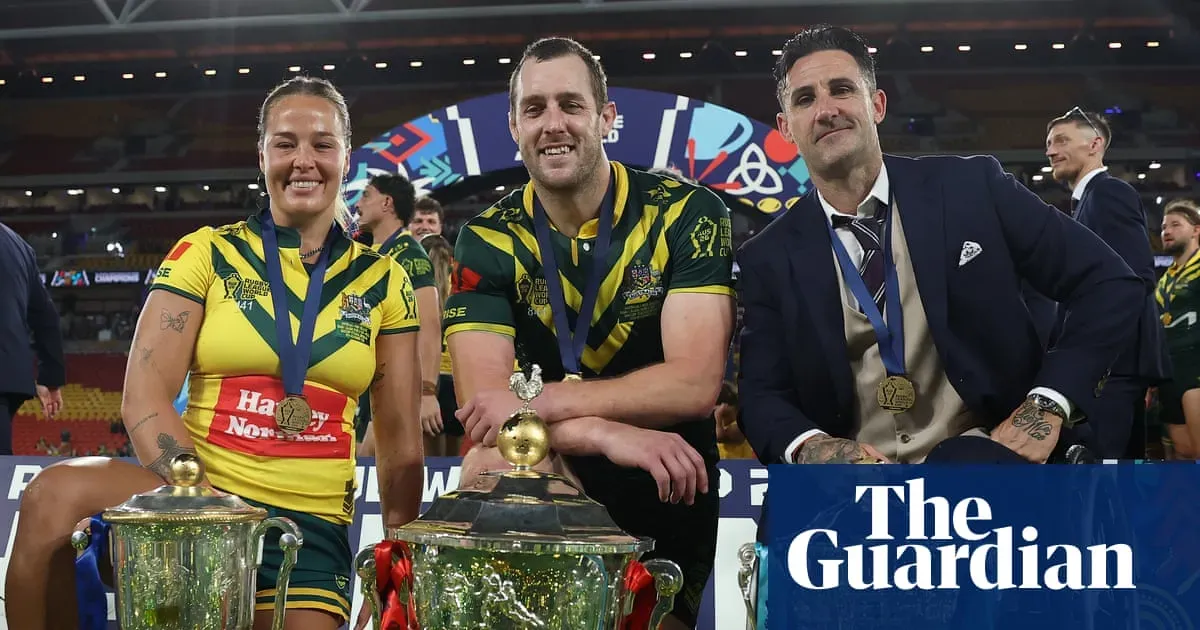
The Rugby League World Cup has come to a close, leaving behind mixed reactions from fans around the world. For some, the tournament was an unmissable spectacle that captivated from start to finish, while for others it slipped under the radar without making much of an impact.
In Australia, the tournament was a resounding success, showcasing the growing popularity of international rugby league. The event's organizers have seemingly grasped the value of global competition, which is a welcome change from the NRL's previous neglect of the international game. This shift in approach has sparked renewed interest and enthusiasm among fans.
The tournament itself was filled with vibrant colours and infectious energy, making it an enjoyable experience for all involved. The final matches saw Australia emerge victorious in both the men's and women's competitions, a familiar outcome that nonetheless underscored the progress being made by other teams.
The Rugby League World Cup's success in Australia has been overshadowed by its lack of visibility in the UK. The tournament's popularity will likely continue to grow as it heads to the USA for the 2030 edition, where it will tap into a large Pasifika population in states like Hawaii and Utah.
However, one thing is clear: the men's competition needs a new champion. The dominance of one country has made the tournament feel less competitive than it should be, with that country having won 10 out of the last 11 instalments. A change in fortunes would breathe fresh life into the sport.
The contrasting reception to the World Cup in England and Australia is striking. While Australians are celebrating their team's success, many English fans were left disappointed by their side's early exits from both competitions. This was compounded by the fact that rugby league fans had to pay to watch the flagship international fixture on a different platform.
The issue of broadcasting rights has emerged as a major problem for the sport in the UK. With free-to-air broadcasters showing little interest in airing the World Cup, those who run the tournament are facing significant challenges in getting their product seen by a wider audience.
The contrast between Australia's successful World Cup coverage and the UK's lack of interest highlights the challenges facing rugby league as it seeks to expand its global reach.
Free-to-air broadcasting in Australia allowed storylines from the tournament to be showcased to a wider audience, giving the sport much-needed exposure to mainstream viewers. This success was due in part to the fact that Australians had access to live coverage of the games through free-to-air broadcasters. As a result, rugby league's profile was boosted in the country.
The partnership agreement between Super League and the NRL is set to be signed this week, marking a significant step towards Australian control in the northern hemisphere. Led by Peter V'landys, who serves as both chair and CEO of the Australian Rugby League Commission, Australians will take on more authoritative roles in shaping the sport's global strategy.
The World Cup's poor showing in the UK was a major blow to rugby league's international ambitions. The BBC's decision not to broadcast the tournament was particularly damaging, given its long-standing partnership with the sport. The lack of investment and exposure for the World Cup has left the sport struggling to convince TV broadcasters of its value.
The future of rugby league expansion will depend on implementing a clear strategy for growth in key markets like England and France. Investment is already being made in these countries, but it must be accompanied by a plan to ensure they can progress and compete at a higher level, preventing the World Cup from becoming a Pacific Championships-style event.
The Rugby League World Cup has left an indelible mark on Australian sports fans, creating memories that will endure for generations. However, the tournament's success also highlighted a stark contrast in global attention and enthusiasm, particularly when compared to the UK.
A major accomplishment of the Australian organizers is their ability to revitalize international rugby league's popularity, but their most daunting task lies ahead: bridging the gap between the northern and southern hemispheres by 2030.
Facts based on reporting originally published by The Guardian Sport.
You may republish this story, in full or in part, if you credit Noti Group and link to it (licence CC BY 4.0). Photos are not included.