






Rising Shipping Costs Threaten Retailers' Inventory Strategies
Retailers are reassessing their inventory strategies due to soaring shipping costs, driven by record-high diesel prices and a surge in supply chain prices.
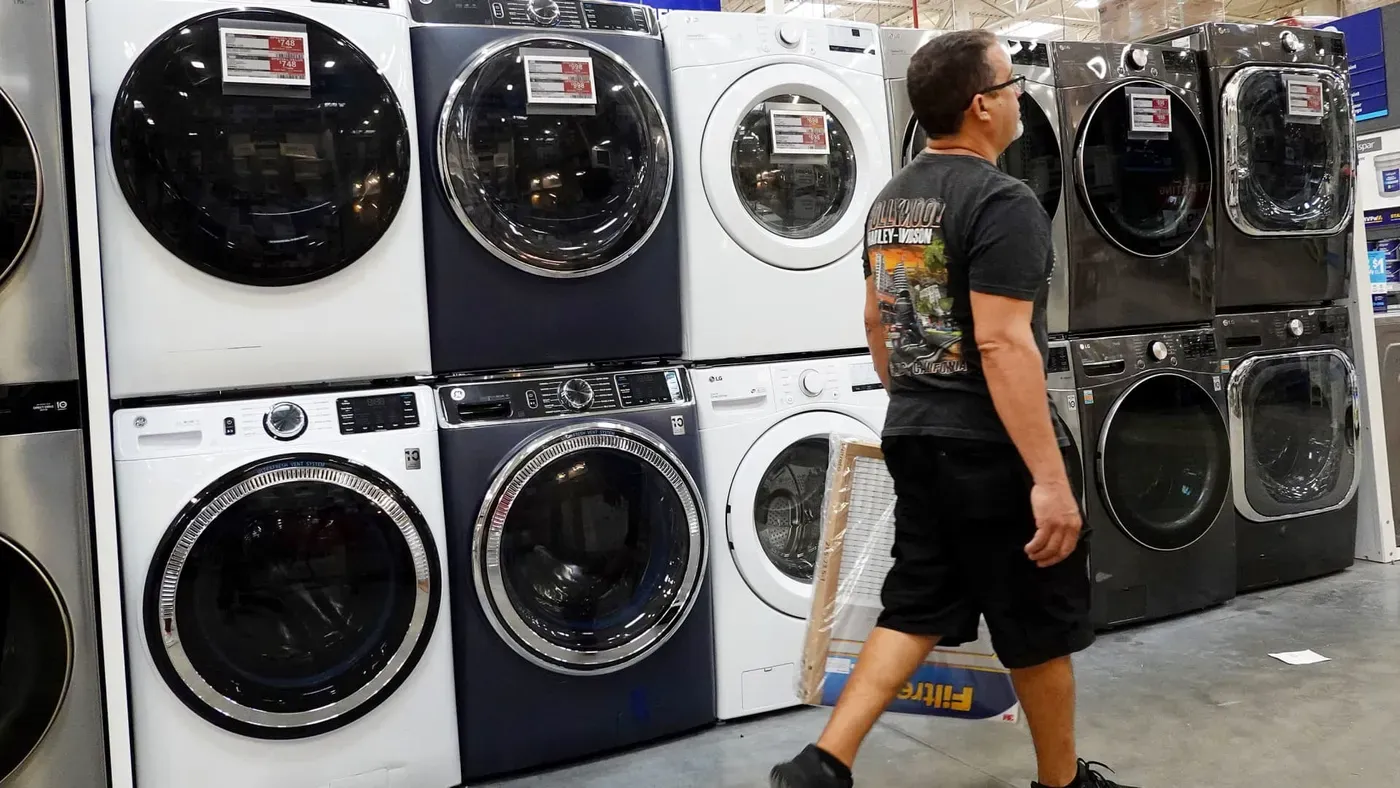
Shipping costs are soaring this holiday season, making it harder for retailers to stock up on big-ticket items. As diesel prices hit record highs, trucking rates approach pre-pandemic levels and carrying costs skyrocket, many retailers are reassessing their inventory strategies.
Deborah Weinswig, CEO of Coresight Research, warns that retailers will have "some of the lowest inventory levels" for these high-end items in history. She notes that her clients are holding less stock of large consumer goods like TVs, grills, and appliances due to increased costs associated with storing and transporting them.
The main culprit behind these rising costs is a perfect storm of factors, says Weinswig. "It's freight getting it from there to here; it's carrying costs; then it's just the trucking to get it into the stores," she explains, pointing out that each of these components has seen significant year-over-year increases.
A recent surge in supply chain prices is being driven by policy changes at both the domestic and international levels. According to Evercore ISI, general trucking rates jumped more than 47% year over year during the week of November 2. Industry experts attribute this increase to a federal crackdown on non-citizen and non-U.S.-based truck drivers operating in the country.
The resulting capacity crunch has sent shipping costs skyrocketing, with many retailers struggling to adapt to these new realities. As Weinswig puts it, "We're talking three different pieces right here and each is up significantly year on year."
Fuel surcharges are a major concern for companies and consumers alike as they skyrocket by 64% year over year.
The increase in fuel surcharges is largely due to rising diesel prices, which have reached record highs partly because of the ongoing conflict between the US and Iran. This has led to higher costs for transportation providers, who pass on these expenses to customers through additional fees.
Inventory holding costs are also on the rise as interest rates climb. The 10-year Treasury yield, a key indicator of borrowing costs, exceeded 5% in October and remains at multiyear highs. This means that companies must pay more to store unsold goods, which can be a significant expense for retailers.
Logistics experts warn that the combination of higher fuel surcharges and inventory holding costs could lead to increased discounts and promotions as holiday shopping season approaches.
Retailers and logistics companies are exercising caution in their holiday planning due to rising shipping costs.
Executives at major transportation and logistics firms say they're waiting for more accurate forecasts from their clients before making any significant decisions about stocking shelves after the early sales in October.
According to Werner Enterprises' CEO Derek Leathers, retailers are being extremely cautious with their inventory management because higher fuel surcharges and increased costs of capital make it imperative to avoid holding excess stock.
As a result, even though holiday sales are expected to reach $1 trillion in 2026 due to inflation-driven growth, retailers are showing a willingness to pay more to secure capacity rather than risk running out of stock.
The logistics industry is bracing for a surge in holiday package delivery, with ShipMatrix forecasting 2.4 billion packages to be delivered during the 2026 peak season, a 4% increase from last year.
As a result of this anticipated growth, retailers are expected to rely more heavily on gig workers to manage the increased demand. Gig workers offer flexibility and scalability, allowing companies to quickly adjust to changes in order flow without having to invest time and resources into training new employees.
Industry insiders agree that the use of drones is becoming increasingly viable for last-mile delivery, particularly for smaller items. In fact, a 2024 study by PwC predicted that drone delivery costs will decline significantly over the next decade, eventually surpassing traditional last-mile delivery costs.
Several major retailers are already exploring drone delivery options. For instance, Lowe's has partnered with DoorDash and Wing to launch a drone-based delivery service in September, while Amazon aims to offer drone deliveries in nearly 500 U.S. cities by year-end.
Flytrex has established partnerships with several major brands, including retail giant Walmart and popular eateries such as Little Caesars and Papa John's.
Regev emphasizes that customers increasingly crave instant gratification, which can be a deal-breaker if delivery times are too long. "Customers are looking for that instant gratification," he said. If delivery takes too long, potential customers might opt for alternative options, such as drone-based deliveries.
Facts based on reporting originally published by CNBC.
You may republish this story, in full or in part, if you credit Noti Group and link to it (licence CC BY 4.0). Photos are not included.