






Rivian Automotive Stock Price Plummets Over 80% Since IPO
Rivian Automotive marked a significant milestone on November 10, 2021, when it debuted on the Nasdaq stock exchange at $78 per share, backed by Amazon and promising a future in all-electric...
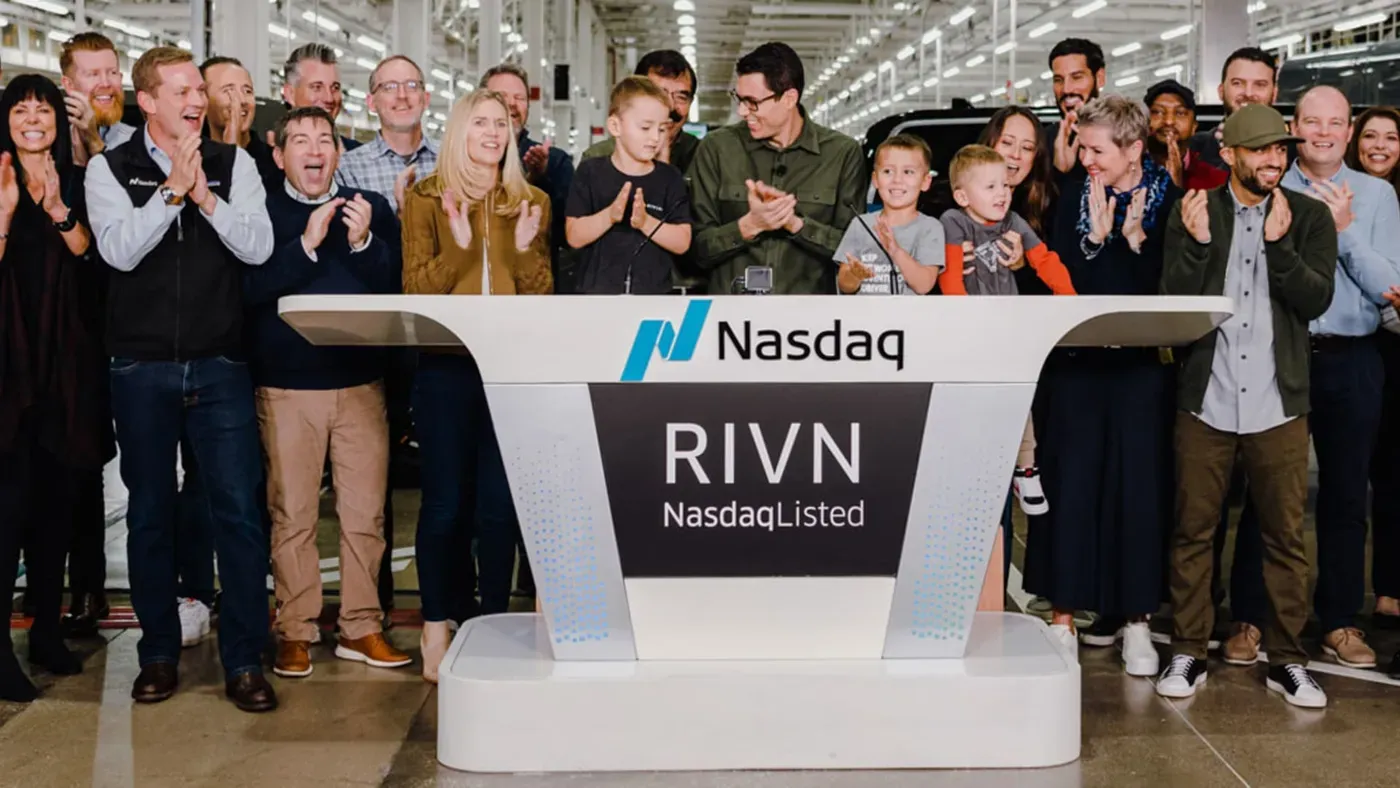
Rivian Automotive marked a significant milestone on November 10, 2021, when it debuted on the Nasdaq stock exchange at $78 per share, backed by Amazon and promising a future in all-electric vehicles.
However, since its IPO five years ago, Rivian's stock price has plummeted, dropping more than 80% from its initial value. This decline is part of a broader trend affecting many electric vehicle companies that emerged during the early 2020s.
While several of these companies no longer exist today, Rivian remains one of the most promising players in the EV market, despite facing internal and external challenges such as supply chain disruptions, geopolitical tensions, and slower-than-expected consumer adoption of electric vehicles.
Rivian's CEO and founder RJ Scaringe acknowledges that the company has not met all its expectations but is optimistic about its prospects for the future. He sees 2027 as a turning point for Rivian, when it will be able to demonstrate its capabilities and potential more effectively.
The EV market has been marked by significant fluctuations since Rivian's IPO, with many companies struggling to adapt to changing circumstances and consumer preferences. Despite these challenges, Rivian remains committed to its vision of a sustainable future in the automotive industry.
As Rivian continues its rapid expansion, the R2 SUV is taking center stage in the company's efforts to reach a wider audience. With an entry-level price point of around $45,000, this midsize model aims to bring the brand into the mainstream market.
Rivian has already seen significant success with the R2, which has become its best-selling vehicle by volume, surpassing both the flagship R1 and commercial van in sales. The company's record-breaking 19,248 vehicles delivered in the third quarter of 2026 is a testament to the R2's popularity.
The R2 will play a crucial role in Rivian's path to profitability and revenue growth, according to CEO Scaringe. He emphasized that the vehicle's success will be key to achieving these goals, with variants following the R2 also expected to contribute significantly.
Rivian's automotive cost of goods sold per vehicle has improved by more than $12,000 quarter over quarter, thanks in part to a higher proportion of R2 sales and better fixed-cost leverage. This development is a positive sign for the company as it continues its ambitious growth plans.
Rivian's production capacity continues to expand as its Normal, Illinois factory reaches full potential. The facility is now capable of producing a substantial 215,000 vehicles annually, accommodating both R1 models and electric vans alongside the new R2 SUV.
The upcoming Georgia plant will significantly boost Rivian's production capabilities once it comes online in late 2028. Initially, this site is expected to produce up to 300,000 units per year, marking a substantial increase over current levels.
As Rivian invests heavily in its technology and autonomy features, the company faces mounting pressure to optimize profitability. This decision was made by Scaringe, who emphasized the simultaneous pursuit of both goals: achieving financial stability while advancing technological advancements.
Rivian's operating performance has shown improvement, with the company generating $176 million in consolidated gross profit during the third quarter. However, its automotive business incurred a gross loss of $80 million, while its software and services segment achieved significant profitability at a 42% margin.
Rivian's investors have long been concerned about the company's funding situation, and recent quarterly results that exceeded expectations may not be enough to alleviate these concerns.
The electric vehicle maker has secured significant funding commitments from various partners, including Volkswagen and Uber, as well as a $4.5 billion loan from the U.S. Department of Energy for its Georgia plant. When factoring in available credit and partnerships, Rivian's total future liquidity is expected to reach around $13 billion.
However, this may not be enough to satisfy investors' concerns about the company's cash flow prospects. With a current cash balance of $5.5 billion, Rivian still needs to demonstrate its ability to generate profits and achieve breakeven on its investments.
Rivian's CEO has signaled that the company will be opportunistic in seeking additional capital raises, but is focused on achieving profitability rather than relying on external funding.
Rivian has been upgrading its vehicles' software and hardware capabilities to prepare them for autonomy technologies, also referred to as physical artificial intelligence by the company's CEO.
The next step in this process is the release of point-to-point driving capabilities, which will enable vehicles to drive autonomously from one destination to another with the driver acting as a monitor in case of any unexpected issues.
Currently, only Tesla offers such features on its vehicles, but Rivian plans to not only match but exceed these capabilities by utilizing multiple sensor types that allow the vehicle to better navigate inclement weather conditions.
This upgrade is seen as a starting point for Rivian's comparison with Tesla, rather than a finish line, and will be rolled out initially to employees before being made available to customers.
The release of point-to-point driving capabilities is expected to pave the way for autonomous vehicles with Uber by 2028.
Rivian is gearing up to share more information about its artificial intelligence and autonomous driving capabilities at an investor technology event scheduled for December 9. This upcoming conference may spark significant growth opportunities for the electric vehicle maker in 2027.
The event could potentially set a roadmap for autonomous features, which analysts believe will boost demand for Rivian's vehicles and generate additional software revenue next year. Currently, Rivian's stock is rated overweight with an estimated price of $17.70, representing a nearly 26% increase from its current value but still far below its initial public offering price.
Facts based on reporting originally published by CNBC.
You may republish this story, in full or in part, if you credit Noti Group and link to it (licence CC BY 4.0). Photos are not included.