






Mazama Energy Develops Breakthrough Geothermal Drilling Technology
Mazama Energy has developed a new technology called Carbon Chill that uses carbon dioxide to cool drill bits and transport cuttings during geothermal energy drilling.
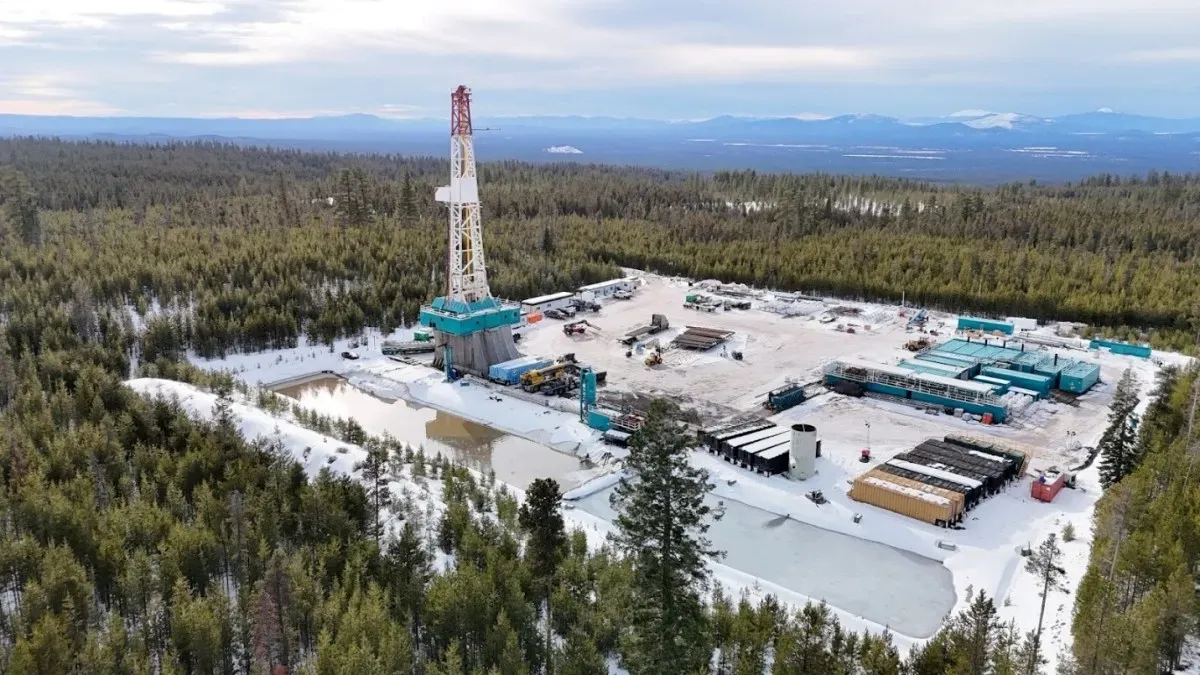
Mazama Energy has made a breakthrough in geothermal energy drilling technology, tackling two major obstacles simultaneously.
Drilling deep into the earth to harness geothermal energy is a challenging task due to the immense heat generated by the process, which can damage equipment and hinder progress. On the other hand, rapid drilling also poses problems as it generates excessive heat that compromises efficiency. Mazama Energy has developed a solution to address these issues with its new technology, Carbon Chill.
Carbon Chill uses carbon dioxide to cool the drill bit and transport cuttings to the surface, enabling faster and deeper drilling without compromising equipment integrity. This innovative approach allows for higher rates of penetration, according to Sriram Vasantharajan, co-founder and CEO of Mazama Energy. "Our rate of penetration increased 20% over the already very high rates we were achieving," he said.
The cost savings from reduced drill time can be substantial, considering that drilling accounts for a significant portion, around 25-30%, of the total expenses associated with building a power plant.
Mazama Energy has been working tirelessly for years to tackle one of geothermal's most significant challenges: drilling efficiency. The company made headlines in October 2025 when it successfully drilled a well in Oregon that reached an astonishing temperature of 629˚ F (331˚ C). More recently, Mazama's drilling efforts have surpassed even this impressive milestone, with temperatures exceeding 700˚ C.
The startup's innovative approach to geothermal energy aims to prove its viability as a major player in the electricity market. To achieve this goal, Mazama is developing a cutting-edge carbon dioxide-based cooling technology that could revolutionize the industry. This technology has the potential to unlock new possibilities for harnessing geothermal energy from super-hot rock.
The potential of geothermal energy is vast and far-reaching, with estimates suggesting it could generate between 26.5 to 57 terawatts of electricity in the United States alone. If just a small fraction of this potential were tapped, it would have a significant impact on the country's peak generating capacity. Companies like Google and Meta are already exploring geothermal energy as a viable option.
Geothermal experts believe that super-hot rock holds the key to improving drilling efficiency. When temperatures exceed 752˚ F (400˚ C), water enters a unique state known as "supercritical," where it becomes a gaseous-like liquid capable of carrying significantly more energy than traditional geothermal wells. By harnessing this energy, developers can reduce the number of wells needed, leading to substantial cost savings.
The impact of reduced drilling time on overall costs cannot be overstated. With drilling accounting for a significant 25-30% of total expenses associated with building a power plant, even modest improvements in efficiency can lead to substantial cost savings. Mazama's innovative approach has the potential to transform the geothermal industry and unlock new opportunities for sustainable energy production.
The limitations of traditional drilling methods in accessing geothermal heat are well-documented. One major challenge is managing the high temperatures encountered during drilling, which can cause electronics to fail. Mud, a mixture of water and other compounds used to cool the drill bit and clear cuttings from the borehole, has its own temperature limits.
When mud reaches its boiling point, it becomes ineffective in cooling the electronics. This forces geothermal drillers to rely on expensive high-temperature-rated electronics that are often prohibitively costly. According to Vasantharajan, such components would be impractical for widespread use in the industry.
Mazama Energy has developed an innovative solution to this problem by using liquid carbon dioxide as a coolant. The CO2 is injected down the center of the drill string and heated by the surrounding rock, causing it to become supercritical. This state allows the gas to expand rapidly through a specially designed valve, cooling the electronics and drill bit in the process.
The use of carbon dioxide cooling technology has been described by Vasantharajan as a binary solution, without such technologies, drilling at high temperatures would be impossible. This is particularly relevant for horizontal wells drilled into super hot rock formations.
Next year, Mazama aims to complete a single well capable of generating up to 15 megawatts of electricity. The company's plans have been bolstered by recent capital injection, which will enable it to drill more wells deeper and further develop its innovative technology.
Mazama Energy's ambitious plans are gaining momentum as it pushes to commercialize super-hot rock geothermal energy.
The company is making significant strides in addressing one of the biggest challenges facing the geothermal industry: drilling deep enough into hot rocks to harness their thermal energy efficiently. By developing innovative technologies, Mazama Energy aims to overcome this hurdle and unlock the vast potential of geothermal energy.
Recent capital injection has provided a crucial boost to the company's efforts, enabling it to expand its operations and further develop its cutting-edge technology. This investment will allow Mazama Energy to drill more wells and explore new areas, paving the way for widespread adoption of super-hot rock geothermal energy.
As Mazama Energy continues to drive progress in this field, the prospect of a commercial-scale geothermal industry is becoming increasingly tangible. The company's vision for a sustainable future is starting to take shape, with the promise of clean energy and reduced greenhouse gas emissions on the horizon.
Mazama Energy's innovative approach is addressing one of geothermal energy's most significant challenges: the high cost and complexity of drilling deep wells. The company's solution involves using advanced robotics and artificial intelligence to optimize the drilling process.
The benefits of this technology are already being felt, with potential for reduced greenhouse gas emissions and increased access to clean energy on the horizon. Mazama Energy's vision is taking shape as they push forward with their sustainable future plans. This pioneering work has far-reaching implications for the geothermal industry.
Facts based on reporting originally published by TechCrunch.
You may republish this story, in full or in part, if you credit Noti Group and link to it (licence CC BY 4.0). Photos are not included.