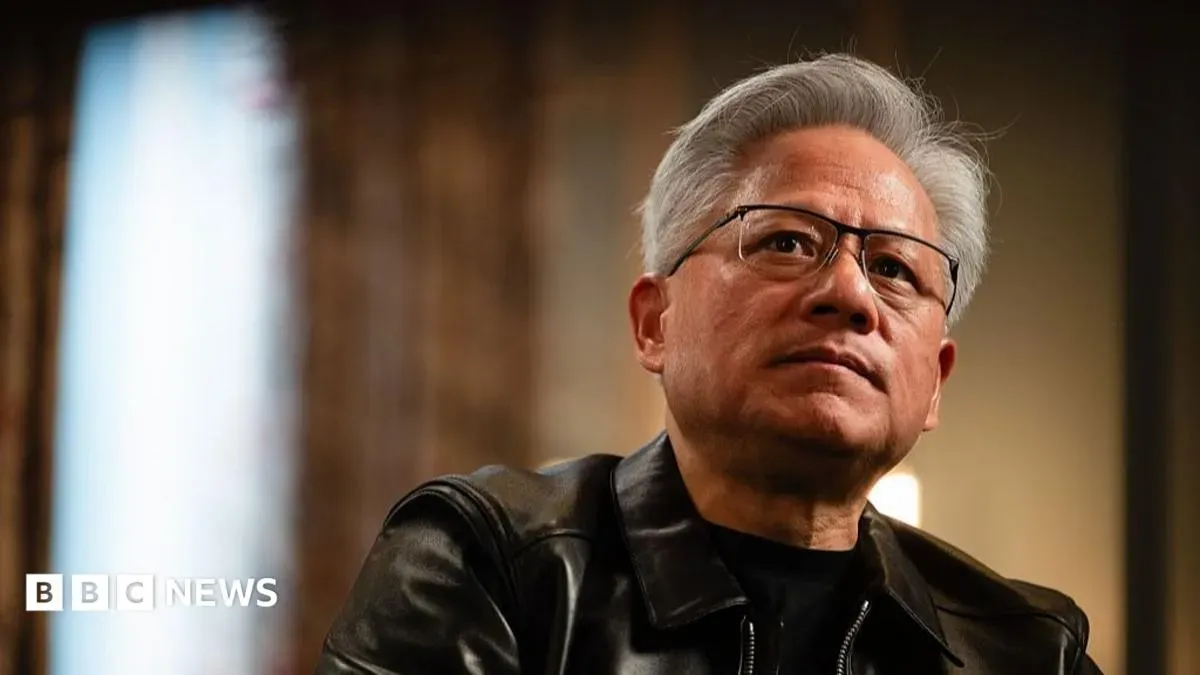



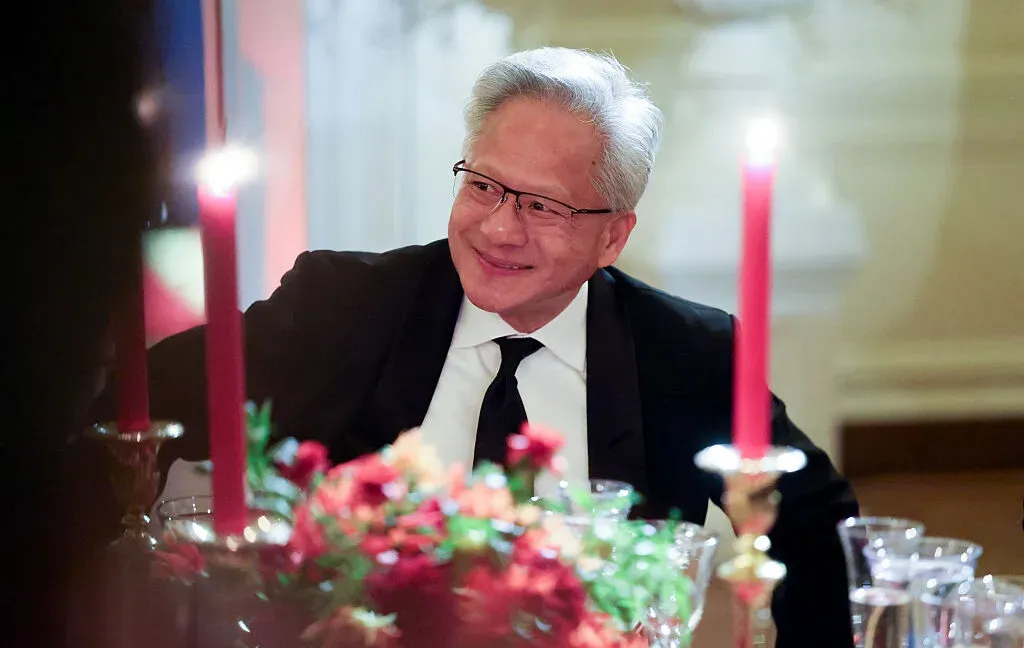


Nvidia's CEO Jensen Huang Faces Pressure Amid Allegations of Extramarital Affair
Jensen Huang is facing mounting pressure following an explosive report detailing his alleged extramarital affair with two women.
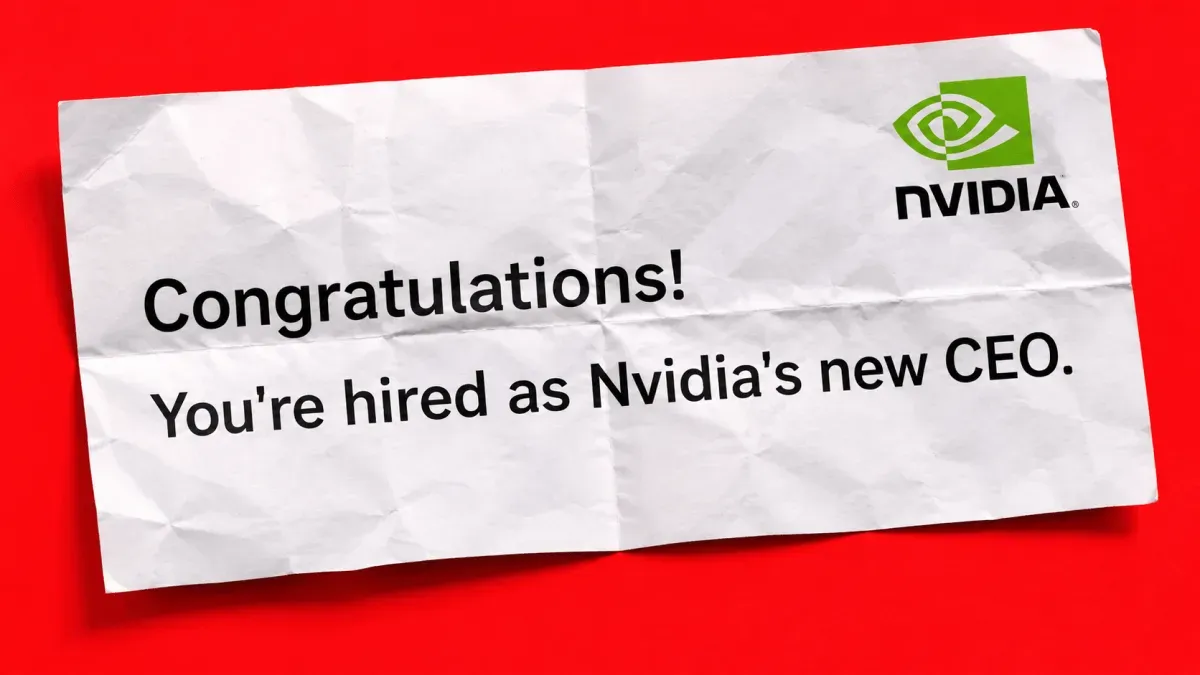
Nvidia's CEO Jensen Huang is facing mounting pressure following an explosive report detailing his alleged extramarital affair with two women. The situation has led to speculation about who could replace him as leader of the company.
The odds of Huang surviving the week are low at 30%, according to market predictions. Despite building one of the world's most valuable and powerful companies, he is now facing intense scrutiny over his personal conduct.
Huang's alleged affair has raised questions about his judgment and ability to lead the company. According to reports, he may have had an affair with either Alice Huang, a Chinese executive suspected of spying for her country, or Kimberly Powell, an Nvidia executive who reports directly to him.
The company's board members, who are likely to be impacted by any changes in leadership, may not cut ties with Huang entirely. They could potentially keep him on as chairman, a role that does not currently exist at the company.
As the situation unfolds, attention is turning to potential successors for Huang's position. While his direct reports will likely get closer consideration, others are also being mentioned as possible candidates in speculation about who might take over if he were to step down or be removed from his post.
The AMD CEO Lisa Su has been mentioned as a possible successor to Jensen Huang in recent speculation about who might take over at Nvidia if he were to step down or be removed from his post. However, it is unclear why she would leave her job as head of a major rival chipmaker, given the benefits that could come to her company while Nvidia is distracted by ongoing investigations and congressional briefings.
Su's company stands to gain from every day that Nvidia spends dealing with these issues, which are likely to create mini-dramas for the company. It may be in Su's best interest to send a friendly note and keep her current position rather than taking on the challenges of running a major tech firm like Nvidia. Her departure would also give her the opportunity to focus on growing AMD.
Another name that has been floated as a potential successor is Eric Schmidt, who ran Google from 2001 to 2011. He now heads the rocket company Relativity Space and has experience in chips, software, government, and rockets. According to Jeffrey Sonnenfeld, senior associate dean for leadership studies at the Yale School of Management, Schmidt could "parachute in tomorrow and do a very good job."
However, it is worth noting that Schmidt's own personal life may be an obstacle to his taking on a role like this one. His past extramarital dalliances have been well-publicized, which could make it difficult for him to clear the board of any potential conflicts or distractions.
Intel CEO Lip-Bu Tan has also been mentioned as a possible candidate. With Intel's recent financial struggles and its reliance on PC chips that are being hurt by the memory-chip shortage caused by the AI boom, Tan may be looking for a soft landing. A move to Nvidia could be seen as an escape hatch from these challenges.
Tan's company is currently facing significant headwinds, with a 20% drop in stock price following a warning about its fourth-quarter results. With Intel's business being heavily impacted by the AI boom and related shortages, Tan may see a move to Nvidia as an attractive option for his own career.
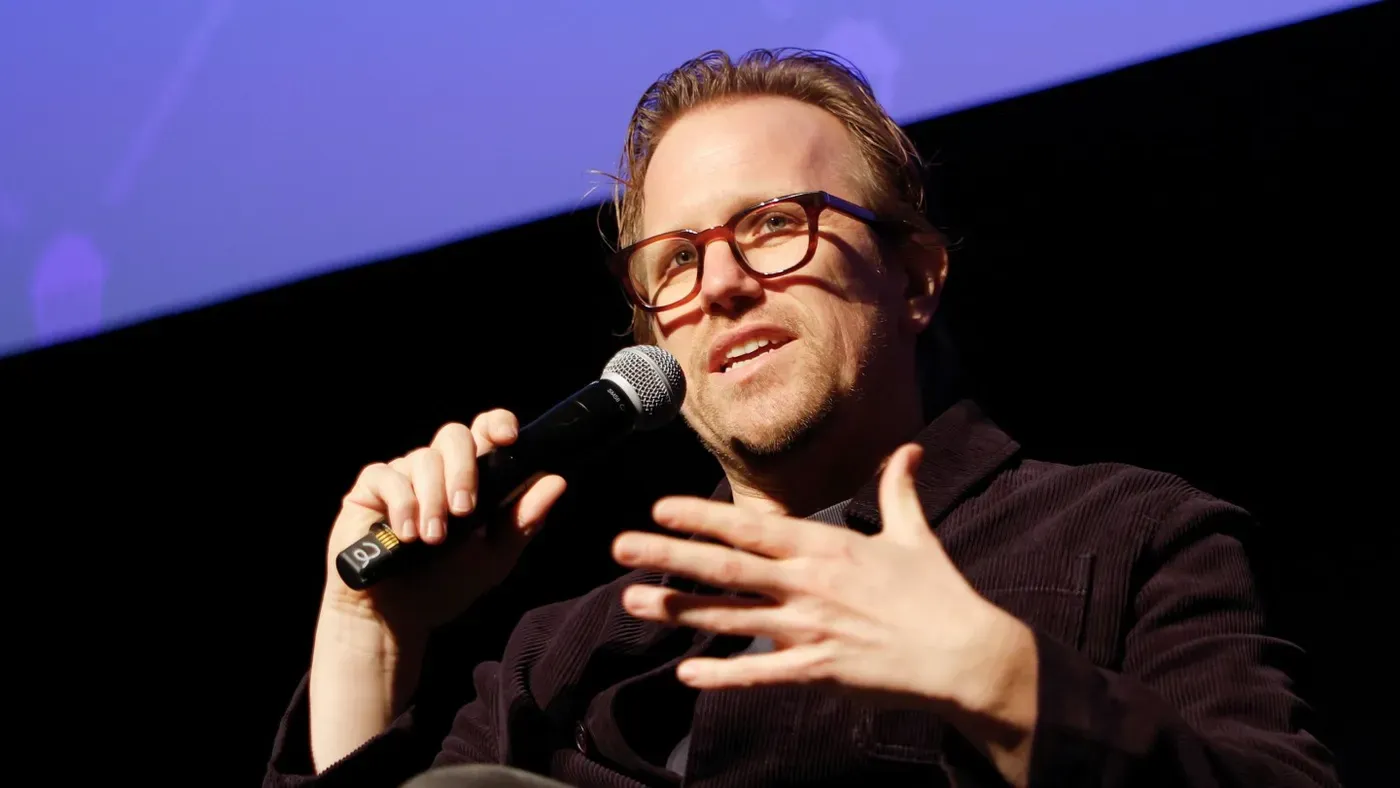
Bret Taylor's impressive resume makes him a strong contender to succeed Jensen Huang at Nvidia. As the co-creator of Google Maps and former CTO of Facebook, he has a proven track record in Silicon Valley. His current role as board chair of OpenAI, following his tenure on Twitter's board, further underscores his expertise in the AI space.
Taylor's extensive connections in the industry would undoubtedly be an asset to Nvidia. He likely knows many of the company's key customers and partners, which could help him navigate the complex landscape of the tech industry. His ability to remain composed under pressure has made him a go-to figure for companies seeking stability and guidance.
Ian Buck, Nvidia's VP who helped develop CUDA, is another potential candidate to succeed Huang. As a Stanford PhD, he brings a high level of technical expertise to the table. Analysts and former employees have mentioned him as a possible successor, although his chances are not considered particularly strong according to some estimates.
Andrew Bell, Nvidia's senior vice president of hardware engineering, has been quietly building a reputation within the company over the past 25 years. Arriving as a fresh Cornell grad, he has consistently risen through the ranks and now reports directly to Huang. His extensive experience in chip design could make him an attractive choice for the top spot.
Nvidia CFO Colette Kress is often mentioned as a potential successor, but some analysts question whether she has the necessary qualities to lead the company as an innovator and visionary. Bell's technical background and Nvidia tenure, on the other hand, may give him an edge in this regard.
Lori Huang's background is notable given her connection to Jensen Huang. The two met while studying at Oregon State University, where they were lab partners. This means Lori has been working alongside Jensen since before Nvidia was established.
Her professional experience prior to raising their family includes a stint as a micro chip engineer at Silicon Graphics, during which she reportedly earned more than her husband. This achievement is particularly noteworthy given the common perception of women in engineering and tech roles.
Lori's current role involves co-leading the family trusts, indicating that she has significant financial management expertise. If continuity with Jensen's vision were a priority for Nvidia's board, Lori would be an intriguing choice to succeed him.
Her experience as a technical professional, combined with her understanding of the company's inner workings from years working alongside Jensen, make her a strong candidate in this hypothetical scenario.
The company's leadership structure would likely remain intact if Jensen were to step down, with a strong team in place to support any new CEO.
A hypothetical candidate could be someone who has experience working within the company, having served in key roles and demonstrating a deep understanding of its inner workings over time. This individual would bring a unique combination of technical expertise and industry knowledge to the position, making them a formidable contender for the role.
Facts based on reporting originally published by TechCrunch.
You may republish this story, in full or in part, if you credit Noti Group and link to it (licence CC BY 4.0). Photos are not included.