







Starship reaches orbit on 15th test flight
The launch marked a significant milestone in SpaceX's development of the Starship rocket, which has been in testing for over three years.
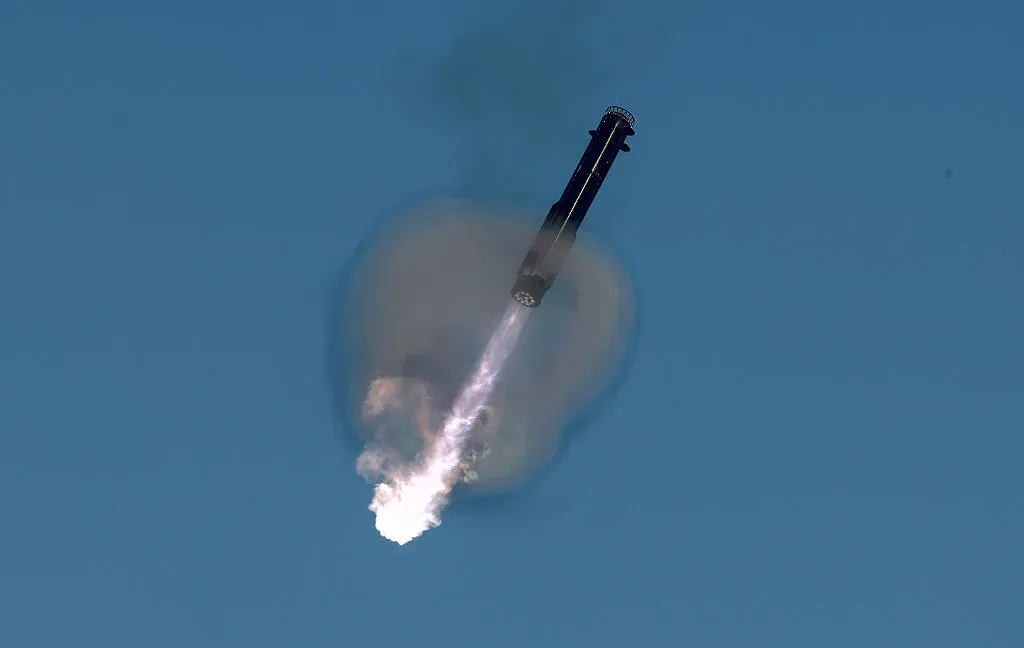
Starship flight 15 has successfully reached orbit in Texas, marking its 15th test flight in over three years of development.
The launch took place on Friday evening at Starbase in South Texas, where ideal conditions made for a flawless ascent into the atmosphere as the Sun set in the west. With calm atmospheric winds, the rocket's plume remained visible for several minutes after liftoff, providing a striking sight to observers. Typically, the weather in this region is not always favorable, with long and hot summers being a norm.
The first stage of the Starship rocket performed perfectly as it propelled itself toward space, releasing the upper stage over the Gulf of Mexico before igniting its Raptor engines to achieve orbit. This marks the second time SpaceX has successfully flown its Starship into low-Earth orbit using this configuration.
Upon completion of its mission, the first stage was supposed to return to Earth by descending directly onto the launch tower at Starbase for recovery and reuse. However, an unexpected issue arose that forced the vehicle to divert into the Gulf instead, resulting in a massive explosion visible from over 10 miles away.
The cause of this diversion is still unknown, but it did not seem to affect the success of the overall mission as the upper stage reached orbit according to plan. This development raises questions about what happened during the return phase and whether it was an intentional decision or an unexpected event that occurred in real-time.
The deployment of the 26 Starlink V3 satellites from the narrow door at the base of the spacecraft marked a significant milestone in Friday's launch. The satellites, equipped with solar panels that span 60 meters when fully deployed, successfully entered orbit and are now using onboard propulsion to reach their desired altitude.
The achievement makes Starship an operational, orbital rocket, surpassing any previously launched machine in terms of size and power. However, the focus has shifted from the successful deployment of satellites to the challenge of making Starship reusable and increasing its flight rate significantly.
SpaceX had initially aimed for a different outcome with the first part of Friday's mission. The company had hoped to return the first-stage booster, refurbish it, and fly it again. Unfortunately, this did not happen as planned, leaving room for improvement in future missions.
The weekend may bring another historic moment for SpaceX with the potential return of the Starship upper stage. This would be a groundbreaking achievement, as the company has never attempted to catch the vehicle's upper stage before.
The next steps for Starship will involve a series of crucial tests in orbit to ensure the vehicle's overall health and stability. These assessments are essential because Starship will soon be passing over populated areas, including parts of Mexico and the United States, before returning to its launch site at Starbase.
If these checks are successful, the upper stage is expected to touch down safely back on Earth around 3:15 pm local time in Texas, which corresponds to approximately 21:15 UTC. However, if any issues arise during this process, SpaceX has alternative plans to de-orbit the vehicle into an ocean, thereby preventing any potential damage or harm.
A successful recovery of Starship's upper stage would be a groundbreaking achievement for the company, providing valuable insights into its performance during re-entry and paving the way for rapid reusability. This milestone is significant because it would demonstrate SpaceX's capabilities in recovering the massive rocket, which is a crucial aspect of making Starship more efficient.
SpaceX faces one major challenge in achieving this goal: developing an effective heat shield that can protect the upper stage from the intense heat generated during its return through Earth's atmosphere. The tiles used on Starship must be both lightweight and resilient to meet the company's ambitious reusability goals.
The Starship's thermal protection system is being refined through experimentation with various tile designs and retention mechanisms. By incorporating learnings from previous test flights, SpaceX aims to minimize refurbishment needs between launches and ensure a higher level of durability.
To address heat incursion issues in the gaps between tiles, the company has implemented curved tile designs on a significant portion of the heat shield for this flight. These new tiles have demonstrated an ability to reduce heating in areas where tiles meet.
The combination of these design improvements is expected to contribute significantly to the Starship's overall performance and reusability goals, allowing it to be launched with greater frequency while minimizing maintenance requirements between flights, ultimately paving the way for more efficient space exploration.
Facts based on reporting originally published by Ars Technica.
You may republish this story, in full or in part, if you credit Noti Group and link to it (licence CC BY 4.0). Photos are not included.