




Iranian Director Majid Majidi Releases Latest Film Midday Meal
The film delves into the themes of food and its significance in times of scarcity, highlighting the struggles that people face when they are left without governmental support.
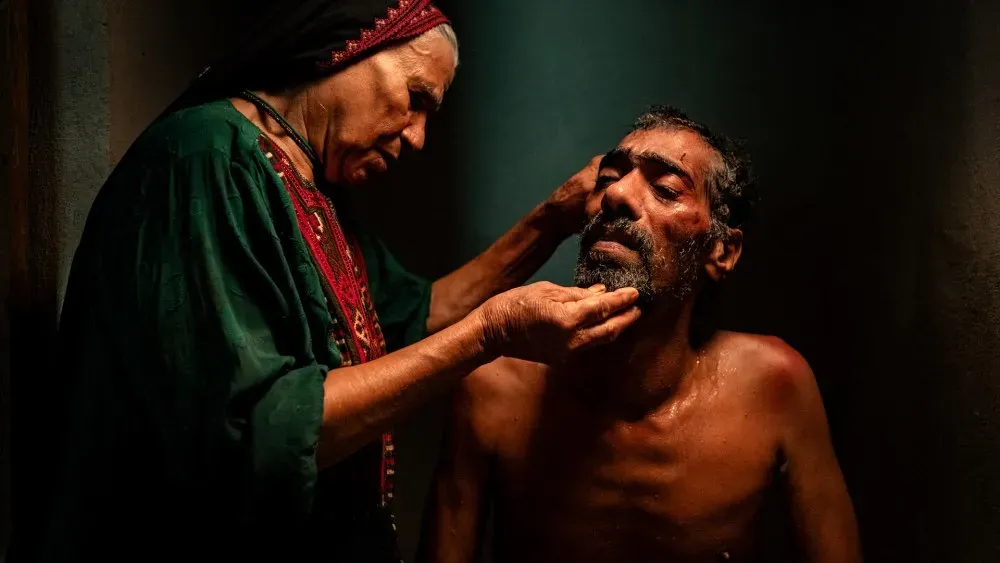
Iranian director Majid Majidi's latest film "Midday Meal has been released, showcasing a powerful performance from lead actor Mohammad Rahimi.
The movie delves into the themes of food and its significance in times of scarcity, but it is more than just about cooking or sustenance - it's about the fundamental right to have access to basic necessities. In this context, the film highlights the struggles that people face when they are left without governmental support. The story revolves around these pressing issues.
Set against the backdrop of an arid and inhospitable region in Iran, Midday Meal is a poignant portrayal of life in Goorankesh village. At its center is Davoud Soulan, played by Mohammad Rahimi, who is struggling to make ends meet as a schoolteacher.
Davoud's job hangs precariously in the balance due to the loss of his private benefactor, whose heirs are unwilling to continue their financial support. This development threatens not only Davoud but also the entire school he works at, which relies heavily on his provision of lunches for its students.
The film's narrative is driven by the consequences of this situation, as Davoud fights against time to find a solution and prevent the closure of the school within an estimated two weeks.
The complexities of Soulan's situation are multifaceted. He has accepted that his relationship with his students is transactional, acknowledging that it's hard to fault children for being hungry and difficult not to be moved by desperate measures.
However, the narrative suggests that Soulan's actions are not simply driven by altruism. By living in the school building and moonlighting as a smuggler and fuel seller, he is making moral compromises to keep the school running.
The conflict between pragmatism and generosity begins on a small scale, with Soulan initially hesitant to accept children from other villages into his class. This reluctance escalates into anger when he perceives his mother's actions as potentially threatening the children's meals.
As desperation sets in, Soulan's actions become increasingly dubious. His motivations are called into question by one character, who wonders how much of what he does is charity and how much is driven by a desire for a guaranteed salary.
The tension between idealism and pragmatism is palpable as Soulan navigates the gray areas between doing good and doing whatever it takes to keep his school open.
The character's vulnerability is expertly balanced by Rahimi, who conveys Soulan's desperation through subtle expressions and body language. Majidi's direction adds to this tension, as he deliberately avoids revealing too much about Soulan's plans for the school.
The ambiguity surrounding Soulan's intentions creates a fascinating dynamic, making it difficult to determine whether his actions are driven by idealism or pragmatism. This nuanced approach is reflective of the character's conflicted nature, and Rahimi brings depth to this portrayal through subtle variations in tone and emotion.
Soulan's interactions with others reveal the complexity of his situation, particularly when he takes in a sick old man who falls into his care. This development raises questions about Soulan's motivations and whether he is capable of making tough decisions to ensure the school's survival.
The film critiques the systemic failures that have led to the community's downfall, highlighting the lack of governmental support and the prevalence of corruption. Encounters with representatives of the law only serve to exacerbate this frustration, with one officer chastising Soulan for being a bad role model for his students.
Majidi continues to test the limits of Soulan's sentiments throughout Midday Meal, often achieving great effect in doing so. The tension between idealism and pragmatism remains palpable as Soulan navigates the gray areas between doing good and doing whatever it takes to keep his school open.
The emotional toll of Soulan's desperate acts to provide for his school is palpable throughout Majidi's Midday Meal. The Iranian drama masterfully captures the cold reality of institutions failing to make basic decisions that could benefit those in need. This sense of frustration and desperation seeps into every scene, stripping away any potential didacticism.
However, amidst the bleakness, moments of kindness and redemption emerge, softening the tone of the film. Even the school inspector, initially seen as a stern figure, reveals a compassionate side when he witnesses Soulan's charity. This nuanced portrayal adds complexity to the narrative, making it harder for viewers to draw clear moral lines.
Ultimately, Midday Meal" presents no easy answers, instead opting for a balanced exploration of the gray areas between idealism and pragmatism. The film leaves its audience with a sense of ambiguity, mirroring the difficult choices that Soulan faces in his quest to keep his school running.
Facts based on reporting originally published by Variety.
You may republish this story, in full or in part, if you credit Noti Group and link to it (licence CC BY 4.0). Photos are not included.