







US Army Halts Plans to Destroy Lead Azide Barrels Citing Public Safety Concerns
The US Army has put on hold plans to destroy 68 deteriorating barrels of lead azide, citing concerns over public safety and awareness.
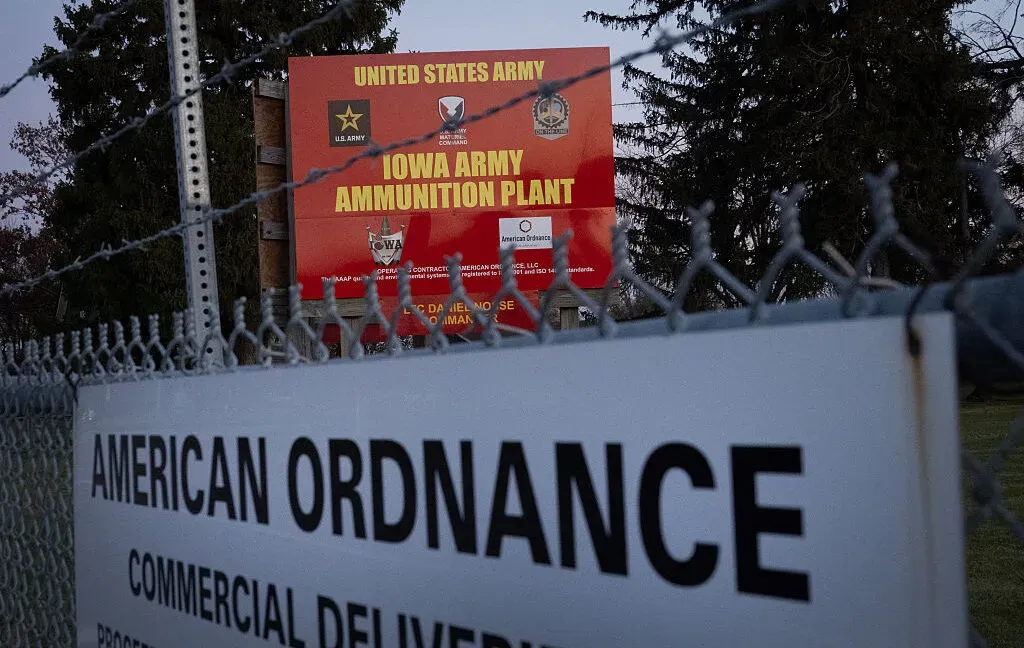
The US Army has put on hold plans to destroy 68 deteriorating barrels of lead azide, citing concerns over public safety and awareness.
Earlier this week, the Army had announced its intention to detonate the toxic substance in a controlled explosion, which would have released neurotoxic lead into the air. The plume was predicted to travel up to 100 miles north of the Army's installation in Middletown, Iowa. This raised alarms among local residents who were only recently informed about the plans.
The Army had initially planned to carry out two simultaneous detonations on Friday at noon. However, in a sudden reversal, officials have decided to delay the operation until November 23. The extra time is intended to allow for more effective communication with state and local authorities as well as the public at large.
Acting Secretary of the Army Adam Telle acknowledged that timely public disclosure was essential in maintaining trust. He emphasized that the Army would actively engage with regional officials to disseminate accurate information about the situation. This effort aims to alleviate concerns among Iowans who have been caught off guard by the news.
Telle stated that further delays were not feasible due to the precarious state of the lead azide. The material is extremely unstable and poses a significant risk if left unchecked. He claimed that the Army could only wait until Monday before proceeding with the detonation, which would coincide with an expected drop in temperature that could compromise the substance's stability.
The Army had initially anticipated destroying the barrels in a single operation. However, the decision to postpone the plan has introduced uncertainty about the timing and execution of the procedure.
The US military has identified deteriorating stockpiles of lead azide at an Iowa facility, where the compound's hazardous properties are becoming increasingly unstable due to temperature fluctuations.
Temperature changes can cause lead azide to dissolve into a mixture of water and ethanol within specialized containers, only to recrystallize into sharp needles or platelets that are extremely sensitive to physical shock. This process has led the Army to conclude that the current state is "catastrophically hazardous," posing a significant risk to personnel handling the material.
Any attempt to move the lead azide for safer detonation would introduce unacceptable safety risks and increase the likelihood of an accidental explosion. The military's environmental assessment emphasizes this point, warning that even slight physical shocks or vibrations could trigger a catastrophic event.
The Army initially explored neutralizing the lead azide using a chemical reagent, but ultimately ruled out this option due to concerns over prolonged handling time and increased risk of detonation during processing.
The Army's plan to detonate the "catastrophically hazardous" lead azide has been put on hold due to concerns over its potential impact on local agriculture and facility operations. The fall season is seen as an ideal time for the detonation, with reduced thermal cycling expected to minimize disruptions.
To mitigate the effects of the explosion, the Army plans to use a combination of physical barriers and environmental controls. Lime-fill and sand-fill barriers will be placed around each of the Explosive Composition 2 (ECM) containers, while water cannons and misters will be used to control lead dust in the aftermath of the blast.
The Army has also taken into account the weather conditions for the scheduled detonation on Friday. Modeling suggests that high winds could disperse the plume over a wider area, increasing exposure to hazardous levels of lead dust. Conversely, a thermal inversion could trap the plume in one place, exacerbating its effects.
The Environmental Protection Agency (EPA) has released an emergency permit for the detonation, outlining the planned mitigation measures and expected outcomes. According to the permit, the explosion is likely to deposit lead dust at levels between 5 and 100 micrograms per square foot over a 25-mile stretch, with some areas exceeding hazardous thresholds.
Airborne lead levels are also expected to be significant, reaching nearly 100 miles north of the detonation site. The EPA standard for lead levels in the air is 0.15 micrograms per cubic meter, and the predicted airborne lead level is slightly above this threshold.
The Army's plan to detonate lead azide at a military facility in Iowa has sparked concerns about the potential health risks for residents in the surrounding area. To minimize exposure, the Army advised local residents to stay indoors with windows closed and consider leaving the immediate area if necessary.
Local fire departments have also taken steps to mitigate the impact of the detonation, planning to hose down children's playgrounds to remove any lead dust that may accumulate on surfaces. Schools in the affected area are taking a proactive approach by closing temporarily to minimize exposure to the toxic substance.
The Army had initially planned to hold an open-house event on October 15 to inform the public about the detonations and their plans for mitigating the environmental impact. However, many residents in Iowa were caught off guard when they learned of the detonation plans this week, sparking concerns about transparency and communication from the military authorities.
The Army's environmental risk assessment highlights the potential long-term effects of lead exposure, particularly for vulnerable groups such as children and pregnant people. The neurotoxic effects of lead can have serious consequences, including damage to brain development and function.
Questions are being raised about how the lead azide deteriorated to a hazardous condition and whether the Army explored safer alternatives before deciding on detonation. State leaders and residents are seeking answers on these issues, highlighting concerns about the Army's handling of the situation and its commitment to public safety.
The controversy surrounding the Army's plan to detonate lead azide in Iowa has sparked widespread concern among state leaders and residents. Iowa's governor-elect, Rob Sand, took to social media to express his disappointment at what he called an "unacceptable lack of communication" from the authorities.
Meanwhile, neighboring Illinois is also weighing in on the issue. Governor JB Pritzker posted on social media that his state shares the same concerns as Iowa about the potential health and safety risks associated with the detonation. He echoed the sentiment expressed by other leaders that the Army must provide clear answers to these pressing questions.
In response to growing public anxiety, environmental groups have filed a lawsuit seeking to halt the planned detonation. They argue that the Environmental Protection Agency (EPA) did not adequately consider safer alternatives and that the timeline for the operation was excessively rushed. The suit claims that this lack of consideration for less hazardous options could lead to widespread dispersal of toxic lead.
In an effort to quell concerns, a joint statement from the Army, Department of Health and Human Services, and EPA has been released. According to the statement, all involved agencies have been meticulously planning for the event since March, with extreme mitigation measures in place to minimize disruptions and ensure public safety. The statement also reaffirms the administration's commitment to engaging with state officials and the broader community as updates become available.
The Army's decision to delay the detonation has sparked both relief and skepticism among residents. While some see it as a positive step towards addressing their concerns, others remain unconvinced that their voices are being heard or their safety is being prioritized.
The EPA's collaboration with Iowa's lead azide project was hailed by Zeldin as one of its top environmental achievements in June, ranking it number 60 on a list that included critical support to an army ammunition plant.
This work involved deploying technical experts to handle 68 deteriorating drums of explosive lead azide, highlighting the agency's commitment to protecting American families.
Facts based on reporting originally published by Ars Technica.
You may republish this story, in full or in part, if you credit Noti Group and link to it (licence CC BY 4.0). Photos are not included.