






SpaceX Rideshare Mission Demonstrates New Satellite-Based Sensor Technology
A new satellite-based sensor has been successfully demonstrated to track other spacecraft that may be hiding their maneuvers in Earth's shadow.
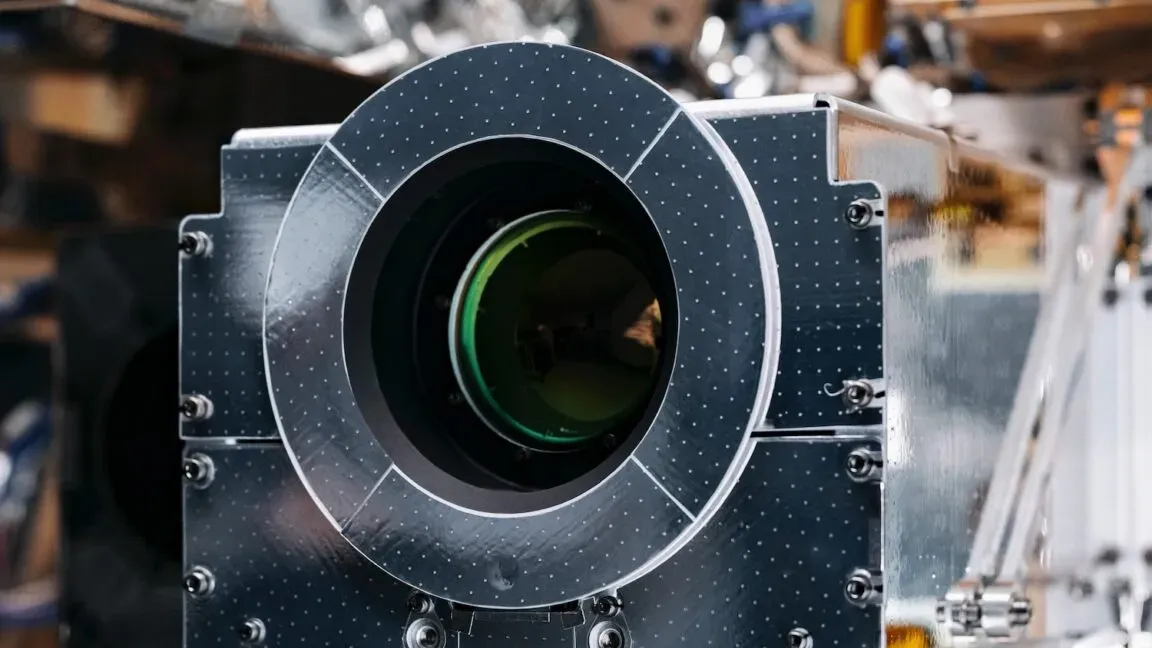
A new satellite-based sensor has been successfully demonstrated to track other spacecraft that may be hiding their maneuvers in Earth's shadow. The technology was developed by Anduril Industries using its own internal funding and launched on a SpaceX rideshare mission in July as part of a tech demo package.
The Anduril-216 satellite, which orbits about 590 kilometers above the Earth, spends around one-third of each orbit in darkness. This allows its long-wave infrared space sensor to shine, taking advantage of the low light conditions to detect other objects in orbit. The sensor's unique ability to operate in full dark is a significant advancement for tracking and monitoring spacecraft.
The company's senior vice president of engineering, Gokul Subramanian, highlighted the significance of this technology, saying that it allows for imagery in long-wave [infrared] with huge dynamic range. This means the sensor can capture a wide range of temperatures without being blocked by sunlight. As a result, Anduril-216's infrared imager is able to detect and track other spacecraft even when they are not visible.
The successful demonstration of this technology marks an important milestone for Anduril Industries as it continues to develop its capabilities in satellite-based sensing and tracking.
The development of satellite-tracking technology has become increasingly important for both military and commercial purposes, with a network of radars and optical sensors on the ground and in space being used to monitor satellite traffic.
One of the key challenges facing space traffic monitors is the "orbital night" period, when satellites fly into Earth's shadow and temporarily lose visibility. This makes it difficult to track spacecraft that perform maneuvers during this time.
To address this gap, Anduril Industries has developed a long-wave infrared space sensor, which can detect heat signatures from satellites in the dark. This technology is being used to enhance the ability of the US military to monitor satellite traffic and identify potential threats.
The successful demonstration of this technology will help close the gap in optical tracking during orbital night periods, allowing for more accurate monitoring of satellite movements and a reduced risk of collisions.
The long-wave infrared sensor developed by Anduril is capable of detecting heat signatures from spacecraft even during periods of eclipse, providing valuable information on satellite movements. This technology has significant implications for orbital tracking and collision avoidance. The sensor's ability to detect heat signatures is a result of the imaging technology used in Anduril's autonomous weapons.
Anduril's engineers have successfully adapted this technology for use in space by incorporating it into a new infrared space sensor. A single image released by the company showcases the sensor's capabilities, providing an infrared view of the Moon above Earth's horizon. This image offers a glimpse into the potential of Anduril's long-wave infrared capability.
The sensor can perform both unresolved and resolved imagery, allowing for detailed inspection of satellites in orbit if they fly close enough. While Anduril is currently focusing on optimizing its tracking sensor for low-Earth orbit, it has the potential to be used in other orbits and eventually in cislunar space near the Moon.
Anduril's collaboration with Apex Space, a satellite-manufacturing startup, has resulted in the development of the spacecraft platform for Anduril-216. This partnership underscores Anduril's strategy of leveraging third-party satellite platforms rather than investing in its own production line.
The integration of sensor and compute modules with these third-party platforms enables Anduril to perform a range of different missions in space, expanding the capabilities of its technology.
Anduril's first satellite has demonstrated its ability to detect and track adversaries even during periods of orbital night.
The compute module on Anduril-216 is capable of fusing data from various sensors, such as infrared or visible imagers, to generate tracking solutions autonomously without human intervention. This advanced capability enables the satellite to maintain custody over targets in space.
Anduril's focus remains on providing space domain awareness data for sale to the US military, rather than offering entire satellites or sensors as a merchant supplier.
Facts based on reporting originally published by Ars Technica.
You may republish this story, in full or in part, if you credit Noti Group and link to it (licence CC BY 4.0). Photos are not included.