






Climate Change Affects South Africa's Western Cape Wine Region
Researchers studying environmental change in South Africa's wine-producing regions found that 107 vineyards are implementing sustainable land stewardship measures.
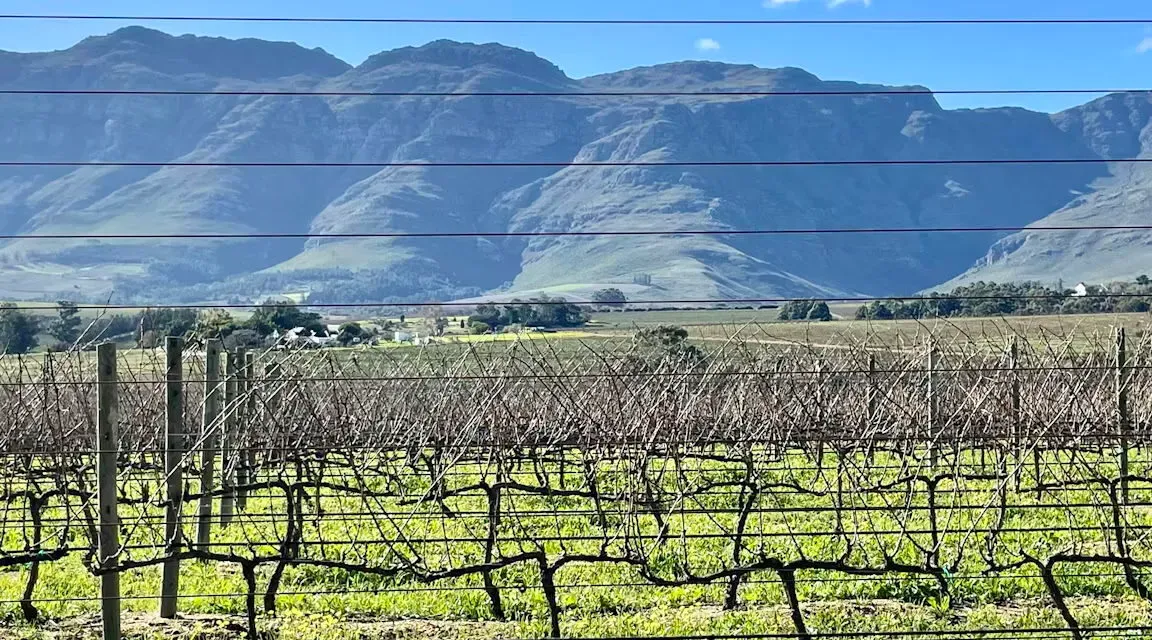
South Africa's Western Cape region is home to over 500 vineyards that produce around 90 percent of the country's wine, but winemakers are facing a growing challenge due to drought, excessive heat, and erratic rainfall.
The region's climate has changed dramatically in recent decades, with temperatures rising by as much as two times faster than the global average. This increase in temperature has been accompanied by more intense storms, which have further strained vineyards already under stress from the changing climate.
In the late 2010s, severe drought hit the Western Cape for three consecutive years, severely impacting grape production and placing winemakers under immense pressure to adapt. The situation was dire, with many vineyards struggling to cope with the extreme conditions.
As part of a larger study on environmental change, researchers from various fields have been investigating how farmers in South Africa's wine-producing regions are responding to these pressures. To gain insight into their strategies, they conducted interviews with growers, conservation practitioners, and industry experts in the Western Cape.
The team analyzed the practices used by 107 vineyards, approximately 20 percent of the total number in the region, which were found to be implementing sustainable land stewardship measures as part of their adaptation efforts.
Vineyards in South Africa's Western Cape are finding that adopting sustainable practices can have a positive impact on their business operations. These producers are recognizing the importance of long-term stewardship and conservation of soil and wildlife habitats to ensure the success of their vineyards.
The region is home to the Cape Floral Region, a global hotspot for biodiversity. This unique biome is characterized by fynbos, which contains thousands of endemic plant species that can be found nowhere else on Earth. Among these species are proteas, ericas, and restios, all of which play a vital role in maintaining the region's ecological balance.
Sustainability certifications such as World Wildlife Fund Conservation Champions have encouraged vineyards to prioritize biodiversity conservation. Many growers use these certifications to enhance their wine's marketability, but they have also come to appreciate the benefits that conservation brings to their vineyards. Rather than viewing conservation as a hindrance to production, they see it as an essential component of their business.
The Integrated Production of Wine certification system, established in 1998 by the South African wine industry and researchers, has become the standard for many vineyards in the region. This system sets standards for pesticide use, water management, wastewater treatment, and environmental stewardship, with independent auditing to ensure compliance.
Restoring native vegetation along waterways has become a common practice among winemakers seeking to manage their vineyards' water supplies effectively. By removing alien species and reducing erosion, growers aim to protect wetlands and rivers, which in turn helps improve water retention in the soil.
This approach is part of a broader effort to enhance the overall resilience of the landscape in the face of increasingly extreme climate conditions. Research has shown that healthy natural systems play a crucial role in maintaining water supplies, making it an essential strategy for winemakers to adopt.
To boost their soil's health, some growers have started planting cover crops between vine rows. These include legumes, cereals like oats and rye, and brassicas such as radish and mustard. By incorporating these crops into their farming practices, growers can improve soil structure and increase organic matter in the soil.
Growers widely use a range of techniques to enhance soil health, including cover crops, compost, mulching, and others. However, maintaining cover crops requires careful management to ensure they don't become a haven for pests. Research suggests that when done correctly, cover crops can reduce erosion and increase water retention and nutrient levels in the soil.
A growing number of winemakers are also adopting more targeted approaches to pest control, rather than relying on chemical pesticides. By monitoring pest populations closely, growers can respond with targeted measures, reducing their reliance on chemicals.
Some producers have taken a step further by creating habitats that support natural pest predators and beneficial insects. This approach not only reduces the overall disease risk but also contributes to a more balanced ecosystem in the vineyard.
A significant shift is underway in South Africa's wine industry, where sustainable practices are increasingly being adopted by growers as a long-term investment strategy for their businesses.
These approaches focus on prevention and ecological balance rather than just treating problems after they arise, which is a more reactive approach to managing vineyards.
Healthy soils, water conservation, and reduced vulnerability to drought and disease are essential for keeping vineyards productive in the face of rising costs and market uncertainty.
Many growers have diversified their business models or switched crops to make their businesses more resilient to hotter, drier conditions, as concerns about climate pressures and profitability continue to rise.
The area under vineyard production in South Africa has decreased, but this shift is also an opportunity for farmers around the world to recognize the interconnectedness of nature and production.
The shift towards more sustainable wine production practices has led to increased awareness among winemakers about the interconnectedness of nature and their business operations. This realization is prompting farmers to adopt conservation methods that not only reduce environmental impact but also improve yields and enhance product quality.
As a result, vineyard production areas are being reevaluated, with some regions seeing decreases in the area under vineyard production, while others are capitalizing on this trend by investing in sustainable practices. By doing so, farmers around the world are recognizing that conservation can be a valuable business strategy, ultimately benefiting both their operations and the environment.
Facts based on reporting originally published by Ars Technica.
You may republish this story, in full or in part, if you credit Noti Group and link to it (licence CC BY 4.0). Photos are not included.