







Nationwide Ground Stop Implemented Due to Safety Concerns
Flights across the US came to a near-halt on Friday afternoon after the Federal Aviation Administration (FAA) implemented a nationwide ground stop due to safety concerns.
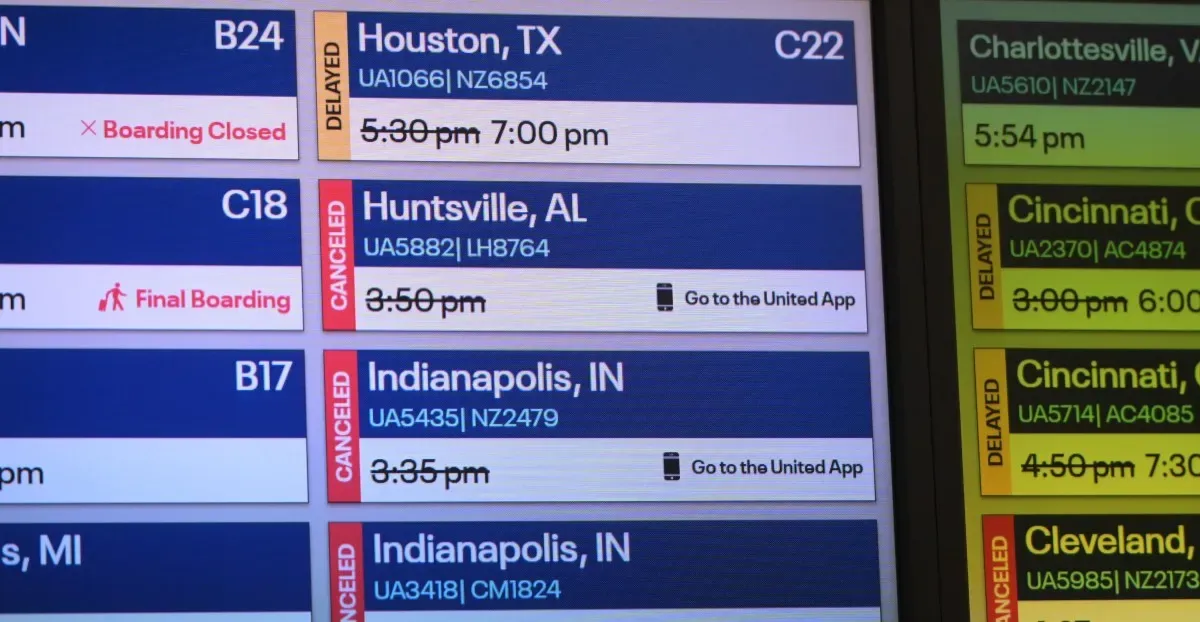
Flights across the US came to a near-halt on Friday afternoon after the Federal Aviation Administration (FAA) implemented a nationwide ground stop due to safety concerns.
The FAA announced the temporary halt at 3:44PM ET, citing "extraordinary circumstances" that necessitated the precautionary measure. Planes already airborne were given clearance to land safely. The decision was made in response to a significant disruption affecting air traffic control communications.
According to an FAA spokesperson, the issue arose from a telecommunications outage caused by overloaded analog telecom devices at several facilities. These devices, which manage data transmission between switches and routers, began experiencing inconsistencies due to excessive data flow. This led to a breakdown in communication systems essential for coordinating flights.
The resulting disruption had far-reaching implications, with hundreds of flights facing delays or cancellations as a result. Many passengers were left stranded, awaiting updates on when their journeys could resume.
The number of delayed flights has reached 9,124 nationwide, while an additional 5,901 have been canceled, according to FlightAware's latest update at 8:39PM ET. The severity of the disruptions is evident in these numbers, which reflect the scope of the impact on air travel.
CNN reports that the previous nationwide ground stop occurred in 2023, lasting approximately 90 minutes due to a failure in the NOTAM system for pilots. This was also preceded by another major disruption following the terrorist attacks on September 11th, 2001. These past incidents highlight the complexity and vulnerability of air traffic control systems.
The FAA has acknowledged that it is investigating potential connections between the outage and the activation of the cloud-based AI SMART system on November 10th. According to reports from The Air Current's Jon Ostrower, the disruptions began with the Chicago air traffic control center before spreading to other facilities in Boston, Washington, New York, and Minneapolis.
The disruptions to air traffic control systems have caused problems for both radar and radio frequencies used by controllers and pilots. According to an unnamed source, the FAA is currently at a loss to explain what's causing these issues, with no clear answers in sight.
The situation was further complicated by reports that multiple facilities were affected, including Chicago, Boston, Washington, New York, and Minneapolis air traffic control centers. The stop has now been lifted, but the incident serves as a stark reminder of the complexities involved in maintaining safe and efficient air travel systems.
Facts based on reporting originally published by The Verge.
You may republish this story, in full or in part, if you credit Noti Group and link to it (licence CC BY 4.0). Photos are not included.