





Kalshi parts ways with Donald Trump Jr.
Kalshi has parted ways with Donald Trump Jr., who had been serving as an advisor to the platform since early 2025, due to a significant investment in Polymarket by his venture capital firm this past summer.
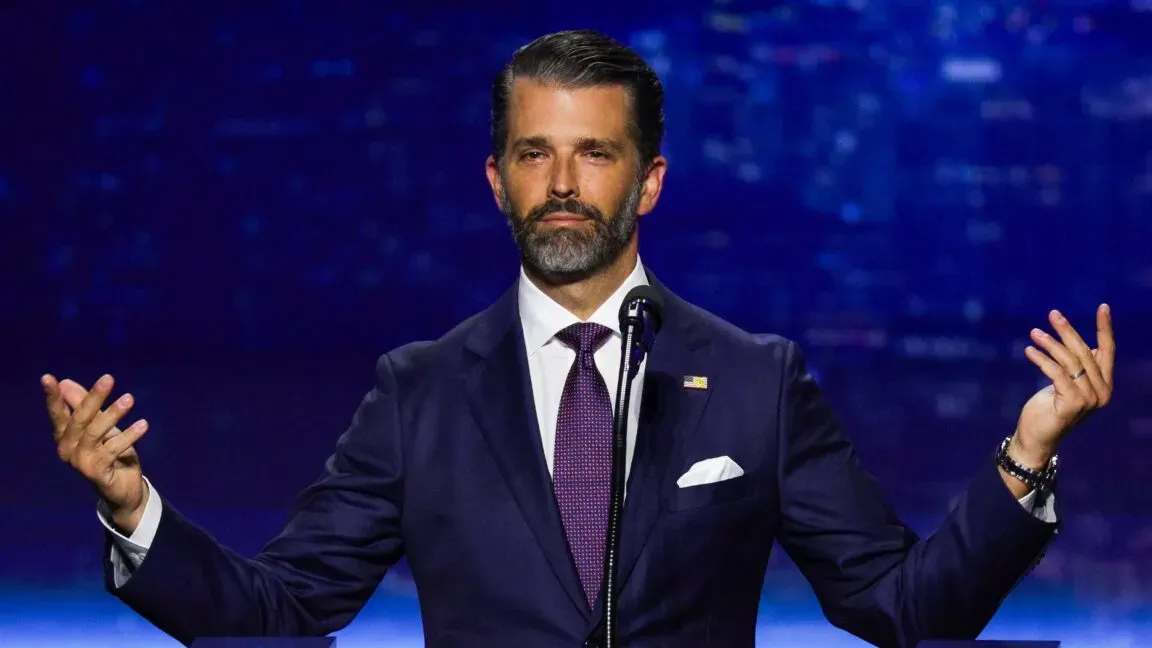
Kalshi has parted ways with Donald Trump Jr., who had been serving as an advisor to the prediction market platform since early 2025.
The decision comes after Trump's venture capital firm made a significant investment in Polymarket, Kalshi's main competitor, this past summer.
A statement from Kalshi acknowledged that the optics of the situation were not ideal and that the company was grateful for Trump Jr.'s contributions to marketing the platform to new customers.
Trump Jr. still maintains a financial stake in Kalshi, having been granted approximately $300,000 worth of equity in the company after joining as a strategic adviser nearly two years ago.
This grant of shares gave him a significant interest in the private company, which was valued at under $2 billion at the time but has since skyrocketed to over $22 billion following a recent funding round.
Kalshi's relationship with Don Jr. began to unravel this fall when the company reached out to discuss its increased investment in Polymarket, where he served as an advisory board member.
The situation had been brewing since August, when news of 1789's investment in Polymarket became public and raised questions about Kalshi's own involvement in prediction markets.
As a result of this permissive regulatory environment, prediction markets have experienced significant growth under the Trump administration. The Commodity Futures Exchange Commission (CFTC) has taken a hands-off approach to regulation, which has allowed companies like Kalshi to thrive.
Attorneys general from multiple states, however, have accused Kalshi of operating an illegal gambling operation and have filed lawsuits against the company in an attempt to block its activities.
Kalshi's CEO Tarek Mansour acknowledged that the relationship with Don Jr. was causing optics issues for the company. In a recent interview, Mansour stated that the decision to appoint him as strategic advisor was not political.
Mansour claimed that he and Trump Jr.'s association began as a marketing strategy when Kalshi was still a relatively small company and prediction markets were not well understood by the public.
The company's association with Donald Trump Jr. began to unravel after CEO Mansour acknowledged that the "optics weren't good.
Kalshi's partnership with Trump Jr. was initially touted as a strategic move to raise awareness about prediction markets. In a social media post announcing his role, Trump Jr. claimed that he had used Kalshi to predict election outcomes ahead of mainstream news outlets.
However, critics pointed out the potential for conflicts of interest given Trump Jr.'s family ties and the company's ambitions in the US market. Host Stephanie Ruhle questioned whether the partnership was transparent about regulatory matters.
Mansour clarified that Kalshi's focus had been on educating people about prediction markets rather than seeking policy or regulatory involvement from Trump Jr. The company sought to work with anyone who could help spread awareness, regardless of their political affiliation.
Trump Jr.'s influence and following were seen as key assets for Kalshi in promoting its platform. With 10 million Twitter followers, he was a valuable partner in getting the word out about prediction markets and their unique approach to forecasting outcomes.
Kalshi aimed to capitalize on Trump Jr.'s enthusiasm for direct communication by using social media platforms like Twitter to reach a wider audience and promote its products.
Kalshi's growth online was significantly influenced by Trump Jr.'s early advice on direct communication.
The company has utilized social media platforms like Twitter to reach a wider audience and promote its products, leveraging Trump Jr.'s enthusiasm for direct interaction.
A lobbying service provided by former US Senator Blanche Lincoln (D-Ark.) has been paid for by Kalshi since 2024. As a Democratic senator in 2010, Lincoln played a role in shaping the law that now regulates prediction markets and expressed reservations about using event contracts for sports gambling.
However, as a lobbyist for Kalshi, Lincoln supports event contracts based on sporting contest outcomes and opposes state regulation of prediction markets.
Trump Media and Technology Group announced plans last year to launch a Truth Predict" prediction market for Truth Social but appears to have scaled back this initiative.
The intersection of prediction markets and politics continues to blur as Kalshi's association with high-profile figures comes under scrutiny.
A development that has raised eyebrows is the departure of Donald Trump Jr. from his advisory role at Kalshi, reportedly due to concerns about optics. This decision follows a significant investment by Trump Jr.'s venture capital firm in Polymarket earlier this year, which also saw him take on an advisory position there.
The regulatory environment for prediction markets remains complex and contentious, with the CFTC pushing back against state attempts to impose stricter regulations. In a recent lawsuit, the agency sought to block Arkansas from regulating Kalshi, echoing similar cases filed in 10 other states.
Kalshi has faced setbacks in its efforts to operate outside of traditional gaming laws, with several US courts refusing to grant injunctions to block state gambling regulations. A recent victory for Louisiana Attorney General Liz Murrill saw a judge issue a temporary restraining order against the company and others operating in the state.
Murrill's statement on the matter was clear: "It's not complicated: if you aren't a licensed gaming operator, you aren't legal." She emphasized that judges across the country have consistently ruled that prediction markets constitute gambling, and attempts to circumvent regulations will not be tolerated.
The CFTC's ongoing fight against state-level regulation of prediction markets has significant implications for companies like Kalshi, which operate in a gray area between traditional gaming laws and emerging regulatory frameworks.
Kalshi's stance on regulation hinges on its classification of wagers as event contracts, a type of swap that it claims falls under federal jurisdiction alone. This assertion is built upon the company's argument that even seemingly identical sports bets qualify as such contracts.
The company has already secured a significant victory in the US Court of Appeals for the Third Circuit against New Jersey, but the state is now seeking to have this ruling overturned by the Supreme Court. If the high court takes up the case, Kalshi can expect strong support from the Trump administration.
Facts based on reporting originally published by Ars Technica.
You may republish this story, in full or in part, if you credit Noti Group and link to it (licence CC BY 4.0). Photos are not included.