




Federal judge to decide on Trump's Truth Social API fees
A federal judge will soon decide whether former President Donald Trump can charge up to $100,000 monthly for instant access to his social media posts on Truth Social, potentially marking a...
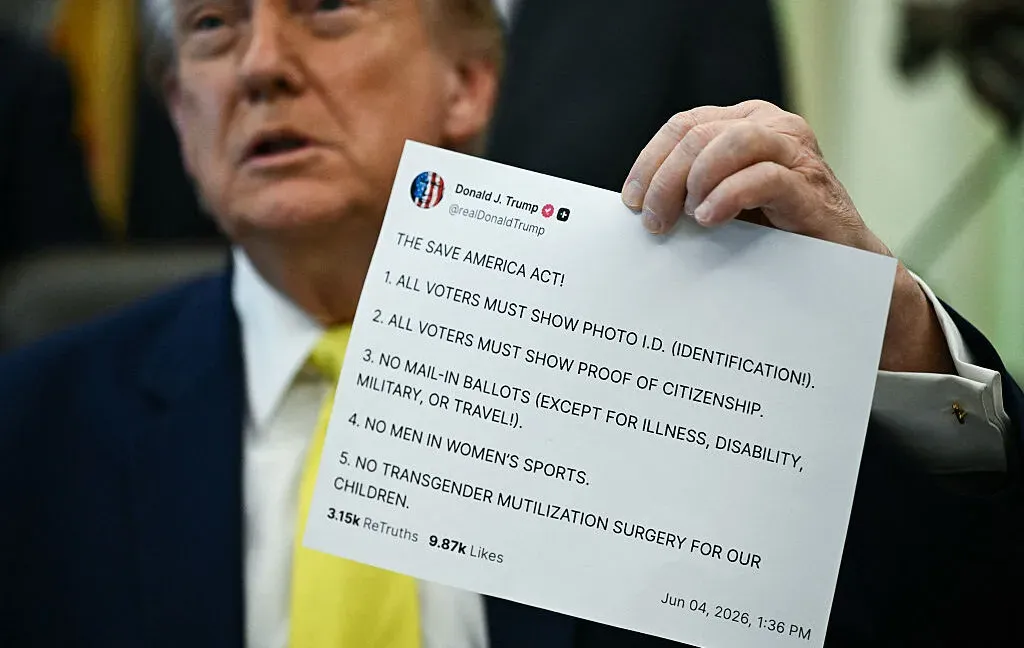
A federal judge will soon decide whether former President Donald Trump can charge up to $100,000 monthly for instant access to his social media posts on Truth Social, potentially marking a significant departure from traditional government practices.
Trump's company, Trump Media & Technology Group, owns and operates Truth Social, with the ex-president holding majority ownership stakes. This unique situation has raised questions about whether Trump can profit from selling early access to his posts, which often break news related to his administration.
The Department of Justice (DOJ) has argued that there is no conflict in Trump charging for instant API access to his social media posts, suggesting that the value comes largely from his role as president. However, several news groups have filed lawsuits against Trump, alleging that his exorbitant fees violate various constitutional amendments and federal laws.
The lawsuits argue that Trump's charges create a tiered system of access to government information, favoring those who can pay top dollar for early access to his social media posts. This, they claim, undermines the First Amendment and the Presidential Records Act by creating arbitrary and irrational reasons for granting preferential access to crucial government information.
The DOJ countered these claims during a hearing on Wednesday, likening Trump's Truth Social posts to the "fireside chats" of former President Franklin D. Roosevelt. The DOJ argued that Trump's personal feed serves as an unvarnished public service, rather than a profit-driven endeavor.
The judge will likely make a decision on this matter within the next few weeks, potentially setting a significant precedent for future government practices regarding social media and access to information.
The hearing's focus on the comparison between Trump's Truth Social API and President Roosevelt's fireside chats has raised eyebrows among observers.
Judge Oetken questioned whether charging for access to presidential announcements is comparable to FDR's broadcasts, suggesting that there are significant differences in how information was disseminated during those times.
Mayers' response pointed out that while Roosevelt didn't charge for his broadcasts, not everyone had equal access due to the cost of radios, which some Americans couldn't afford.
The judge's line of questioning has been seen as a challenge to the DOJ's argument that charging $100K per month for access to Truth Social posts is equivalent to FDR's model.
The judge's line of questioning has taken an interesting turn as he probed the value of early access to Truth Social posts.
Initially, Oetken seemed skeptical about claims that the API scheme violated the First Amendment, Courthouse News reported. He wondered aloud if a delay of potentially just a fraction of a second would have any meaningful impact on the free press. This raised questions about whether the government's argument was overstating the significance of timely access to information.
However, this line of questioning has been challenged by nonprofit news organizations who argue that there is more at stake than just timing. They point out that large news groups are already negotiating with TMTG for API access because it offers significant value beyond instant access to Truth Social posts.
The API provides a machine-readable feed and a historic archive of all President Trump's Truth Social posts, according to Sus. This means that even if Trump deletes posts, which he frequently does, news organizations can maintain a reliable log of his online activity.
News outlets use APIs for various purposes, not just algorithmic traders who stand to benefit from early access. The value of this service is undeniable, and it's not just about getting information before the general public.
The judge has decided not to make an immediate ruling on the case, opting instead for a written decision that will address whether Trump's company can sell API access to his posts while he is in office. The delay has given neither side reason to celebrate, with both parties eagerly awaiting the outcome.
Court observers have noted that requests for preliminary injunctions are typically treated with urgency, and it is expected that the judge will make a decision within the next few weeks. This has left news groups on tenterhooks as they wait for the court's ruling on whether Trump can continue to charge high fees for access to his posts.
The nonprofit news groups suing Trump's company have consistently argued that charging such high prices for API access is not only corrupt but also unconstitutional, given America's long history of providing equal access to presidential records. They claim this gives a direct advantage to newsrooms with deep pockets who can afford the expensive fees.
Trump's lawyer has defended his client's actions by arguing that the decision to charge for API access was a private commercial decision made solely by Trump Media & Technology Group, and not influenced by Trump himself. However, nonprofit groups have countered that this is a transparent attempt to shield Trump from accountability for his actions as president.
A court is currently deliberating on whether former President Trump can charge $100,000 for early access to his social media posts through the Truth Social platform's API. This move would allow news organizations to pay a hefty fee for real-time updates from the president, but experts warn of far-reaching consequences.
The potential precedent set by this decision could have significant implications for press access to government information, with nonprofit groups cautioning that it would create a barrier between journalists and official data. If approved, it's feared that more politicians might follow Trump's lead, further restricting public access to essential information.
Facts based on reporting originally published by Ars Technica.
You may republish this story, in full or in part, if you credit Noti Group and link to it (licence CC BY 4.0). Photos are not included.