






Exxon's 1988 Memo Warns of Negative Consequences from Climate Action
A previously undisclosed memo penned by Frank Sprow in June 1988 cautioned Exxon colleagues that addressing greenhouse gas emissions could have significant negative consequences for the company.
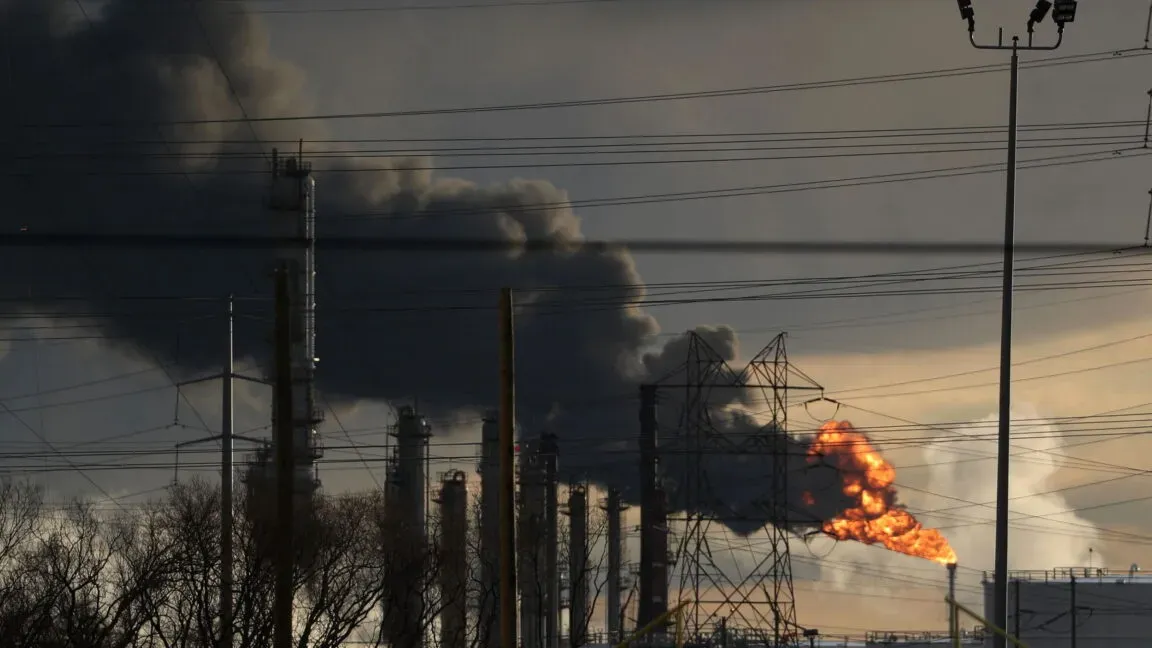
The world's awareness of climate change began to shift in 1988, a year marked by significant events. That June, NASA climatologist James Hansen testified before Congress about rising global temperatures and warned that continued pollution from fossil fuels would exacerbate the issue.
As the United Nations prepared to establish the Intergovernmental Panel on Climate Change just months later, Exxon's corporate research department was already sounding alarms. In a memo penned by Frank Sprow, he cautioned his colleagues that if the world were to reach a consensus on addressing greenhouse gas emissions, Exxon could face substantial negative consequences.
The memo, dated weeks before the UN vote, is part of a batch of previously undisclosed documents released in an ongoing lawsuit against ExxonMobil filed in 2019. The documents have not received much attention, but they contain new information about internal deliberations at Exxon from the 1980s to the 2010s.
Despite being mentioned in a 2023 article by The Wall Street Journal, Sprow's memo has never been published in full until now. Other newly revealed documents include statements from Exxon scientists questioning the company's claims about its work on biofuels and carbon capture and storage.
The release of these internal files is significant because they align with hundreds of confidential documents previously uncovered through reporting by various news organizations, lawsuits, and other sources. Experts say this new information provides a unique insight into Exxon's inner workings during a pivotal period in the history of climate change.
The timing of the document release is also noteworthy, as it coincides with a crucial moment for the oil industry. This week, the US Supreme Court heard arguments from Exxon and Suncor Energy regarding a lawsuit filed by the city and county of Boulder, Colorado.
The outcome of this decision could have far-reaching implications, potentially deciding the fate of more than two dozen other claims against oil companies. The release of these internal files adds to the growing body of evidence pointing to an alleged climate deception campaign by ExxonMobil.
The release of internal documents from a Massachusetts court case has shed further light on the alleged climate deception campaign by ExxonMobil.
Aaron Regunberg, director of climate accountability at Public Citizen, believes that these new files demonstrate why oil companies are fighting so hard to block lawsuits from proceeding to the discovery phase. He claims that they are "really scared of what the public might learn about their activities.
The Massachusetts filings suggest that only a small portion of the evidence that ExxonMobil has been hiding for decades has been revealed so far, according to Regunberg. This raises questions about how many more reports and documents the company may be sitting on, deliberately concealing them from the public.
Most lawsuits against oil companies assert that they should contribute financially to the costs imposed on society by climate-related extreme weather events. These costs have skyrocketed in recent years, exceeding $100 billion in the US over four of the last five years alone.
ExxonMobil's earnings for the first six months of this year were nearly $19 billion, highlighting the stark contrast between its financial performance and the devastating impacts of climate change on communities worldwide.
The company has consistently denied any wrongdoing, arguing that the lawsuits against it are meritless and an attempt to bypass policymakers. In its annual securities filing, ExxonMobil claimed that these proceedings represent an inappropriate use of the court system.
The Massachusetts case is slightly different from other lawsuits, focusing on how ExxonMobil deceived state consumers and investors by presenting itself as a leader in addressing climate change when, in reality, its efforts were largely cosmetic.
ExxonMobil's research into algae biofuels has been under scrutiny in recent months, with internal documents revealing a disconnect between the company's public claims and its private assessments.
According to new disclosures in the Massachusetts case, an Exxon scientist who worked on the program testified that a 2018 press release announcing the company's plans to produce 10,000 barrels of algae biofuel per day by 2025 was misleading.
The scientist stated that all the claims made in the press release were patently false and that achieving 10,000 barrels per day was completely impossible.
This assessment was shared with others at Exxon before the press release was issued, further highlighting the discrepancy between the company's public statements and its private concerns.
Exxon eventually dropped its research into algae biofuels but has continued to promote carbon capture and storage as a climate solution, despite evidence suggesting that this technology may also be unlikely to present a scalable solution to cutting emissions.
Internal documents obtained in the Massachusetts case include a 2014 presentation on Exxon's carbon capture portfolio, which listed several challenges to reaching commercial scale.
These challenges included high costs, no market-based incentives, and the need for a massive investment to achieve widespread deployment.
Exxon's carbon capture operations were largely restricted to gas processing plants at the time, with one scientist noting that this technology was not related to the type of carbon capture being promoted by Exxon for power plants and industrial facilities.
The company's promotion of carbon capture as a climate solution has been met with skepticism, given its own internal assessments of the technology's limitations.
Internal files reveal that ExxonMobil continued to promote its carbon capture research even after it became clear that the technology was not as effective as claimed.
The company's advertisements for algae and carbon capture were among its most successful campaigns, according to a 2017 presentation. These ads were touted as All-Around Winners due to their high performance in promoting ExxonMobil's climate-friendly image.
ExxonMobil's efforts to promote its work on carbon capture did not stop there. In 2021, the company was still actively advertising its involvement in this technology, with a presentation aimed at political and financial leaders claiming that it would help solve the climate crisis.
The internal documents reveal a proposed hub for carbon capture in Houston, which is no longer a part of ExxonMobil's strategy. This change of direction has sparked further questions about the company's commitment to addressing climate change.
Geoffrey Supran, an associate professor at the University of Miami, believes that these early records serve as a roadmap for ExxonMobil's subsequent climate strategy. He has studied the discrepancies between the company's public statements and internal documents.
A memo from 1988 by John Sprow highlights the company's primary goals in addressing climate change: protecting its resources and preserving business options. This agenda was set against the backdrop of growing concerns about climate action, with Hansen's congressional testimony just five months earlier.
Sprow proposed supporting modeling efforts to stay ahead in this critical area of research. He suggested sending a representative to work at one of the leading modeling centers or supporting someone on staff at such an institution.
ExxonMobil's internal documents reveal a deliberate strategy to undermine climate change policies by questioning their scientific basis and highlighting potential economic costs.
As part of this effort, the company was working closely with other oil majors and industry associations, such as the American Petroleum Institute (API), to coordinate their messaging and tactics.
A memo summarizing a 1997 meeting of API's climate steering group outlines key elements of this strategy, including continued questioning of the scientific basis for climate change policies and highlighting their economic costs.
The document also notes that Exxon was planning to fund a project by Jonathan Adler of the Competitive Enterprise Institute, a free-market think tank, which aimed to focus on the impacts of climate policy proposals on individuals and trade competitiveness.
This approach was not limited to advocacy efforts; Exxon was also working with labor unions and conservative think tanks like the American Enterprise Institute to promote its views and prevent any potential misuse of information by advocates for action on climate change.
The memo highlights a grassroots campaign aimed at influencing public opinion, as well as efforts to arrange seminars and other events to promote Exxon's message and shape policy debates.
These tactics were reportedly part of a larger strategy to question the scientific basis" of climate policies and avoid pressures to negotiate international agreements like the one being discussed in Kyoto.
Internal files have shed new light on ExxonMobil's alleged climate deception campaign, revealing a sophisticated strategy to undermine international agreements.
Adler, a former CEI executive, has denied promoting climate denial in his work, insisting that the focus was on accuracy and consistency with the organization's principles.
He acknowledged that CEI received funding from companies supporting limited government regulation, but declined to speculate on ExxonMobil's motivations for backing similar groups.
ExxonMobil's spokesperson at the time maintained that the scientific evidence on greenhouse gas emissions was inconclusive, while emphasizing the company's commitment to university research programs, including a planned $100 million investment in Stanford University's Global Climate and Energy Project.
These tactics ultimately contributed to ExxonMobil's efforts to avoid pressures to negotiate international agreements like the one being discussed in Kyoto, as part of a larger strategy to question the scientific basis of climate policies.
Facts based on reporting originally published by Ars Technica.
You may republish this story, in full or in part, if you credit Noti Group and link to it (licence CC BY 4.0). Photos are not included.