






Navi Pillay Awarded Nobel Peace Prize for Promoting International Law and Preventing Acts of War and Violence
Navi Pillay, a South African judge serving at the ICJ, has been awarded the Nobel peace prize for her efforts in promoting international law and preventing acts of war and violence.
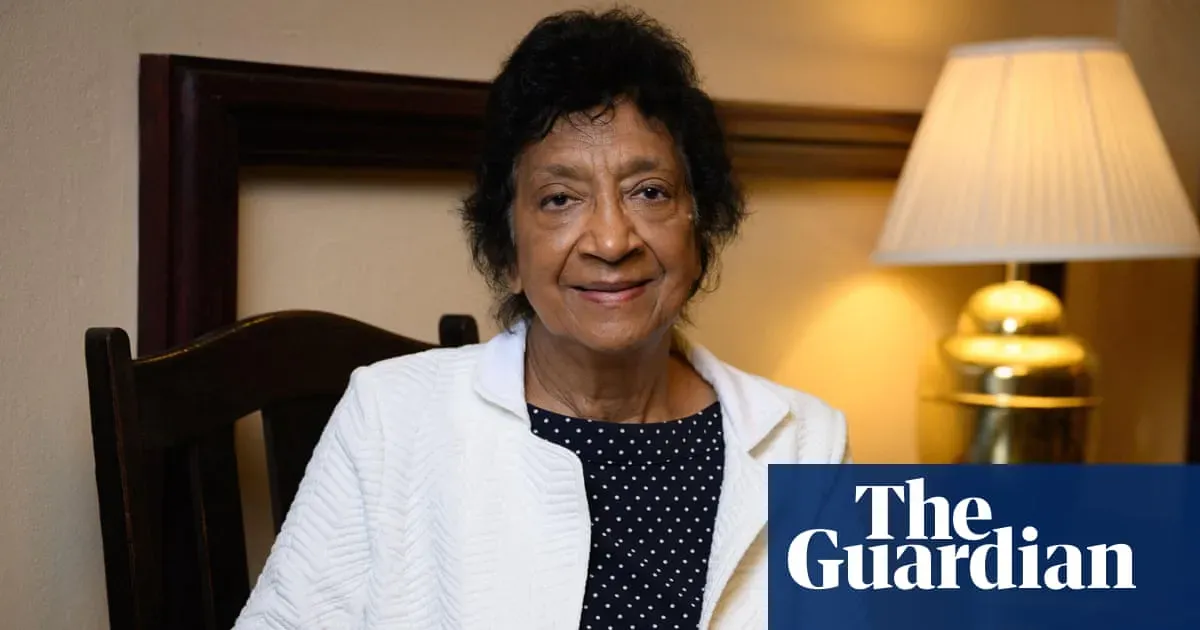
Navi Pillay, a South African judge serving at the International Court of Justice (ICJ), has been awarded the Nobel peace prize for her tireless efforts in promoting international law and preventing acts of war and violence.
Pillay's remarkable career spans decades, marked by her unwavering commitment to upholding universal legal principles. She began her work as a young lawyer defending Nelson Mandela under South Africa's apartheid regime, demonstrating her early dedication to fighting for justice and human rights.
Her leadership roles in various international forums have been instrumental in shaping the global conversation on human rights. As UN high commissioner for human rights, Pillay played a pivotal part in shedding light on some of the world's most pressing humanitarian crises.
The Norwegian Nobel committee has recognized Pillay's outstanding contributions to promoting peace and justice through law, citing her chairmanship of the UN independent international commission of inquiry on the occupied Palestinian territory as a notable achievement.
The Norwegian Nobel committee's decision to award Navi Pillay the Nobel Peace Prize has sparked a heated reaction from the Israeli government.
In response to news of the award, the Israeli foreign ministry launched a scathing attack on Pillay, accusing her of promoting "lies, hatred, and blood libels". The ministry took to social media platform X to express its outrage, labeling Pillay as a frontrunner for an imaginary award that would recognize such behavior.
The ministry's statement also suggested that the Nobel Peace Prize was being used as a tool to legitimize anti-Israel sentiment. It further compared Pillay's award to the work of Joseph Goebbels, a notorious propagandist who served under Adolf Hitler during World War II.
Pillay has faced criticism from Israel before, including when she chaired the UN independent international commission of inquiry on the occupied Palestinian territories. The commission's findings were rejected by Israel as "scandalous", with the country refusing to cooperate with its work.
The Israeli government's reaction to Pillay's award highlights the ongoing tensions between Israel and the global community over issues such as human rights and international law.
Pillay was informed about her Nobel Peace Prize win by colleagues at a meeting of human rights lawyers and jurists in Nuremberg, Germany. The city is known for its postwar significance as the site where Nazi leaders were tried for war crimes.
Upon hearing the news, Pillay expressed skepticism, stating she needed to verify it before accepting it as true. As a lawyer and judge, she emphasized the importance of impartiality in her work.
Pillay's recent report on Gaza was a notable example of her commitment to speaking truth to power. She named the atrocities committed there as genocide, sparking reactions from those who praised her courage for taking such a stance. However, she countered that it was not about being courageous but rather about interpreting the law and presenting facts.
Pillay is currently presiding over a genocide case against Myanmar at the ICJ, underscoring her dedication to upholding human rights and international law.
The Nobel Peace Prize awarded to Navi Pillay has been hailed as a recognition of her dedication to upholding international law and promoting peace across borders.
Edwin Cameron, a retired South African constitutional court justice, believes that this award re-emphasises the importance of respecting human rights and understanding between nations. He also notes that leaders such as Desmond Tutu and Nelson Mandela have received similar international recognition in the past, highlighting the significance of Pillay's achievement.
Yasmin Sooka, a human rights lawyer and commissioner on both South Africa's and Sierra Leone's truth and reconciliation commissions, has praised Pillay for following in the footsteps of Chief Albert Luthuli and Archbishop Desmond Tutu. She credits Pillay with transforming international justice through her pioneering work, particularly in the landmark Akayesu judgment.
The Akayesu case was a significant milestone in 1998, when the international criminal tribunal for Rwanda found Jean-Paul Akayesu guilty of genocide and crimes against humanity. The verdict marked a historic breakthrough in recognising rape and sexual violence as weapons of war, placing survivors' experiences at the heart of international justice.
The ICJ judge's Nobel Peace Prize win has been met with praise for her unwavering commitment to upholding international law and holding those in power accountable.
Her work on the ICC, as UN high commissioner for human rights, and leading the inquiry that found Israel responsible for genocide in Gaza, has been particularly notable. Critics of last year's winner, Venezuelan opposition leader María Corina Machado, have pointed out her controversial calls for US military intervention in her country as a reason to question the Nobel Peace Prize's standards.
Pillay's lighthearted response to those who might want to share the prize with others was a humorous nod to the controversy surrounding last year's winner, who handed their medal to Donald Trump, defying the prize committee's insistence that the honour could not be transferred.
Facts based on reporting originally published by The Guardian World.
You may republish this story, in full or in part, if you credit Noti Group and link to it (licence CC BY 4.0). Photos are not included.