






Delta Air Lines Lowers Profit Forecast Due to High Fuel Prices
Delta has revised its profit forecast downward due to persistently high fuel prices, reducing its full-year earnings per share outlook.
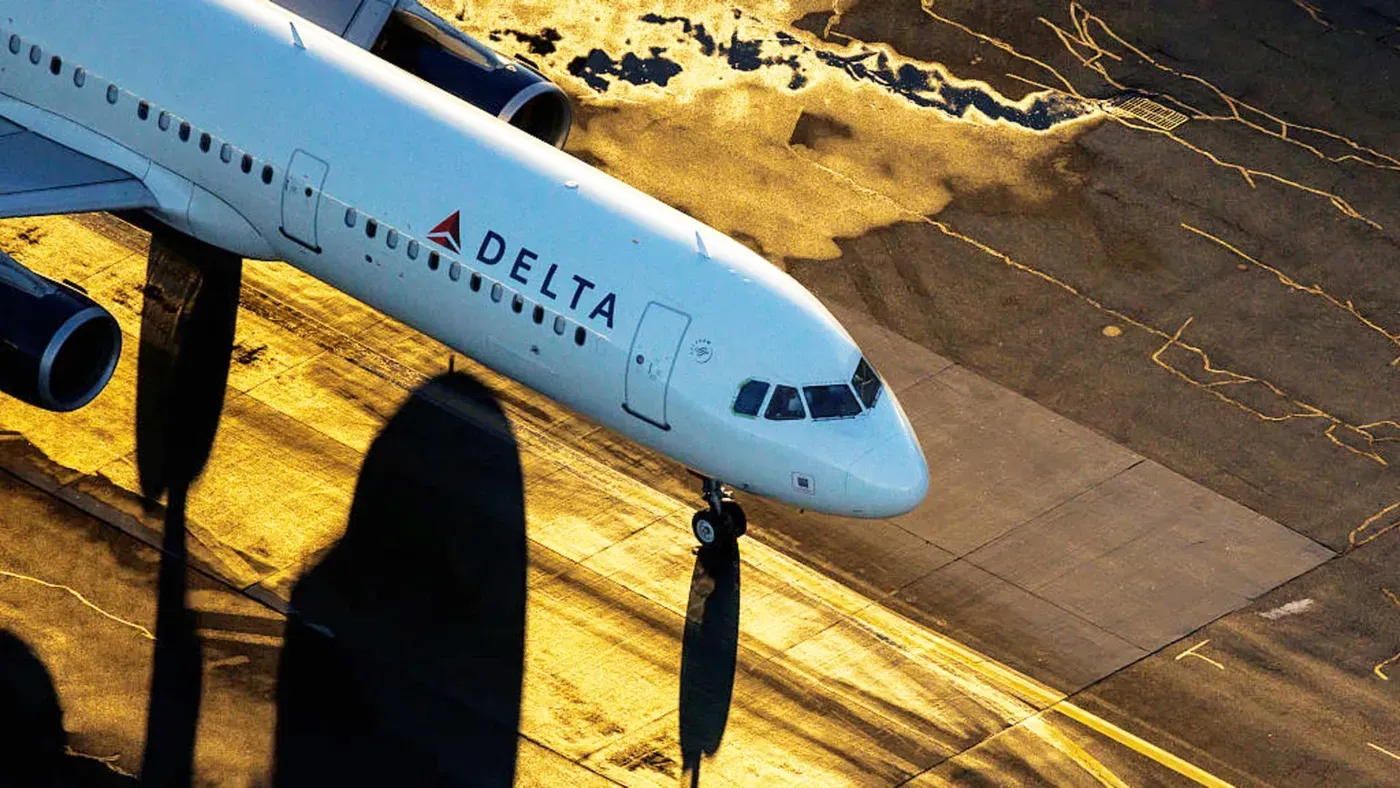
Delta Air Lines has revised downward its 2026 profit forecast due to persistently high fuel prices. The airline's new outlook for full-year earnings per share on an adjusted basis is between $5.10 and $5.60, a significant decrease from the previous estimate of $6.50 to $7.50.
The company's fourth-quarter guidance has also fallen short of analyst estimates. Delta had initially projected stronger results for this period, but its latest forecast suggests a more subdued performance. The airline's adjusted earnings per share for the quarter are now expected to be within a narrower range than previously anticipated.
Delta has also reduced its free cash flow outlook for the year to $2.5 billion from a previous estimate of up to $4 billion. This downward revision reflects the significant impact of rising fuel costs on the airline's financial performance. The company had initially expected to generate more cash from operations this year, but high fuel prices have eroded these expectations.
Jet fuel prices in the U.S. Gulf of Mexico region have surged, reaching nearly double the levels seen a year ago. According to data from FactSet, jet fuel prices in this area now stand at $4.34 per barrel, up significantly from the $2.19 recorded in the same period last year. This sharp increase is having a major impact on Delta's operating costs.
Delta CEO Ed Bastian remains optimistic about demand for air travel despite the challenges posed by high fuel prices. In an interview, he noted that fares have continued to rise as the airline passes on much of the increased cost of fuel to customers. However, this has not deterred travelers, with bookings remaining strong across various channels and geographies.
Despite the challenges posed by rising fuel prices, Delta's premium revenue has shown significant growth, increasing by 18% in the third quarter to $6.82 billion.
This marked a notable contrast to main cabin sales, which rose at a slower pace of 12% to $6.8 billion during the same period.
The airline's overall revenue saw an uptick as well, with operating revenue jumping 21% in the third quarter to $20.19 billion and adjusting for one-time items, Delta posted earnings of $1.76 per share.
However, the increase in revenue was not enough to offset the impact of rising fuel prices, which weighed heavily on the airline's bottom line.
Delta's net income for the third quarter came in at $756 million, or $1.15 a share, down 47% from $1.42 billion, or $2.17 per share, a year earlier.
Delta Air Lines has taken a significant step towards improving in-flight Wi-Fi by partnering with Amazon's Leo satellite internet service. This move is part of an ongoing effort among airlines to provide high-speed internet on board their planes.
The announcement comes as SpaceX's Starlink Wi-Fi service continues to dominate the market, with partnerships with major carriers including United Airlines, American Airlines, Southwest Airlines, and Alaska Airlines. Despite this, Delta has chosen to go with Amazon's Leo satellite internet instead of SpaceX's Starlink.
Delta CEO Bastian dismissed any notion that his airline is engaging in a personal feud with Elon Musk, stating that "everyone's entitled to their opinion." He also revealed that the airline had previously discussed partnering with SpaceX six years ago but decided not to move forward due to scalability issues.
Facts based on reporting originally published by CNBC.
You may republish this story, in full or in part, if you credit Noti Group and link to it (licence CC BY 4.0). Photos are not included.