






Kidnapping Crisis Hits Families in Borno State Nigeria
Families are being forced to sell assets and take loans to raise ransom demands for their loved ones' release.
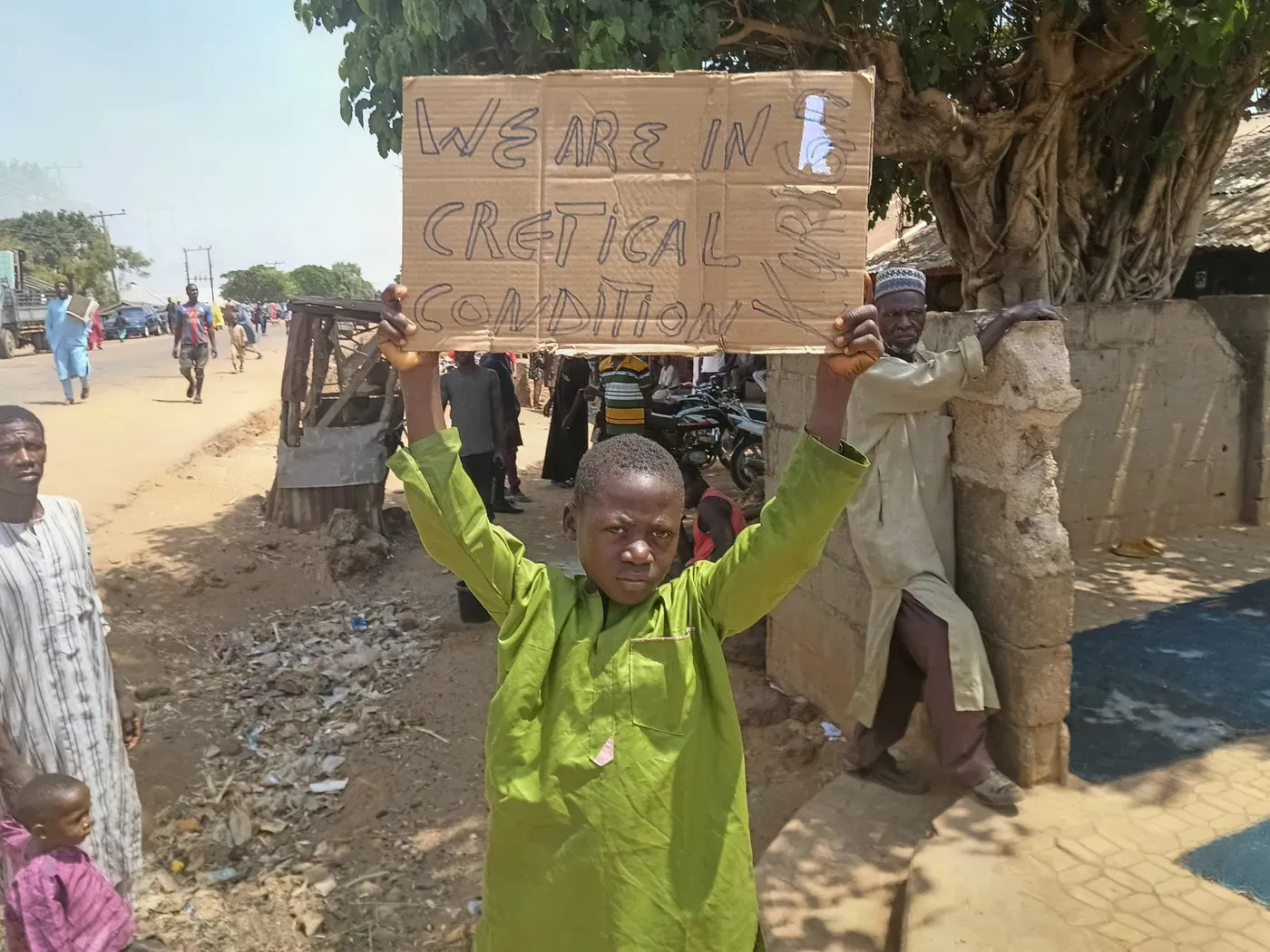
Families in Nigeria's Borno State are being devastated by a wave of kidnappings that has left many struggling to raise ransom demands for their loved ones' release.
The crisis has created a financial burden on families who are forced to sell valuable assets, seek loans, and exhaust their savings in the hopes of securing their family members' freedom.
Musa Abdullahi Wakawa's story is not unique - his wife and seven-year-old son were abducted, leaving him to navigate the complex and often brutal process of negotiating with kidnappers for their release.
In an attempt to raise the ransom demanded by the kidnappers, Musa has had to confront the harsh reality of his family's financial situation, searching for ways to come up with the necessary funds.
Families across northeastern Nigeria are being forced to make impossible choices in order to keep their loved ones safe.
Laraba's family is still in the dark about her whereabouts nearly six months after she was kidnapped, leaving them to anxiously await news of her safety.
The uncertainty has taken a toll on the family, who are now pleading with the Nigerian government to step up its efforts to rescue those still being held captive.
"We need the government to come to our aid and help rescue our relatives who have spent more than six months in captivity," Laraba's mother said, echoing the desperation of many families affected by the kidnappings.
The situation is not unique, with Anjikwi Hena's family also struggling to cope after his son disappeared on March 30 last year.
Hena had completed his education and was preparing to leave for Maiduguri in search of work when he vanished into captivity, leaving behind a grieving father who is finding it hard to come to terms with the loss.
The Borno State government has confirmed that around 44 children remain missing from Mussa, a figure that is part of an alarming trend in kidnappings affecting families across the state.
On June 29, armed rebels launched an attack on the Government Day Secondary School in Lassa while students were taking exams for the National Examinations Council. Although some students were rescued shortly after the assault, 36 students and a teacher are still being held captive by their abductors.
The repeated attacks have heightened concerns among parents and educators who already live with the constant threat of rebel violence. As a result, authorities have taken steps to increase security around schools in affected areas.
In Mussa, junior secondary school students were relocated to a government boarding school in Uba for their safety, while local vigilantes were deployed to provide additional protection. Soldiers have also been stationed in both Mussa and Lassa alongside the community guards, according to reports from the Askira.
The situation in Borno is part of a broader kidnapping crisis sweeping across Nigeria, with Amnesty International estimating that at least 1,100 people were abducted between January and April this year alone.
The trauma inflicted on victims of kidnappings in Borno is a harsh reality that continues to plague families across the state. Amnesty International has documented cases where individuals have been subjected to torture, starvation, and sexual violence while in captivity.
Families are often forced to come up with large sums of money under immense pressure, adding to their financial burdens. The fear of abduction is also having a profound impact on education, particularly in rural areas where children are being kept out of school due to the risk of kidnapping.
To combat the rising insecurity, Borno State Commissioner for Information and Internal Security Usman Tar has announced that both military and non-military measures will be employed to tackle the problem. The state government is working closely with the armed forces to provide logistical support and civilian volunteers to aid field operations.
The authorities are also utilizing technology as part of their response, including drones equipped with thermal capabilities to monitor the movements of criminals. This has reportedly helped reduce attacks in some affected areas, although Tar acknowledges that there are still several security hotspots across the state.
Efforts are being made to ensure that those involved in kidnapping and other criminal activities are brought to justice. Authorities are advising commuters to avoid dangerous routes where necessary and working to mitigate the humanitarian and psychological impact on families affected by these crimes.
Government officials have been visiting affected families to offer condolences and support, while authorities also provide financial assistance through designated agencies.
The State Emergency Management Agency and the state humanitarian agency are providing fixed sums of money to help families in need, with other legitimate mechanisms also used to make funding available.
According to Tar, the government views terrorism and criminality as problems that require a comprehensive approach, going beyond military action alone. He notes that these issues have multinational dimensions and cannot be solved by one country or region alone.
Security analyst Professor Khalifa Dikwa describes the kidnapping situation in Borno as "pathetic", warning that there are no clear signs of an end to the crisis anytime soon.
Families in Borno are being forced to make impossible choices as kidnappings continue to plague the region. In a desperate bid to secure the release of one loved one, families may sell their possessions or take on debt, only to face another ransom demand when someone else is abducted.
Security analyst Professor Khalifa Dikwa believes that the government must adopt more effective tactics to combat the kidnappers. He advocates for intelligence-driven operations and the use of technology to locate armed groups and disrupt the flow of ransom money.
To support security personnel on the front lines, Dikwa also recommends providing modern equipment such as night-vision gear and tracking technology, as well as improving their welfare and living conditions. This would enable them to respond more effectively to the kidnappings and better protect civilians.
For many families in Borno, however, paying ransom may be the only way to try to save a loved one, leaving them with the constant fear of further abductions and the devastating uncertainty that follows.
Facts based on reporting originally published by Al Jazeera.
You may republish this story, in full or in part, if you credit Noti Group and link to it (licence CC BY 4.0). Photos are not included.