







Microsoft Unveils New Products at Live Event
Microsoft hosted its first live event in two years, unveiling a slate of new products and technologies aimed at revolutionizing personal computing for developers and enthusiasts alike.
Microsoft hosted its first live event in two years, unveiling a slate of new products and technologies aimed at revolutionizing personal computing for developers and enthusiasts alike.
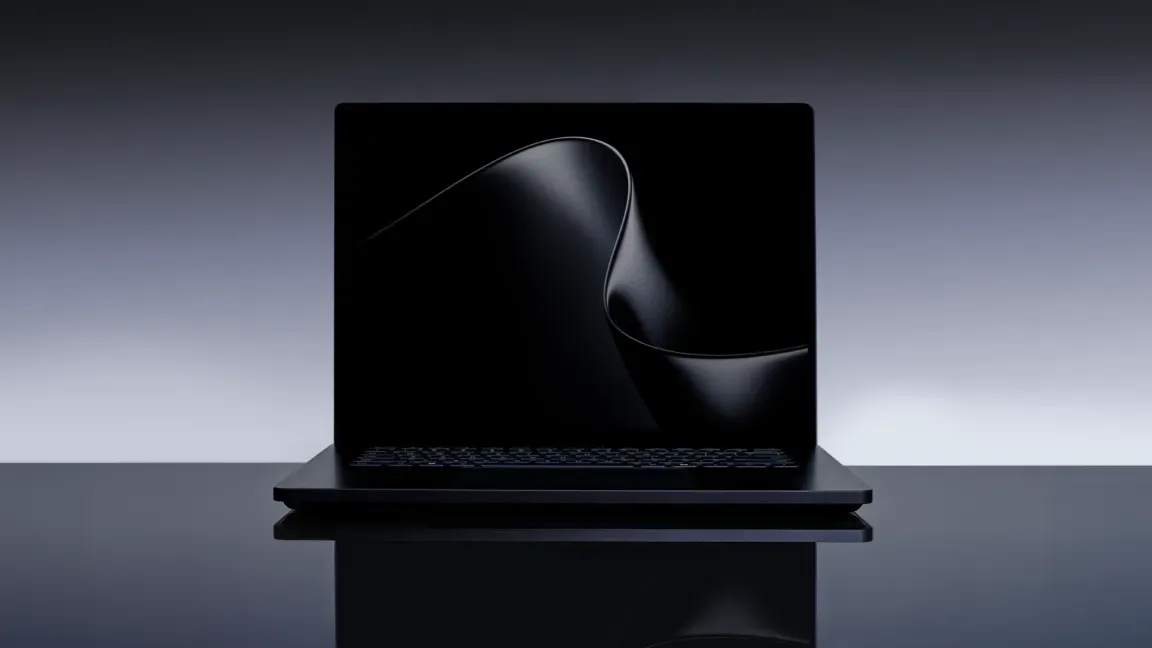
The star of the show was the Surface Laptop Ultra, which is set to become Microsoft's flagship device with the power to handle demanding tasks such as local AI development and deployment. As previously teased in May 2026, this new laptop leverages the Nvidia RTX Spark SoC (system on a chip), offering unparalleled performance capabilities.
The Surface Laptop Ultra boasts a range of configurations, including options for different system-on-a-chip (SoC) and memory setups. These can be paired with either a 5120-core or 6144-core Blackwell GPU and up to 128GB of LPDDR5x unified memory, ensuring that users have the flexibility to tailor their device to suit their specific needs.
Microsoft highlighted the laptop's ability to seamlessly handle modern gaming tasks alongside local AI development and deployment. By utilizing unified memory allocation rather than traditional VRAM limits, the Surface Laptop Ultra can efficiently assign resources to tackle even the most demanding applications.
The company demonstrated the capabilities of the new device by showcasing the Gears of War: E-Day game running smoothly on the system, demonstrating that AAA titles are within reach for users without a dedicated gaming GPU.
The Surface RTX Spark Dev Box has been unveiled by Microsoft as a high-end device catering specifically to developers working on AI projects. This $5,999 anodized aluminum black unit is designed to meet the needs of frontier developers and comes with a custom "developer-optimized build of Windows 11 pre-configured for AI development.
The RTX Spark Dev Box boasts impressive specs, including 128GB of unified memory and an onboard Nvidia RTX GPU. According to Microsoft's claims, this hardware configuration enables one petaflop (1,000 teraflops) of AI compute performance, making it a powerful tool for developers working on complex AI projects.
The design of the RTX Spark Dev Box is notable, with a sleek and compact build that resembles an Android TV box or game console more than a traditional PC. The top of the unit features a unique vent pattern reminiscent of the Xbox Series X, which Microsoft highlights as a nod to its 1,000 teraflops of AI performance.
The Surface RTX Spark Dev Box ships with Windows 11 pre-configured for local AI use and development. This optimized build enables developers to test models directly on their device without needing additional software or setup.
In addition to the hardware announcements, Microsoft has also outlined several changes coming to Windows 11 this fall. The updated OS builds will include an enhanced Windows software suite that supports local model testing out of the box, making it easier for developers to work on AI projects.
Microsoft is revamping its Copilot AI tool to make it more intuitive and user-friendly on Windows PCs. The updated layout will feature a three-tab design, allowing users to access different features and settings more easily.
One of the key changes coming to Windows this year is the ability to execute system-level tasks directly from the search bar. Users can simply describe what they want to do, such as adjusting display settings, and the system will carry out the task without requiring them to open additional windows or menus.
For users who are concerned about the security implications of relying on AI bots, Microsoft has introduced a new framework called Microsoft Execution Containers (MXC). This security tool allows developers and organizations to monitor and control the activities of agent software within their systems, ensuring that they do not have unauthorized access to sensitive files or data.
MXC provides a layer of isolation for compute traffic, directing it to the appropriate backend depending on the workload. This can involve using process containers, session containers, WSL containers, or even an experimental hardware-backed isolation called MicroVM.
The integration of AI and traditional Windows capabilities is being referred to as Hybrid Intelligence" by Microsoft. This approach moves away from cloud-based solutions and towards local ones, allowing users to allocate memory for specific applications on devices like the Surface Laptop Ultra or RTX Spark Dev Box.
Microsoft's Hybrid Intelligence will also provide native support for local frameworks such as llama.cpp and models from the Deepseek and Nvidia Nemotron families.
Microsoft's emphasis on local AI processing is a significant shift in strategy, but concerns about security and user acceptance linger. The company's past experiences with AI mishaps have raised questions about its ability to balance innovation with responsible implementation.
The Surface Laptop Ultra, set to launch next week, will be the first device to feature this new capability. Its $2,599 price tag may raise eyebrows, but it remains to be seen whether the benefits of local AI processing justify the cost.
Facts based on reporting originally published by Ars Technica.
You may republish this story, in full or in part, if you credit Noti Group and link to it (licence CC BY 4.0). Photos are not included.