




US Imposes Sanctions on International Criminal Court
The United States has introduced new sanctions targeting the International Criminal Court (ICC), restricting financial transactions with the court.
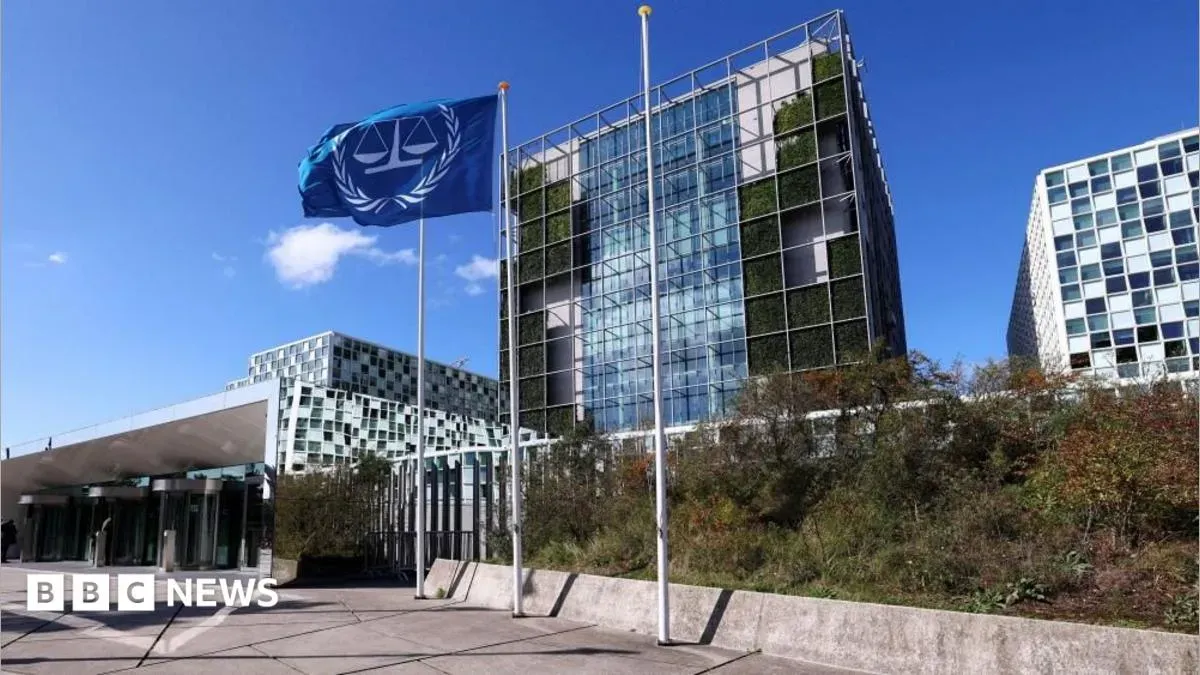
The United States has introduced a new set of sanctions targeting the International Criminal Court (ICC), in what is seen as a significant escalation of its efforts to limit the court's authority. The move aims to restrict US entities from engaging in financial transactions with the ICC, effectively crippling its ability to operate.
According to sources, the Trump administration views the ICC as an institution that poses a threat to American sovereignty and is determined to "dismantle it. US Secretary of State Marco Rubio has accused the court of attempting to prosecute Americans, highlighting what he sees as a major concern for the United States.
The sanctions have been met with strong criticism from the ICC, which describes them as an assault on the rule of law and the fundamental principles of international justice. The court's independence is seen as being under threat, with many fearing that this could set a worrying precedent for other international institutions.
Just hours before the announcement, former ICC judge Navi Pillay was awarded the 2026 Nobel Peace Prize in recognition of her tireless efforts to promote peace and advance international law. The timing of the award serves as a stark contrast to the US administration's stance on the ICC, highlighting the deep divisions that exist between Washington and other global leaders.
The US decision to impose sanctions on the International Criminal Court (ICC) has sparked a strong reaction from the international community, with UN Secretary General Antonio Guterres describing it as a serious blow to the pursuit of international criminal justice.
Several countries have reaffirmed their support for the ICC, including the UK, Canada, Denmark, Germany, France, Italy, Japan, and the Netherlands. These nations expressed regret and disagreement over the US sanctions, highlighting the court's crucial role in bringing perpetrators of war crimes, crimes against humanity, and genocide to justice. They also commended the ICC staff for their dedication to supporting victims.
The ICC was established in 2002 with a mandate to prosecute serious international crimes, and currently has 125 member states. However, several major countries remain outside its jurisdiction, including the US, Russia, China, India, and Israel. The US government has expressed concerns about the court's independence and what it sees as threats to American sovereignty.
The Trump administration has been critical of the ICC for investigating past actions of US soldiers in Afghanistan and issuing arrest warrants for Israeli officials, including Prime Minister Benjamin Netanyahu. Despite these grievances, the new sanctions do not require the withdrawal of the ICC warrants as a condition for lifting the measures.
The US has structured the new sanctions to allow other countries to negotiate a possible solution with the ICC, in an effort to address American concerns.
US companies will now be prohibited from providing goods or services to the ICC, including banking and software. This move is seen as a significant escalation of tensions between Washington and The Hague-based court. Rubio's statement suggests that the US sees the sanctions as a means to pressure the ICC into backing down from its threat to prosecute Americans.
The Netherlands, which hosts the ICC in The Hague, is particularly vulnerable to these new measures. Dutch Foreign Minister Tom Berendsen has warned that the sanctions would severely impact the court's ability to function. As a NATO ally of the US, the Netherlands may face pressure from Washington to reconsider its position on the ICC.
Netanyahu has welcomed the move, describing the ICC as not a court but a political body that undermines national sovereignty and threatens law-abiding democracies. In response, the ICC has stated that the sanctions are aimed at disrupting its work and intimidating those who co-operate with it. However, the court remains resolute in its commitment to upholding international justice and will not be deterred by this latest development.
The sanctions imposed by the US on the International Criminal Court (ICC) have sparked outrage from the court's officials. They view these measures as a direct attack on the rule of law and an attempt to undermine the ICC's authority.
The implications of this move are far-reaching, with potential consequences for the court's ability to try cases. According to Professor Ryan Goodman, an expert in international law at New York University, the sanctions could ultimately lead to the release of detainees awaiting trial or judgment.
Among those currently facing trial in The Hague is Rodrigo Duterte, the former president of the Philippines, who is accused of thousands of extrajudicial killings during his war on drugs". His case has been closely watched by human rights advocates and lawmakers around the world.
The US government's decision to impose sanctions on International Criminal Court (ICC) officials has sparked widespread condemnation from human rights advocates and experts.
Among the measures announced by the US are carve-outs that allow the ICC to continue providing services for the detention of high-profile detainees, including former Philippine President Rodrigo Duterte. These licenses appear to be aimed at mitigating the impact of the sanctions on detained individuals who may have been brought before the court to face justice. However, experts warn that these concessions may ultimately prove insufficient.
The sanctions are set to have far-reaching consequences for the ICC's ability to conduct fair trials and appeals, potentially even forcing the release of detainees as a matter of law.
Facts based on reporting originally published by BBC News World.
You may republish this story, in full or in part, if you credit Noti Group and link to it (licence CC BY 4.0). Photos are not included.