



US President Donald Trump Joins Trilateral Talks with Putin and Xi Jinping
The leaders issued a joint declaration of peace following historic trilateral talks in Shenzhen, China.
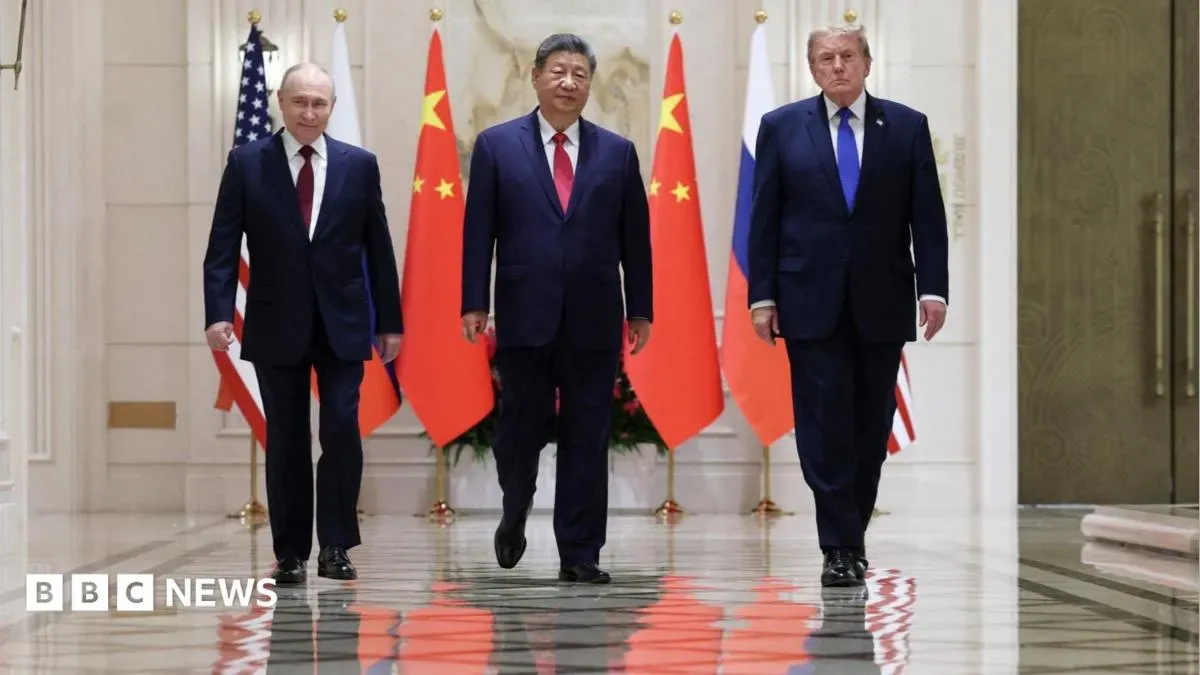
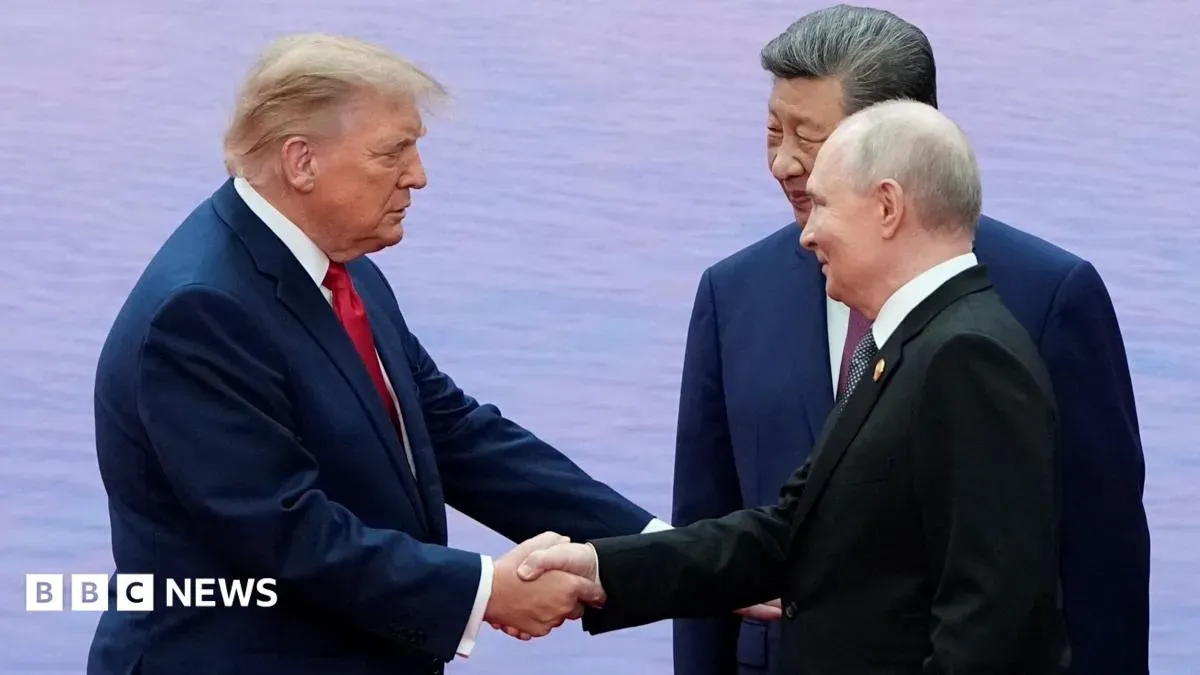
US President Donald Trump has joined forces with his counterparts Vladimir Putin and Xi Jinping to issue a joint declaration of peace following historic trilateral talks.
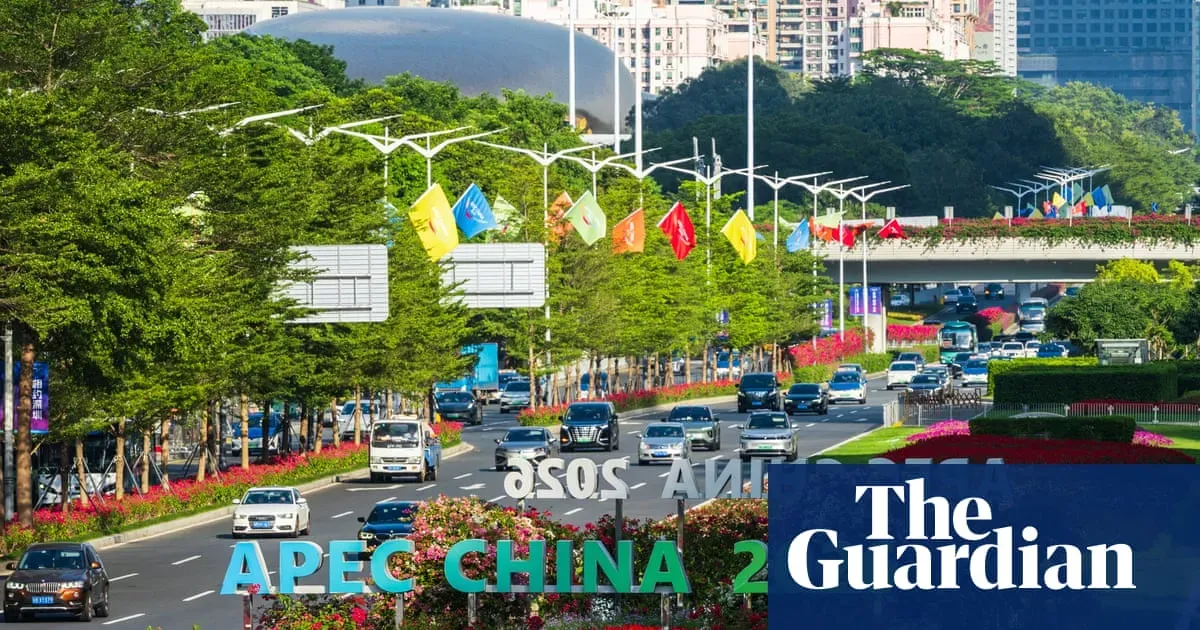
The meeting between the three leaders took place in Shenzhen, China's south-eastern city, on the sidelines of the Asia-Pacific Economic Cooperation summit, where they discussed key issues for nearly an hour and a half.
This marks the first time Trump has held trilateral talks with Putin and Xi, although he has previously met each leader individually on separate occasions.
The joint declaration highlights several areas of agreement between the three countries, including their commitment to reforming the United Nations to better respond to global challenges. They also acknowledged that nuclear war is not a viable option.
As part of the trilateral talks, the leaders discussed ways to boost energy production and supply, with plans to increase petroleum output on the table.
The meeting between the world's top leaders has revealed a complex web of interests and motivations.
Xi Jinping's participation in the trilateral talks marks a significant moment for China's diplomatic efforts, but it also comes with its own set of challenges and potential pitfalls.
Before the closed-door discussion began, Xi emphasized that cooperation among major powers is not an option, but rather a necessity. This sentiment was echoed by Putin, who highlighted the shared goal of ending the conflict in Ukraine.
The meeting's agenda includes discussions on food and energy security, with plans to boost petroleum output being considered. China has maintained its neutrality since Russia's invasion of Ukraine in 2022, while repeatedly calling for negotiations and a peaceful resolution.
Trump also weighed in on the importance of dialogue among nations with significant nuclear capabilities, stating that they have a unique responsibility to reduce the global nuclear arsenal.
The leaders' meeting has sparked hopes for a reduction in global nuclear tensions. In his address to the media, Putin praised the trilateral talks as an "important chapter in the history of diplomacy". He emphasized that Russia was committed to finding a peaceful resolution to ongoing conflicts.
However, Ukraine's capital Kyiv is currently facing a new threat from Russian drones. This attack comes despite repeated ceasefire offers from Ukraine, which have been rejected by Putin. The Kremlin leader has insisted on his maximalist demands, which are seen as unacceptable by both Ukraine and its European allies.
Russia's stance on the conflict in Ukraine was further clarified by Putin during his press conference. He stated that Europe is not yet ready to make compromises to resolve the issue. In response, Russia has invited EU representatives to Moscow for a better understanding of Europe's position.
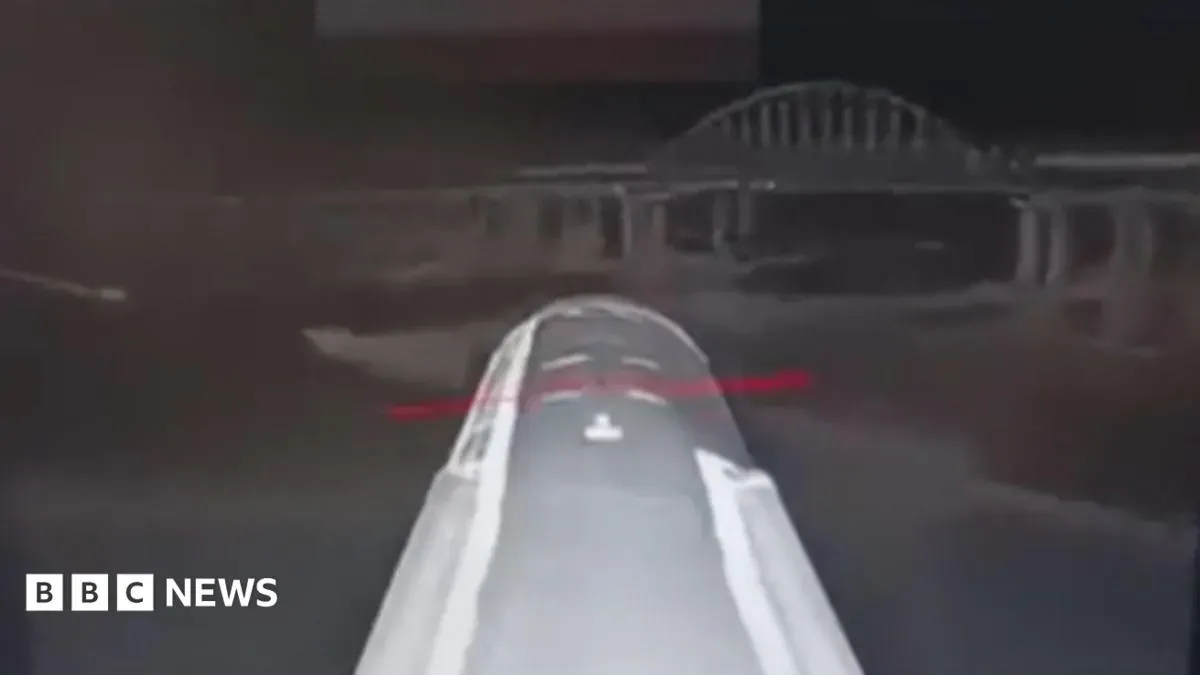
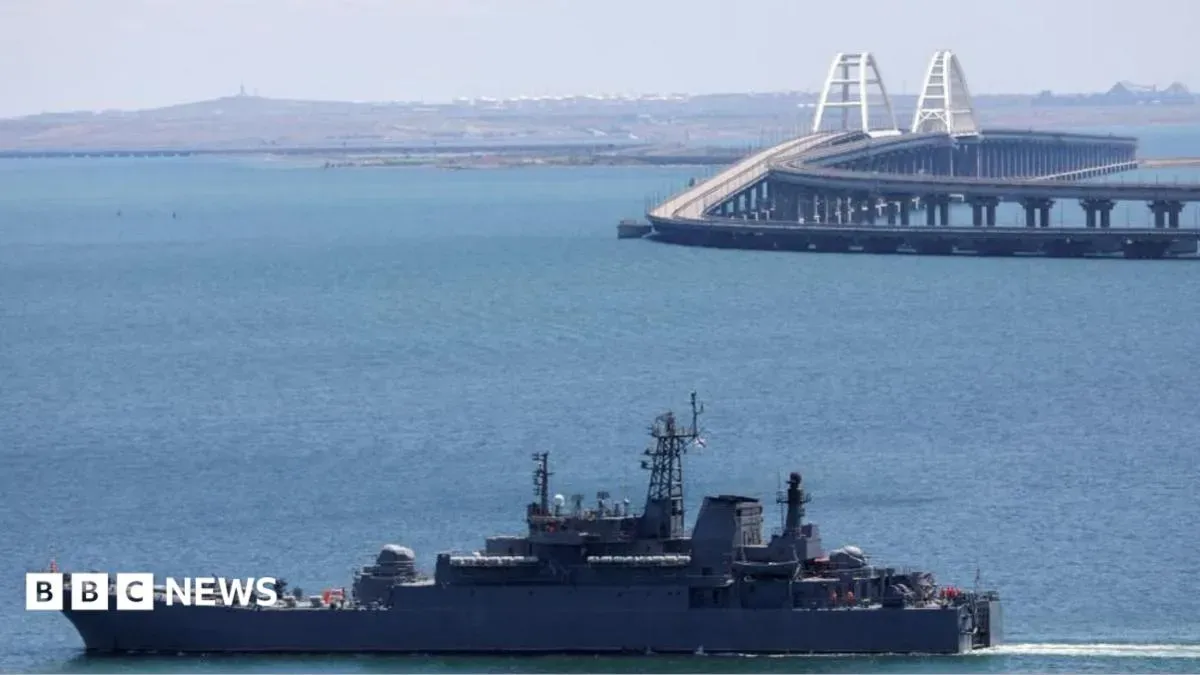
The ongoing conflict in Ukraine has been a major point of contention between Russia and its Western allies. The recent missile and drone attack on the bridge connecting Russia to Crimea has prompted Putin to vow "far more painful retaliation against Ukrainian targets.
Meanwhile, Trump also emphasized the importance of reducing global nuclear tensions during his address. He stressed that nations with significant nuclear capabilities have a unique responsibility to work towards disarmament.
Despite the significance of the meeting between Trump, Putin, and Xi, there was a notable absence of discussion on Russia's actions in Ukraine. The Russian president made no mention of the nearly five-year-long conflict that has seen numerous attacks on Ukrainian infrastructure, including power plants, bridges, and residential buildings.
Putin also addressed the comparison to the 1945 Yalta Conference, where leaders from the Soviet Union, Britain, and the US met during World War Two. In a statement, he clarified that the Yalta Conference did not involve dividing up the world among the great powers, but rather recognizing the post-war realities.
According to Putin, Nobody divided up the world at Yalta. It simply codified the realities that had emerged after WW2. He emphasized that any future conflicts would require accepting the current state of affairs on the ground.
The Kremlin released footage showing Putin leaving the summit venue and exchanging pleasantries with Xi. In a brief remark, Putin said goodbye to his counterpart, expressing gratitude for organizing the meeting.
China's president, Xi Jinping, also weighed in on the significance of the trilateral meeting, describing it as positive, constructive, and highly productive. In comments carried by state broadcaster CCTV, Xi recalled China's shared history with Russia during World War Two.
US lawmakers have expressed disappointment and concern over President Trump's warm reception to leaders of countries considered adversaries by Washington.
Republican Senator John Curtis acknowledged that some positive commitments emerged from the President's meetings in Asia, particularly a shared understanding that nuclear war is unacceptable. However, he also voiced concerns about Trump's approach towards foreign leaders, emphasizing that Vladimir Putin and Xi Jinping are not natural allies for the US.
We should not treat them as though they share our values or interests," Curtis warned, citing potential risks to national security, strained alliances, and mixed signals on America's global stance.
Facts based on reporting originally published by BBC News World.
You may republish this story, in full or in part, if you credit Noti Group and link to it (licence CC BY 4.0). Photos are not included.