


US Defense Secretary Visits Caracas, Announces New Military Agreement
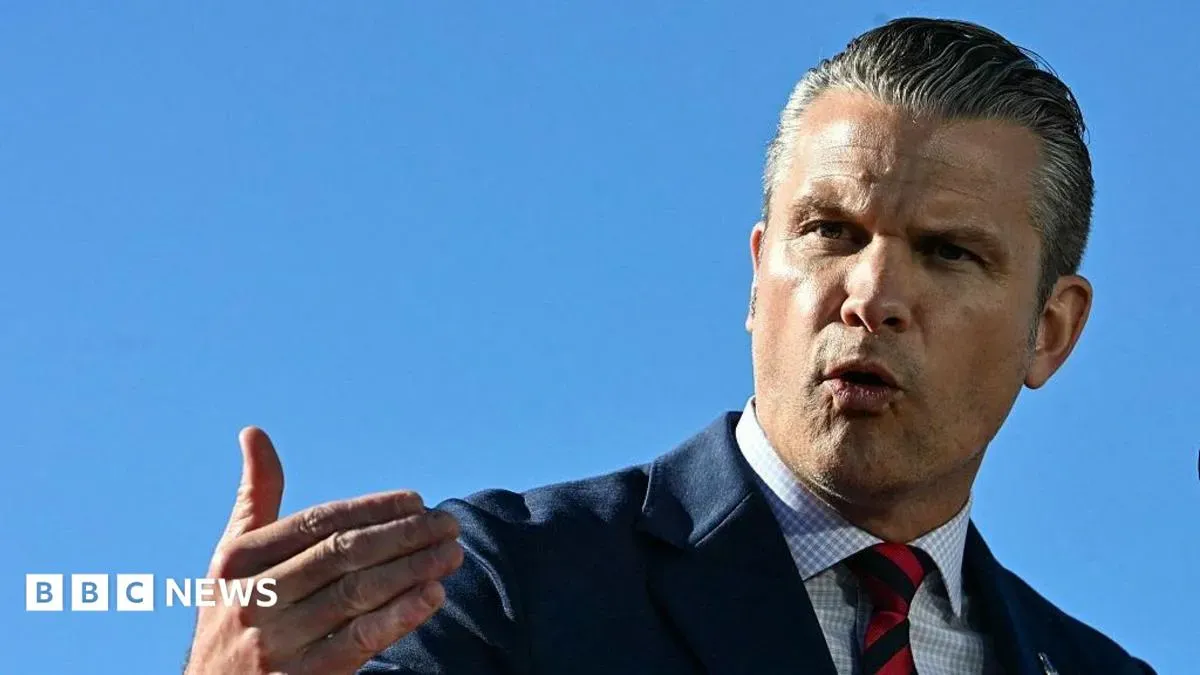
The US and Venezuela have agreed to cooperate on joint training, intelligence sharing, and military equipment as part of a new deal announced by US Defense Secretary Pete Hegseth during an unannounced visit.
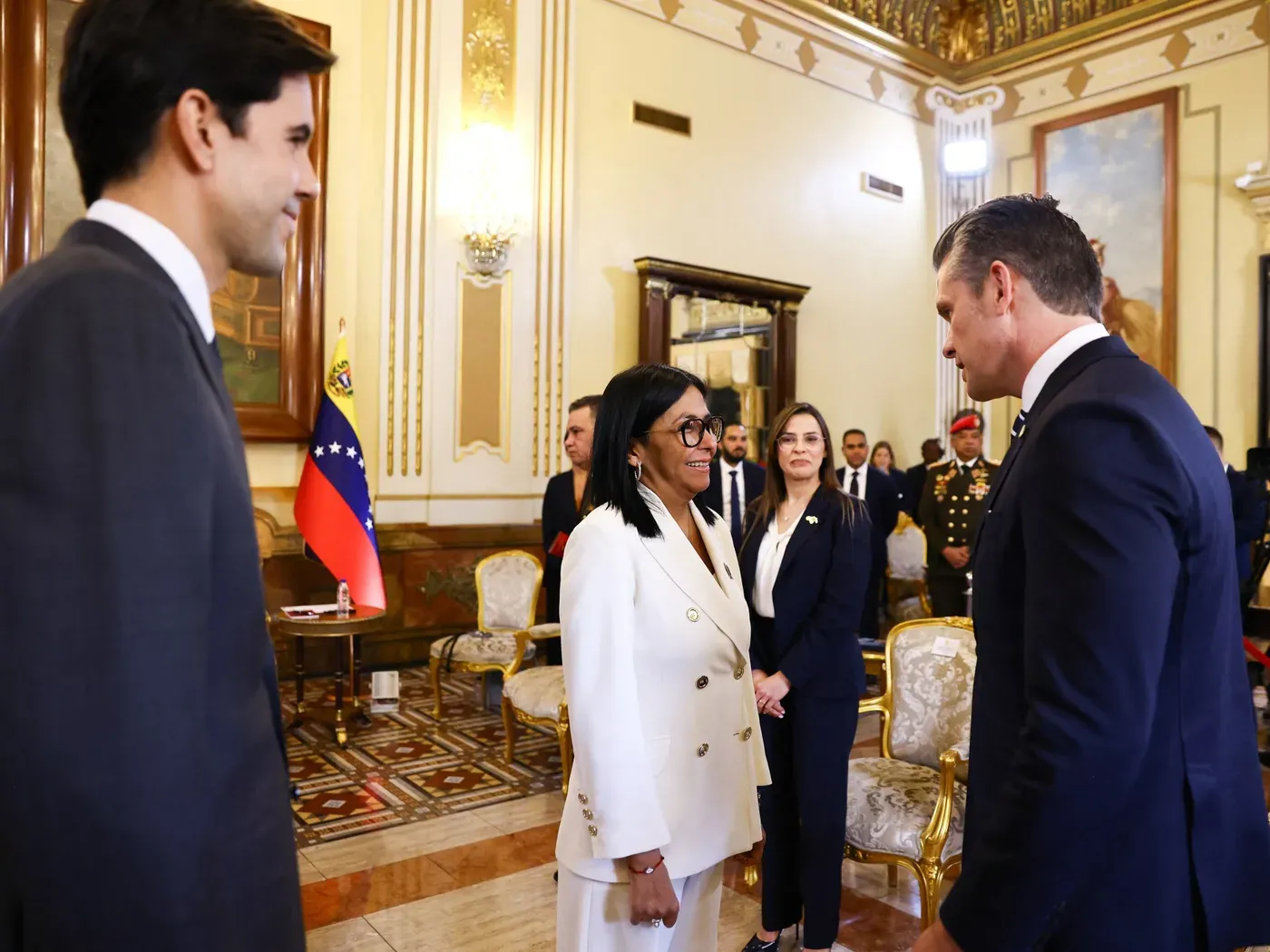
US Defense Secretary Pete Hegseth has made a surprise visit to Caracas, where he announced a new agreement between his country's military and Venezuela's interim government.
The deal aims to facilitate cooperation between the two countries in various areas, including joint training, intelligence sharing, military equipment, and border security. This is seen as a significant development given the long-standing tensions between the US and Venezuela. The agreement was revealed during an unannounced visit by Hegseth, which took place on Wednesday.
The US says the new cooperation will help combat drug trafficking and improve security in the region. Venezuelan officials claim that this deal will enable their country to strengthen its military without compromising its sovereignty. This assertion is likely a response to concerns about potential foreign interference in Venezuela's internal affairs.
Details of the agreement are still scarce, but it appears that the US and Venezuela have agreed to collaborate on several fronts. Joint training exercises, intelligence sharing, and access to advanced technology are among the areas where cooperation will be increased. The specifics of how these joint operations will unfold remain unclear for now.
During his visit, Hegseth met with Venezuelan interim President Delcy Rodriguez and Defense Minister Gustavo Gonzalez Lopez. He stated that this agreement would allow the two countries' armed forces to work together in combating drug trafficking and armed groups operating within Venezuela's borders.
Rodriguez described Hegseth's visit as an extraordinary step forward in relations between their two nations. She claimed that renewed military cooperation would lead to improved troop training, modernization of equipment, and access to new technologies for the Bolivarian National Armed Forces (FANB).
The timing of Hegseth's visit to Venezuela has raised eyebrows among analysts, particularly in light of recent developments in US politics.
A closer look at the calendar reveals that the trip occurred shortly after the midterm elections in the United States, where Democrats secured a majority in the House of Representatives.
This shift in power dynamics is seen as significant by political analyst Carlos Pina, who believes that many events between the US and Venezuela are indeed connected to the November 3 election results.
According to Pina, the Democrats have already signaled their intention to scrutinize US foreign policy towards Venezuela, including agreements reached with Caracas during a tumultuous period in the country's history.
Pina pointed out that the Democrats' scrutiny would include examining the circumstances surrounding then-President Nicolas Maduro's removal from power and the subsequent takeover of Venezuela's oil industry by US forces.
The agreement between Venezuela and the United States is being scrutinized by Democrats, who will soon take control of Congress in January.
Pina suggests that Hegseth's visit is also an attempt to justify Trump's policy in Venezuela as a success story for US foreign policy.
Rodriguez has welcomed the agreement, stating it will enhance her country's military capabilities and provide improved access to technology.
However, Venezuelan officials have emphasized that any cooperation must respect the country's sovereignty and adhere to its constitution.
Analysts believe Rodriguez's government may be using the agreement as a means to maintain power following Maduro's ousting from office.
Washington's leverage over Caracas is significant, with the US controlling most of Venezuela's foreign earnings from oil sales.
Venezuela's government relies heavily on Washington's approval to access funds from overseas bank accounts, giving the Trump administration significant leverage over Caracas' financial dealings.
The US Department of State reported that between January and September, more than $12 billion in oil revenue had flowed through these accounts, with nearly 99 percent disbursed to individuals and businesses within Venezuela via commercial banks.
This arrangement means that Caracas must seek Washington's permission to release funds from these accounts, potentially allowing the Trump administration to exert pressure on Rodriguez's government.
Pina described this situation as a "calculation of survival for the Venezuelan government, which is willing to make concessions to maintain its hold on power.
Rodriguez is also using this time to buy space, particularly as Democrats prepare to take control of Congress in January, which could lead to greater scrutiny of Trump's Venezuela policies and potentially give Caracas more room to negotiate with Washington.
Analysts question whether closer cooperation with the US will lead to changes within Venezuela's armed forces, many of whose senior officers have ties to Maduro.
The strengthening of US military ties with Venezuela is a move that has sparked debate among analysts. One concern is that senior Venezuelan officers may resist changes within their ranks if they perceive them as threats to their positions or personal freedoms.
Venezuela's new Defence Minister Gonzalez Lopez has spoken out about the agreement, framing it as a necessary response to recent events. He pointed to the January 3 takeover by US forces as a catalyst for this cooperation, implying that Venezuela needs to adapt to the changed circumstances.
Gonzalez Lopez emphasized that any military cooperation with Washington would be carried out in accordance with Venezuelan law and respect the country's sovereignty. This is seen as an attempt to reassure domestic audiences that the agreement does not compromise national interests.
The terms of the deal remain unclear, but some analysts believe it focuses on limited areas such as counter-terrorism and anti-narcotics efforts along the border with Colombia. Joint military operations could include air raids against armed groups operating in the region.
Pina argues that for Washington to maintain its influence over Venezuela's transition, a stronger military presence is necessary. He believes this is particularly crucial given the armed forces' continued loyalty to the governing party.
The agreement may also have implications for neighboring countries, including Colombia, which shares a long border with Venezuela and has been affected by cross-border activities of armed groups like the ELN.
The US proposal for joint military operations on Colombian soil has been met with skepticism by President Abelardo de la Espriella, who denies reports that he rejected the plan.
According to De La Espriella, Colombia is eager to strengthen its military ties with Washington and enhance cooperation between their armed forces. However, any deployment of foreign troops would require approval from Colombia's congressional authorities. The president's statement contradicts a recent report by a major US newspaper.
Pete Hegseth has dismissed the report as totally false", while experts believe that the agreement with Venezuela may have significant implications for other countries in the region. One such country is Mexico, which could be concerned about the possibility of US military operations on its territory.
The deal between Washington and Caracas has sent a clear signal to governments across Latin America: the US is willing to use force to pursue its interests, even if it means violating international law. This shift in policy was underscored by the January operation that ousted Venezuelan President Nicolas Maduro's rival.
As the region prepares for midterm elections, governments may reassess their relationships with Washington and consider alternative approaches to hemispheric security. The agreement represents a turning point in Donald Trump's regional security policy, but it remains unclear whether this marks a long-term shift or a short-lived response to recent political developments.
Facts based on reporting originally published by Al Jazeera.
You may republish this story, in full or in part, if you credit Noti Group and link to it (licence CC BY 4.0). Photos are not included.