







UK's Dependence on China for Critical Raw Materials Criticized
The UK is heavily reliant on China for essential minerals used in defence and renewable energy infrastructure.
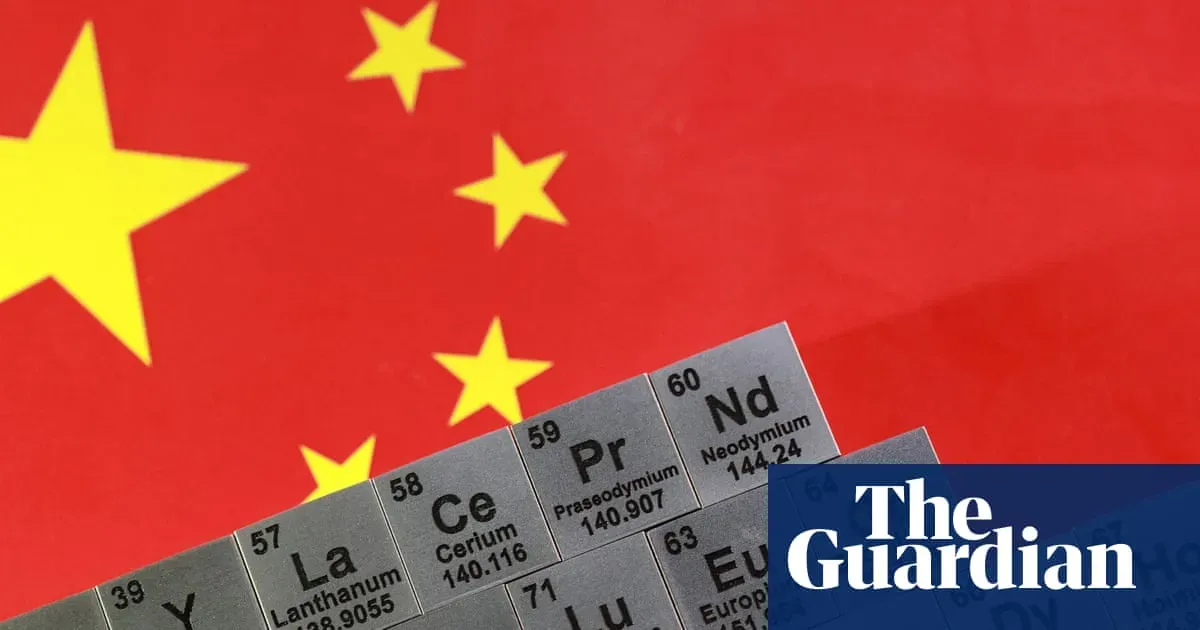
The UK's reliance on China for critical raw materials has been deemed "dangerously high by a parliamentary investigation. The business select committee found that the country is heavily dependent on China for essential minerals used in defence, renewable energy infrastructure, and artificial intelligence.
Critics are calling for an urgent centralised policy to address this issue, including the creation of a dedicated facility to fund rare earth and critical mineral mines. This would involve providing grants, equity, and debt to support diversification efforts.
The committee's chair, Liam Byrne, described critical minerals as the alpha of the new economy, highlighting their importance in driving technological advancements. He warned that without securing these essential resources, the UK will struggle to meet its goals on defence, climate change, and innovation.
China has maintained a stranglehold on the global supply of rare earths and other critical minerals for over 16 years, with the committee labelling Britain's exposure as dangerously high.
The processing stage of critical minerals is where bottlenecks occur, with China dominating the refining of seven key categories of minerals. These include refined lithium essential for electric vehicles and rare earths used in military aircraft to withstand extreme temperatures.
Demand for lithium alone is expected to surge 45-fold by 2030, leaving the UK in a precarious dependency relationship with China. This vulnerability extends to rare earths needed for permanent magnets used in military jets and other applications, which are projected to increase 16-fold over the same period as Britain seeks to rebuild its military capabilities.
The committee warned that a sudden cutoff of rare earth supplies by China, as occurred in 2025, would pose a strategic risk to both the UK economy and national security. This threat is not unique to the UK; other countries, including those in the EU and US, also face the risk of being cut off from critical mineral supplies.
Separate restrictions on legacy chips have already had significant consequences, as seen in October when a dispute over Dutch intervention in China-owned Nexperia led to the European car industry teetering on the brink of shutdown.
The UK's reliance on China for critical minerals has left it vulnerable to global supply chain disruptions, a recent report warns. The situation is further complicated by the US-China trade tensions, which have already led to export restrictions on rare earths.
A one-year reprieve on these restrictions was granted by Chinese President Xi Jinping in October last year, and later extended until January 2027 after his visit to Washington. However, this temporary reprieve has not addressed the underlying issue of the UK's dependence on China for essential minerals.
To mitigate this risk, experts recommend that the UK collaborate closely with its G7 partners, European countries, and Indo-Pacific nations to aggregate demand" and bring in new suppliers. This would help reduce the country's reliance on a single supplier and minimize the impact of any future disruptions.
The report also criticizes the government for lacking transparency in its handling of critical minerals procurement. The investigation found that Parliament is not informed about the capabilities being protected, vulnerabilities identified, or projects undertaken to reduce risk.
The UK's reliance on China for critical minerals has raised concerns about national security and the government's ability to meet its own tests for a secure supply chain. The committee found that the UK could not be confident in satisfying any of its 10 requirements, highlighting the need for new institutional and financial muscle.
A government spokesperson pushed back against these findings, citing a £400m investment to boost domestic production and recycling, as well as forge new international partnerships. However, this effort appears insufficient to address the country's vulnerabilities, with the government's own strategy setting ambitious but potentially unrealistic targets for meeting demand through domestic production and recycling.
Facts based on reporting originally published by The Guardian Business.
You may republish this story, in full or in part, if you credit Noti Group and link to it (licence CC BY 4.0). Photos are not included.