




Lana Nusseibeh Faces Resistance to UN Secretary General Bid
A high-profile figure, Lana Nusseibeh is attempting to rebrand herself as a skilled diplomat capable of mediating conflicts and promoting human rights.
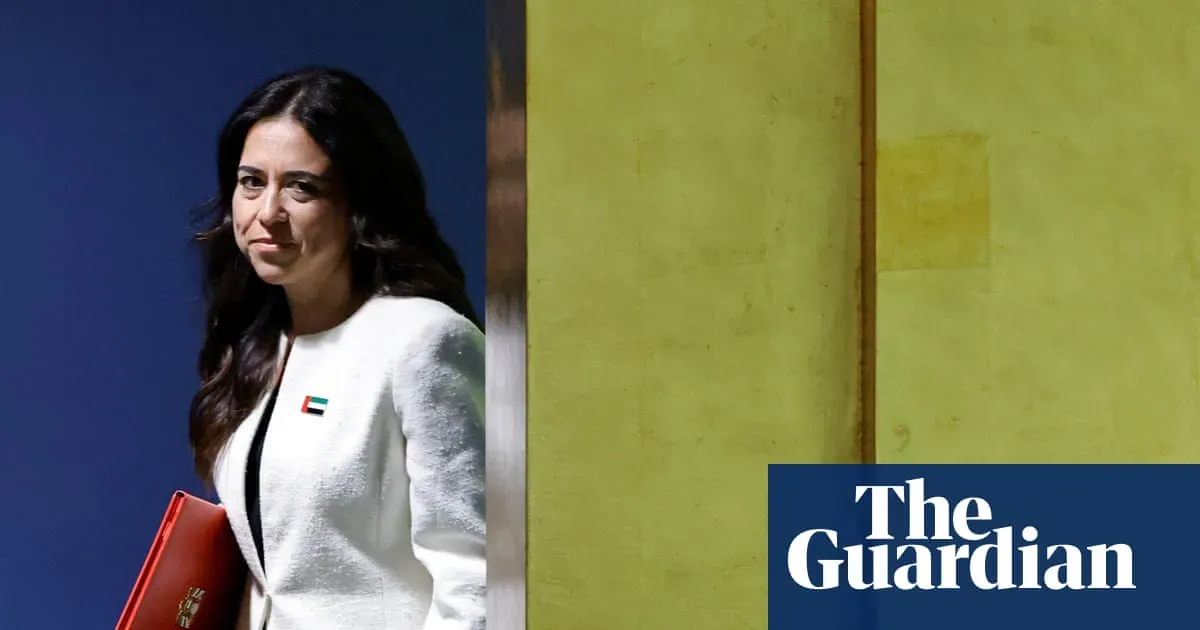
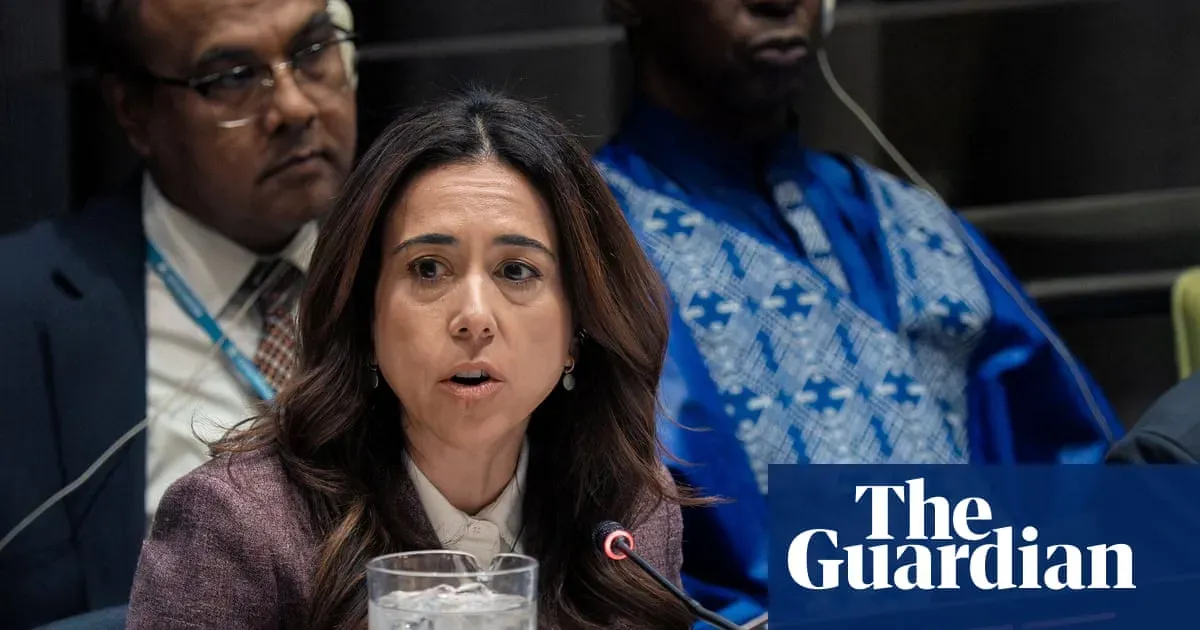
Lana Nusseibeh, a candidate for secretary general of the United Nations, is currently in Britain on a charm offensive aimed at shifting public perception of her past role as a diplomat for the United Arab Emirates.
A high-profile figure, Nusseibeh's bid to become UN secretary general has been met with resistance from some British NGOs and others who have labelled her an apologist for war crimes. She is attempting to rebrand herself as a skilled diplomat capable of mediating conflicts and promoting human rights.
Nusseibeh has maintained that the current geopolitical climate requires a leader with her expertise, stating "these are very geopolitical times" and that fissures in the international system will not dissolve soon. This perspective appears to be part of her efforts to present herself as a strong candidate for the top UN position.
However, Nusseibeh's bid has been dealt a setback by the recent vote of three permanent members of the UN security council: China, France, and the UK. They voted to discourage her candidature, which sets an uphill task for securing the required nine positive votes from the 15-strong security council.
This development is significant as the UN's electoral system requires that candidates secure no discouragement from the permanent five before being recommended to the UN general assembly, where a final vote will be held.
The UN hopeful Lana Nusseibeh believes her chances are not entirely lost despite facing resistance from some quarters. She attributes this to the various theories surrounding the use of veto power in international diplomacy. Sometimes, it's a tactical move, she says, sometimes a holding position, or even a leveraging one. The complexities of this aspect of UN politics have left many observers scratching their heads.
The UK Foreign Office appears to be at the centre of opposition to Nusseibeh's candidacy. This may be due in part to its role as the penholder on Sudan at the UN. As such, it has a significant say in how the issue is handled within the international community. The UK government's stance on this matter seems to have been made clear through a recent blitz of political activity.
Nusseibeh has responded to criticisms by highlighting her broader achievements and experience. She points out that she was instrumental in ensuring humanitarian aid reached Gaza, and that she has supported women's rights in Afghanistan. Her efforts to promote interfaith understanding are also noteworthy. By framing her candidacy in this way, Nusseibeh aims to shift the focus away from her role in Sudan.
As a candidate for secretary general, Nusseibeh believes independence is essential for credibility. She claims that if she were to take on the role, Sudan would serve as a key test of success due to its dire humanitarian situation. The country's ongoing conflict has displaced over 14 million people and created one of the world's most pressing crises.
The UAE government has given Nusseibeh a leave of absence to allow her to campaign independently for the position. However, it remains to be seen whether this move will ultimately prove effective in overcoming opposition from certain quarters. The complex web of alliances and rivalries between regional powers, including the UAE itself, adds an extra layer of complexity to the situation.
The complex dynamics at play in Sudan have long been scrutinized by international observers, including the UN. As part of its efforts to shed light on these issues, a panel of experts recently suggested that the UAE had provided crucial support to the Rapid Support Forces (RSF). This claim has sparked renewed debate about the UAE's role in the conflict.
The charges against the UAE have been repeatedly denied by Lana Nusseibeh, who served as a diplomat for the country. However, she has publicly disputed UN investigators' findings on this matter. The UN panel of experts' allegations have added to the growing list of concerns surrounding the UAE's involvement in Sudan.
Nusseibeh was asked about her past denials of the UAE's support for the RSF and her role in challenging critical UN reports. In response, she expressed regret that the Sudanese civil war had continued for so long. This sentiment is a departure from her previous stance on the matter.
The ongoing conflict has resulted in countless atrocities, including widespread sexual violence and the use of chemical weapons against civilians. These abuses have been committed without accountability, leaving many victims feeling voiceless. Nusseibeh acknowledged that these suffering are a litany of pain inflicted upon the Sudanese people.
In her new role as a secretary general candidate, Nusseibeh is now avoiding direct comment on allegations of UAE support for the RSF. She stated she was aware of the claims but declined to elaborate, citing her changed status as no longer a UAE official.
The UN hopeful's stance on Sudan has been met with scrutiny, with some questioning her past involvement in the country.
Her comments suggest a willingness to challenge established norms and push for greater accountability in global conflicts.
In her analysis of contemporary diplomacy, Nusseibeh noted that nations have defaulted to non-cooperation, leading to a lack of effective collaboration on pressing issues.
The UN has been criticized for its absence from several conflicts, with some arguing that it has failed to utilize its full range of tools and expertise.
Nusseibeh has proposed establishing a mediation board to deploy the UN's toolkit in a more strategic and targeted manner, leveraging resources more effectively.
She highlighted the need for a strategist and mediator-in-chief who can identify key areas of conflict and deploy the UN's assets accordingly.
The complexity of UN operations is a significant challenge that needs to be addressed. With 4,000 different open mandates, it's clear that prioritization is essential for effective decision-making. This requires identifying key areas of conflict and deploying the organization's assets accordingly.
However, Lana Nusseibeh's track record on Sudan has raised concerns about her ability to navigate delicate situations. Critics argue that her actions have been influenced by the UAE's strategic interests, which prioritize autocratic capture over UN standards. "It is a very smart strategic play by the UAE," one critic said, and it would lead to the asset-stripping of the UN and its values.
The next security council vote is scheduled for Monday, and it remains to be seen how the situation will unfold. The flexibility of the P5's mandates may become clearer, potentially altering the dynamics of the race. If a consensus emerges, it could finally bring an end to the impasse, allowing the UN to move forward with renewed purpose and direction.
Facts based on reporting originally published by The Guardian World.
You may republish this story, in full or in part, if you credit Noti Group and link to it (licence CC BY 4.0). Photos are not included.