

Colombian Police Operation Kills 18-Year-Old Day Labourer
An 18-year-old man was killed in a police operation targeting armed groups in northern Colombia's Sierra Nevada mountains.
A 18-year-old man, Ricardo Martinez, left his home on September 13 to work as a day labourer at a cattle ranch in northern Colombia's Sierra Nevada mountains.
The ranch was targeted by police just eight days later, as part of President Abelardo de la Espriella's security crackdown against armed groups.
De la Espriella had pledged to wage an all-out war against the country's armed groups, abandoning peace talks and prioritizing military offensives instead.
Seven alleged paramilitary fighters were killed in the operation, along with three others arrested.
The police presented evidence of their success, including semi-automatic rifles and ammunition laid out on a table alongside seven white body bags.
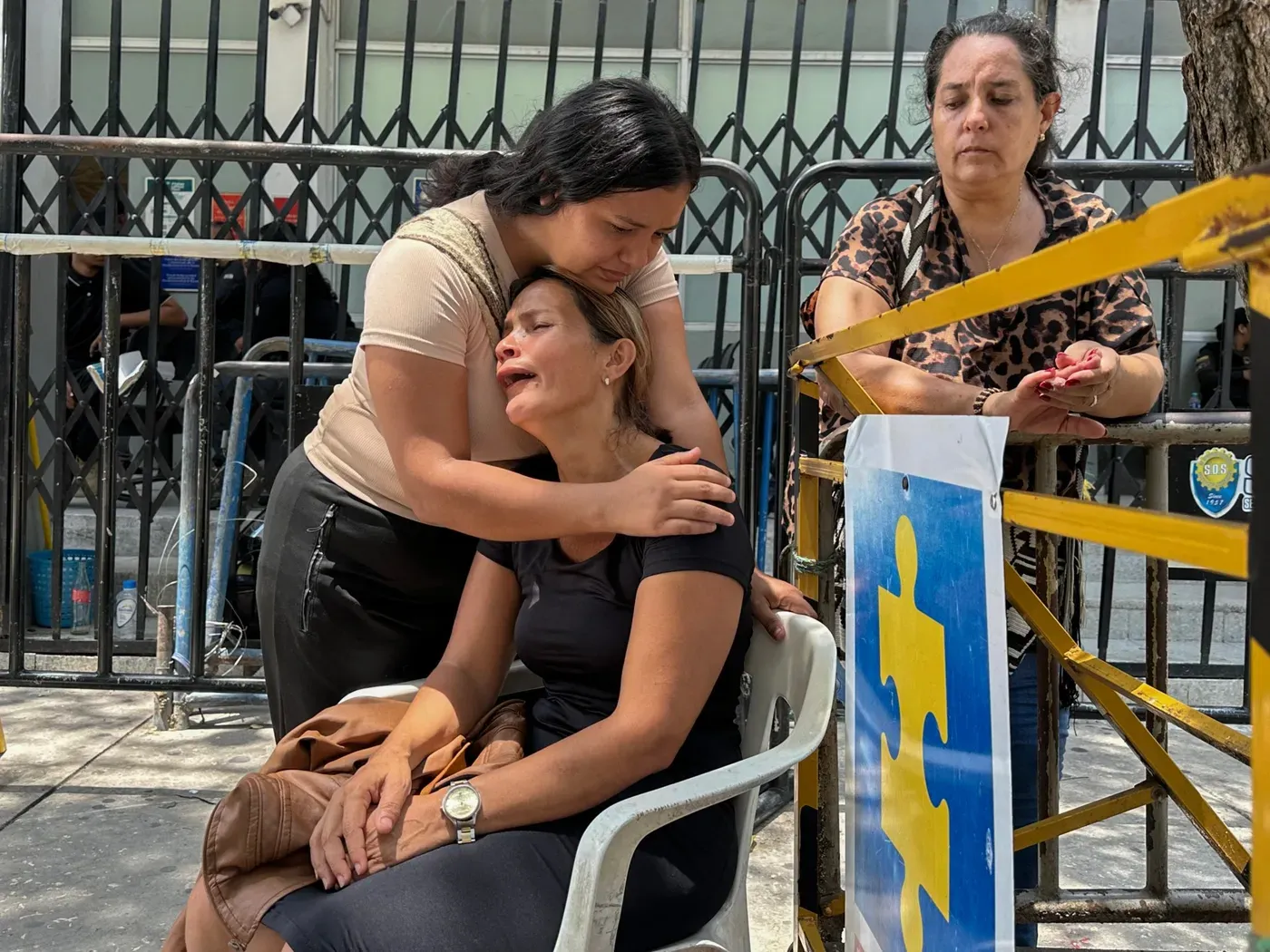
Inside one of those body bags was Ricardo Martinez, who had been working at the ranch as a day labourer when he died. His mother, Marelvis Rodriguez, is demanding justice for her son's death.
President de la Espriella praised the operation as a major blow to the Conquering Self-Defence Forces of the Sierra Nevada (ACSN), a paramilitary force accused of trafficking cocaine to Central and South America, Europe, and the United States.
The recent death of a teenager has sparked concerns that Colombia may be reverting to a dark period in its history marked by extrajudicial killings.
These "false positives incidents saw state agents killing civilians and presenting them as enemy fighters between 1990 and 2016, according to figures released by the Special Jurisdiction for Peace, a tribunal established to investigate human rights abuses.
Rights groups are sounding the alarm that such practices may be making a comeback, with Lerber Dimas, director of the Human Rights Defenders Platform of Sierra Nevada, warning: We fear that we could see a resurgence of false positives.
Some politicians have also expressed their concerns about this possibility. Representative Daniel Monroy has been vocal in his criticism of the administration's handling of the situation.
Monroy led a protest in Congress to highlight Martinez's death, describing it as an extrajudicial execution and calling on the government to take action against those responsible.
In a separate social media post, Monroy asked: Why are they killing young people and presenting them as combat casualties?
The mother's life was marked by constant struggle to make ends meet. With her youngest son, Martinez, dropping out of school to work alongside her, their two-person household relied heavily on odd jobs for survival.
They worked tirelessly in various sectors - construction, coffee harvesting, and milking cows - to keep food on the table. Everywhere I went, he went, Rodriguez recalled about her son's dedication. They were a team, always working together to find employment when there was none.
The teenager had big plans for his future, hoping to learn English to become a tour guide and eventually open a hostel catering to tourists in their region. He shared these ambitions with his mother, who was proud of his aspirations.
Their lives had been relatively peaceful until the fateful day of September 21, when news spread on social media about a police operation near the ranch where Martinez worked. The authorities had blocked off the road, and Rodriguez rushed to find her son.
As she waited to be let through, officials informed her that police had targeted the ranch itself. The next day, Rodriguez visited the forensic institute in a nearby city, where officials confirmed her worst fears: her son had been killed.
The police raid on the ranch was a pivotal moment in the events leading up to Martinez's death, and it has raised more questions than answers for his family.
According to eyewitness accounts, Martinez was unarmed and dressed as a civilian when he was singled out by police and fatally shot in the chest during the operation. The circumstances of his killing have sparked widespread outrage and debate about the use of force by security forces in Colombia.
Rumours quickly circulated online that Martinez was the son of Freddy Castillo, the top commander of the ACSN, which further fueled speculation about his involvement with the group. However, these claims were later debunked by the Defence Ministry on social media, which clarified that it was up to the Attorney General's Office to determine what people were doing at the ranch during the raid.
The spread of misinformation and manipulated images has added to the confusion surrounding Martinez's death. An image altered using artificial intelligence showed him carrying a gun, but this was later revealed to be false and had been circulated on social media as evidence of his ties to the ACSN.
Despite efforts by the authorities to clear up the matter, Martinez's family is still struggling to find answers about what happened to their son. Rodriguez has expressed frustration at the lack of transparency in the investigation, particularly with regards to the autopsy report for her son.
She was told that the state forensic institute refused to release the report, and when his body was finally returned four days after his death, it was badly decomposed. One of her family members advised against viewing the body due to its condition.
Rodriguez has filed a complaint with the Attorney General's Office over Martinez's death, but she is still seeking answers about why deadly force was used in her son's case.
The Attorney General's Office has confirmed that Martinez's case will be handled by the military justice system, which investigates alleged crimes committed by security forces. This decision was made because the police operation in question was a planned and scheduled affair, having received prior judicial authorization.
Concerns have been raised about the potential risks to civilians posed by the government's aggressive security strategy. These concerns are not unfounded, as two new allegations of extrajudicial killings have emerged since Martinez's death.
The popularity of de la Espriella remains a topic of interest, with his approval rating standing at over 48 percent as of November, according to AtlasIntel research. This puts him ahead of other public figures in the survey, including his predecessor Gustavo Petro.
The US administration under Donald Trump has been instrumental in pushing Latin American leaders to dismantle groups it considers narcoterrorists. This pressure has informed de la Espriella's hardline approach to security.
Achieving this security goal will be a complex task, according to Laura Bonilla of the Peace and Reconciliation Foundation. The armed groups operating in Colombia today are increasingly difficult to detect due to their smaller units and ability to blend into civilian populations.
Most armed groups today are not easily identifiable," said Bonilla. They no longer have large camps with hundreds of people. This shift requires a different approach, one that relies on police and judicial capabilities rather than large-scale military operations.
The Colombian government is being urged to take a more cautious approach to security operations following the death of a teenager.
"We're telling the government that if an operation poses a risk to civilians, it's better not to carry it out," said Dimas, echoing the sentiments of many who are calling for a change in strategy. This would involve waiting for another opportunity when the risks to civilians can be mitigated.
Rodriguez, a grieving mother, has also been vocal about her concerns. She wants military bombardments in rural areas to stop due to the dangers they pose to innocent people. Additionally, she believes that intelligence gathering should be improved before operations are carried out.
At the cemetery in Santa Marta where her son is buried, Rodriguez regularly brings an offering of red flowers as part of her Sunday ritual. Her grief is palpable as she reflects on what happened. "It's not fair, she said, standing beside his tomb, I want to know why they killed him when the authorities are supposed to protect citizens like him."
Facts based on reporting originally published by Al Jazeera.
You may republish this story, in full or in part, if you credit Noti Group and link to it (licence CC BY 4.0). Photos are not included.