






Kenya Confirms Second Ebola Death Amid Escalating Outbreak
A 65-year-old woman has become the second person in Kenya to die from Ebola, marking an escalation of the disease's spread in the country.
A 65-year-old woman has become the second person in Kenya to die from Ebola, marking a significant escalation of the disease's spread in the country.
The woman was a close family member of the first victim, who had traveled from the Democratic Republic of Congo, and had been placed in quarantine. Her death highlights the rapid transmission of the virus within families.
In an effort to contain the outbreak, seven other patients are currently receiving treatment at two isolation facilities. These cases all appear to be connected, with no evidence of wider community spread detected so far.
Kenya's health ministry has confirmed that these cases form a single cluster, which suggests that the virus is being transmitted primarily within a confined group rather than spreading more broadly through the population.
In related developments, more than 4,000 people have died in Africa since Ebola was confirmed in DR Congo in May.
The Bundibugyo strain of Ebola is a relatively rare form of the disease, characterized by its unique genetic profile. Unlike other forms of Ebola, this strain can cause severe bleeding, both internally and externally, which can lead to organ failure if left untreated. The symptoms of Ebola are often severe, with vomiting and diarrhea being common complaints as the disease progresses. If not treated promptly, Ebola can be fatal.
Ebola is primarily spread through contact with infected bodily fluids such as blood or vomit. This means that healthcare workers and others who come into close proximity to an infected person are at high risk of contracting the disease. In order to prevent further outbreaks, it's essential for people to take precautions when interacting with individuals suspected of having Ebola.
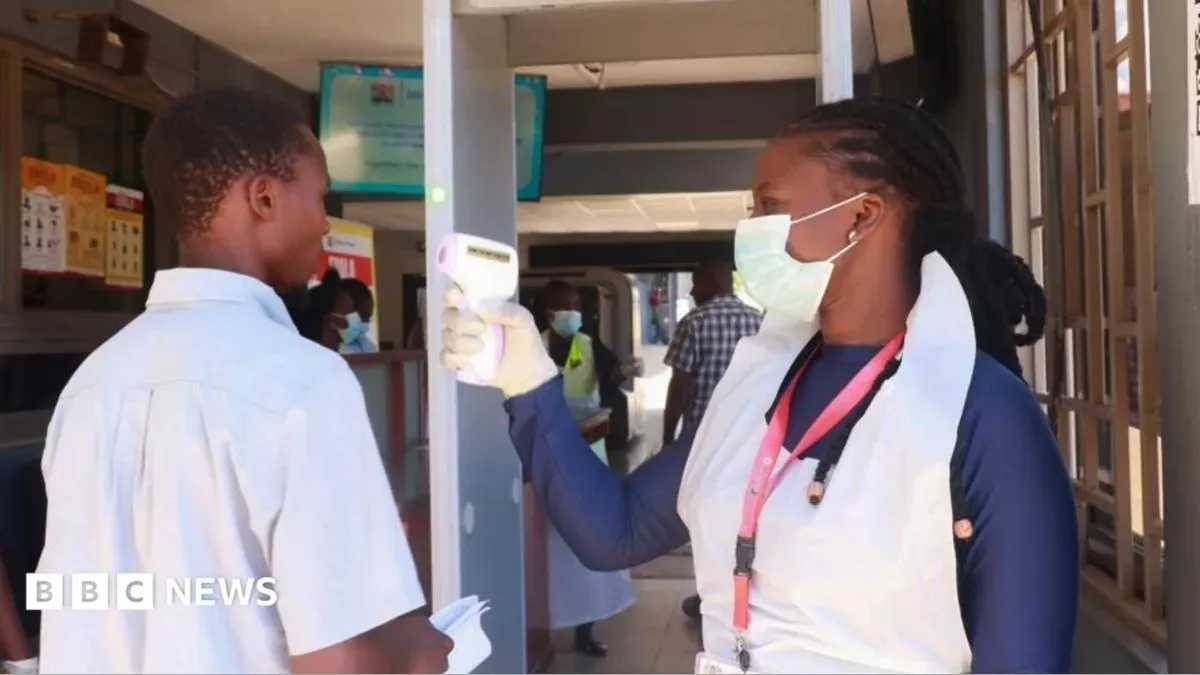
Kenya is taking steps to mitigate the risk of Ebola importation by introducing enhanced screening measures for travelers arriving from countries considered to be at high risk. These countries include DR Congo, Uganda, Tanzania, Rwanda, Burundi, Angola, Zambia, Ethiopia, South Sudan, and the Central African Republic. Travelers from these nations are required to complete a digital surveillance form before boarding their flights and present a QR code upon arrival in Kenya.
In addition to traveler screening, Kenya has also ordered enhanced public health screening of aircraft arriving from high-risk countries. This involves inspecting passengers and crew members for any signs of illness and taking samples if necessary. The goal is to identify potential cases early on and prevent further spread within the country.
The Kenyan government is working closely with international organizations like the International Rescue Committee to contain the spread of Ebola. According to their analysis, Kenya faces a steady risk of new cases arriving from DR Congo due to the large number of reported cases in that country. To address this concern, public awareness campaigns have been launched to educate people on the risks and symptoms of Ebola, as well as the importance of seeking medical attention if they suspect someone has contracted the disease.
Public awareness campaigns in Kenya aim to educate people on the risks and symptoms of Ebola, as well as the importance of seeking medical attention if they suspect someone has contracted the virus. These campaigns focus not only on identifying potential cases but also on preventing further spread through good hygiene practices.
Kenyan health officials have been working closely with their counterparts in neighboring countries to track any possible connections between recent outbreaks. In a related development, Nigeria's health minister announced that the country's single confirmed case of Ebola appears to be genetically linked to a strain identified earlier in Kenya.
The investigation into the possible connection between Kenya and Nigeria's cases is ongoing, with further testing being conducted to determine whether there was any direct contact between the two patients. According to Professor Ali Pate, Nigeria has thus far recorded only one confirmed case of Ebola, with additional tests yielding negative or pending results.
While health officials continue to investigate the potential link between the Kenyan and Nigerian cases, public awareness efforts in Kenya remain a priority to prevent further spread of the virus. By emphasizing good hygiene practices and educating people on the risks and symptoms of Ebola, authorities hope to contain the outbreak and prevent any future cases from emerging.
Facts based on reporting originally published by BBC News World.
You may republish this story, in full or in part, if you credit Noti Group and link to it (licence CC BY 4.0). Photos are not included.