







Alzheimer's Disease May Show Early Signs Years Before Memory Loss Sets In
Researchers have found early signs of brain deterioration in people with Alzheimer's disease, which can occur up to a decade before memory loss begins.
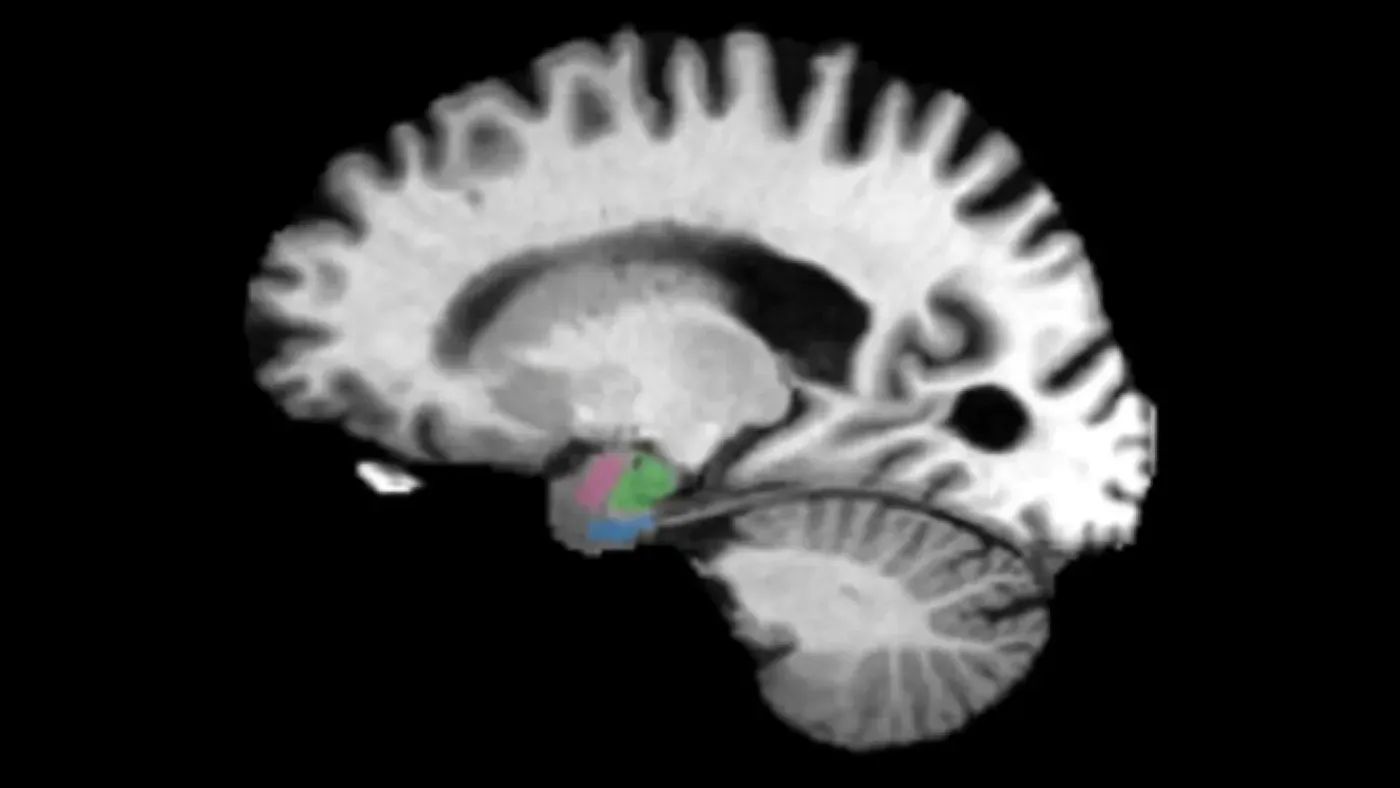
Alzheimer's disease may start showing its hand years before memory loss sets in, with early signs of brain deterioration emerging as much as a decade beforehand.
Researchers at Johns Hopkins University have pinpointed two specific brain regions that are among the first to show signs of decline: the entorhinal cortex and amygdala. These areas play crucial roles in memory and emotion, respectively. They were found to be losing tissue earlier than another key region often examined for Alzheimer's evidence, the hippocampus.
The discovery was made possible by analyzing hundreds of brain scans, which revealed that these two regions begin to deteriorate before any noticeable cognitive decline occurs. This finding could ultimately lead to early detection and treatment of Alzheimer's, potentially giving patients a better chance at slowing down or halting the disease.
According to Michael Miller, biomedical engineer and senior author of the study, It's a 5-10 year window where your brain is changing. He notes that this time frame offers a critical opportunity for intervention. If researchers can develop effective treatments that can be administered early on, they may be able to make a significant difference in patients' lives.
The study's findings were recently published in NeuroImage Reports and will also be presented at the annual meeting of the Society for Neuroscience, where experts are gathering to share their latest research and discoveries.
Scientists have long known that Alzheimer's disease can be a silent killer, progressing in the brain for years before symptoms become apparent. The disease's gradual onset has led researchers to believe that intervening early on could potentially make a significant difference in preserving cognitive function.
In order to take advantage of this window of opportunity, reliable methods are needed to identify the disease at its earliest stages. This is where biomarkers come into play - measurable biological changes that can indicate the presence or progression of Alzheimer's. By detecting these markers, researchers may be able to pinpoint individuals who are developing the condition before symptoms become apparent.
Biomarkers have shown promise in Alzheimer's research as a way to reveal early warning signs of the disease. The goal is not just to diagnose the condition earlier, but also to treat it more effectively by intervening before extensive damage occurs. This could potentially delay or even stop the progression of the disease altogether.
Hundreds of MRI and PET scans from two separate research projects were analyzed in an effort to identify the earliest detectable changes associated with Alzheimer's. These scans came from the Alzheimer's Disease Neuroimaging Initiative and the Biomarkers of Cognitive Decline Among Normal Individuals study, providing valuable data for researchers to examine.
The findings of this study will be presented at the annual meeting of the Society for Neuroscience, where experts will gather to share their latest research and discoveries.
As researchers continued to monitor individuals at various stages of Alzheimer's disease, a consistent pattern emerged from their scans. In both groups, including those without symptoms and those who eventually succumbed to the disease, two specific brain regions showed greater relative tissue loss in the early stages than the hippocampus itself.
The entorhinal cortex and amygdala, situated near the hippocampus, are responsible for distinct functions that contribute to memory and emotional processing. While the hippocampus plays a crucial role in memory formation, these newly highlighted areas perform vital tasks of their own: the entorhinal cortex facilitates retrieval of stored memories, while the amygdala is involved in emotional memory.
The difference in tissue loss between these regions and the hippocampus has significant implications for diagnosing Alzheimer's. By examining the entorhinal cortex and amygdala together, doctors may uncover signs of the disease that are less apparent when focusing solely on the hippocampus.
A key connection was also discovered between brain tissue loss and tau protein, a molecule associated with Alzheimer's disease. Under normal circumstances, tau helps maintain nerve cell structure, but in Alzheimer's, it can accumulate abnormally and form tangles that disrupt healthy brain function.
The researchers used PET imaging and digital pathology to visualize the relationship between gray matter shrinkage and tau-related changes. They found that areas of tissue loss overlapped with regions showing abnormal tau accumulation, highlighting a critical link between these two factors in Alzheimer's disease progression.
The connection between tissue loss and abnormal tau accumulation in specific brain regions has significant implications for understanding the progression of Alzheimer's disease.
Entorhinal cortex and amygdala, two areas of the brain that are often affected by the condition, show changes years before memory loss becomes apparent.
Measuring tissue loss in these regions could potentially serve as an early indicator of cognitive decline, giving doctors a valuable tool for identifying individuals at risk.
This approach may become more practical as brain imaging technology improves and costs decrease, making it possible to examine these areas earlier in life for those with a family history or other risk factors.
Understanding the molecular changes that occur in specific brain regions is crucial to developing effective treatments for Alzheimer's disease.
Researchers aim to investigate these regions at a microscopic level, examining how abnormal tau accumulation leads to progressive loss of brain tissue and identifying the biological processes involved.
Ultimately, this research could lead to new targets for therapies designed to interrupt Alzheimer's progression before extensive damage occurs.
Facts based on reporting originally published by ScienceDaily Health.
You may republish this story, in full or in part, if you credit Noti Group and link to it (licence CC BY 4.0). Photos are not included.