





Interest Rate Hike Looms
The Bank of England is expected to raise interest rates for the first time in over three years due to rising inflation.
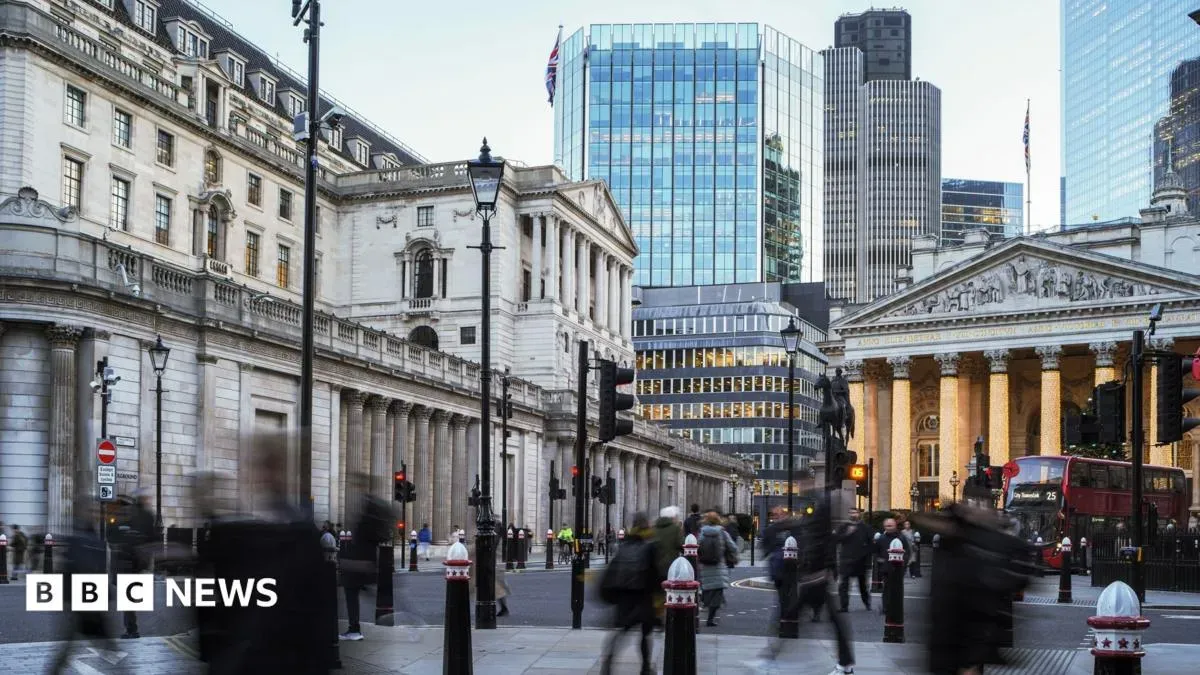
Policymakers at the Bank of England are poised to raise interest rates for the first time in over three years, a move that would have significant implications for both individuals and businesses.
Analysts widely predict that the benchmark rate will increase from 3.75% to 4%, with this rise expected to boost savers but also make borrowing more expensive. The decision follows a decline in the Bank rate from its peak of 5.25% reached during 2023-24, despite the Monetary Policy Committee's (MPC) recent reluctance to change the rate.
The impending interest rate hike is largely driven by rising inflation, primarily fueled by escalating petrol and diesel costs. This upward pressure on prices has forced policymakers into a corner, making an increase in interest rates increasingly likely as they seek to balance high inflation with a weakening economy.
The announcement of the new interest rate will be made by the Bank at 12:00 GMT on Thursday, with close attention also being paid to any hints from the MPC regarding future direction.
Inflation is on the rise again, with the Consumer Prices Index (CPI) measure reaching 3.5% in the year to September, up from 3.1% the previous month and significantly above the central bank's target of 2%.
The current inflation rate is largely attributed to the ongoing impact of the Iran war, which has led to increased costs for energy and fuel. This ripple effect is expected to continue, with millions of domestic energy customers facing a substantial price hike in January.
As a result, the Bank of England may consider increasing its base rate, which influences the interest rates charged by other banks and building societies on mortgages and savings accounts. A rise in the base rate would have an immediate impact on tracker mortgage-holders, who make up around 510,000 of the UK's mortgage market.
Calculations suggest that a 0.25 percentage point increase in the base rate would result in a £31 monthly increase for someone with a typical tracker home loan, according to UK Finance estimates.
Mortgage-holders on variable deals will need to wait for their lender's response before adjusting their repayment plans, as any Bank rate increase will first be reflected in new loan agreements.
For those on fixed deals, the situation is more complex. Although their current monthly payments won't change in reaction to a rate hike, their future interest rates have already been influenced by lenders' expectations of an impending rise.
According to Moneyfacts, the average two-year fixed residential mortgage rate was 5.96% as of November 4th, while the five-year rate stood at 5.99%. This indicates that borrowers rolling off a fixed deal will face higher mortgage costs.
Lenders' pricing strategies suggest that some borrowers now face significantly higher annual repayments on their mortgages compared to those who secured remortgage deals in 2021.
Borrowers are advised to carefully consider their financial situation before making a decision on remortgaging.
The cost of new loans may also be affected by the Bank rate, which could have implications for borrowers who opt for these types of deals.
Savers, however, might benefit from improved interest rates offered by lenders in response to any increase in the Bank rate.
Facts based on reporting originally published by BBC News Business.
You may republish this story, in full or in part, if you credit Noti Group and link to it (licence CC BY 4.0). Photos are not included.