







Rocket Lab delays Neutron rocket launch until 2027
Rocket Lab's Neutron rocket program has been pushed back to 2027 due to manufacturing issues with the large booster stage.
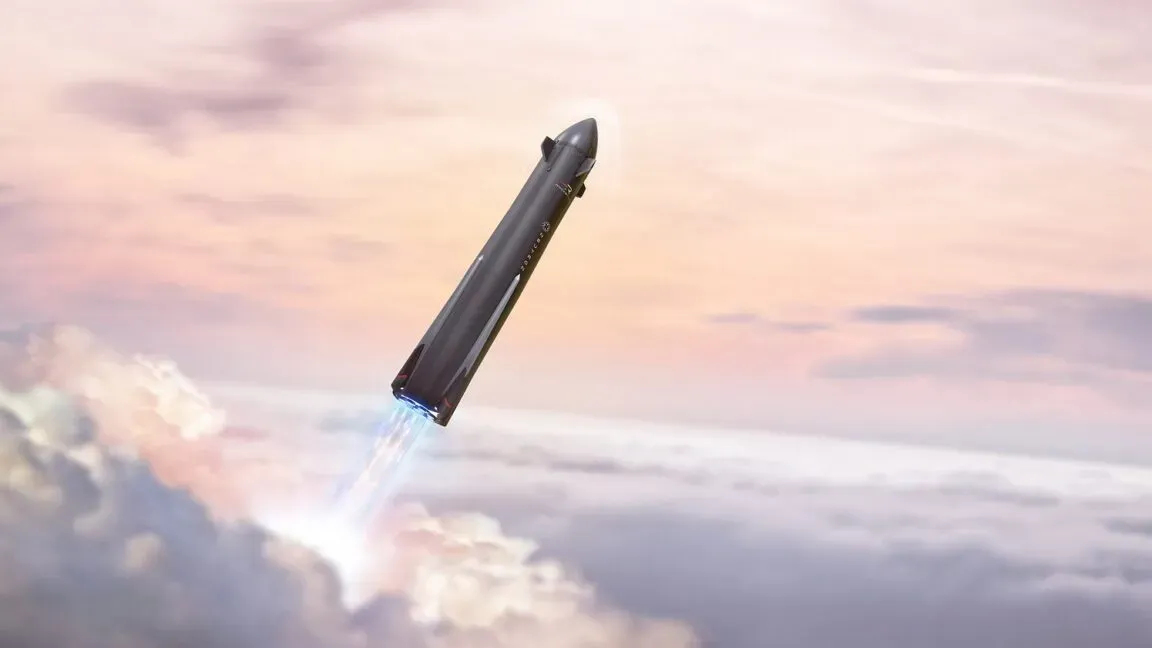
Rocket Lab has announced another significant delay for its Neutron rocket program, pushing back the first launch until 2027. This news confirms what insiders have been speculating about for some time, following a recent update from the company in August.
According to sources, Rocket Lab's Neutron rocket was initially expected to take off from Wallops Island, Virginia, by the end of this year. However, with the latest delay, it is clear that the first flight will now likely slip into 2027.
The manufacturing process for the Neutron's large booster stage has been identified as the main challenge. The rocket's reusable first stage is made up of carbon composite structures, which offer several advantages including low weight, high strength, and corrosion resistance.
However, these complex materials can be difficult to work with, especially in aerospace applications where precision and consistency are crucial. Rocket Lab's founder and CEO, Peter Beck, has acknowledged the issue, citing a manufacturing defect affecting the propellant domes at the ends of the rocket's first stage tanks.
A critical issue has been identified with Rocket Lab's Neutron rocket, which is currently undergoing development. Engineers have discovered voids between layers of carbon fiber in the propellant domes at the ends of the first stage tanks.
The voids were found in a newly cured forward dome and could potentially affect the structure's strength, durability, and reliability. However, it has not been determined whether these defects would cause the dome to fail during flight.
The issue is attributed to a recent design change aimed at strengthening the rocket's structure. This modification was introduced after a propellant tank ruptured unexpectedly during a hydrostatic pressure test in January, highlighting a manufacturing defect at a critical join.
Rocket Lab has developed new out-of-autoclave processes to build the Neutron rocket due to its large scale, which cannot fit into an autoclave for curing. A custom cure cycle was designed specifically for the forward and aft domes, but it appears this process may not be entirely effective in eliminating voids.
The discovery of voids has led Rocket Lab to re-evaluate its manufacturing processes and design specifications for the Neutron rocket. The company is working to address these issues and ensure that the rocket meets its performance requirements before proceeding with further development.
Rocket Lab has modified its manufacturing process for the carbon composite tank of its Neutron rocket after a failed tank was discovered during testing. The company had opted for a manual hand-lay process to speed up production while it brought online an automated fiber placement machine, which is now operational.
The decision to use a manual process led to voids forming in some sections of the tank's structure. To address this issue, Rocket Lab has increased the thickness of those affected areas and deleted joints in the first stage tank structure. These changes were made to prevent similar problems from occurring in future tanks.
According to officials, the modifications seem to have resolved the issue. An aft propellant dome manufactured using the updated procedure passed inspection without any issues. This gives Rocket Lab confidence that its new manufacturing process will yield reliable results.
Rocket Lab has also made significant progress on other aspects of the Neutron rocket's development. The company completed qualification testing on the expendable second stage and payload fairing last year, a crucial step towards ensuring the rocket's overall performance.
The Neutron rocket is designed to be significantly larger than Rocket Lab's Electron launch vehicle, with a diameter of 23 feet (7 meters) compared to the Electron's 3.9 feet (1.2 meters). This increased size will allow the Neutron to carry heavier payloads into orbit.
Rocket Lab's unique design for the Neutron rocket features the upper stage and payload resting inside the first stage's nose cone during launch. After a few minutes, the booster stage opens its clamshell-like nose cone to release the upper stage and payload, which then continues accelerating into orbit.
The development of Rocket Lab's medium-lift Neutron rocket is ongoing, but it has not been without its challenges.
Qualification of the rocket's first stage is still pending, a critical component that must withstand internal pressure and the rigors of launch and reentry. Additionally, the Archimedes engine, which will power nine boosters on the Neutron rocket, also requires final qualification testing.
Rocket Lab has reported progress in its development timeline, but it seems to be an ongoing process. The company had initially aimed for a first flight in 2024 when the Neutron was announced in 2021.
The launch campaign for the Neutron rocket is scheduled to take place on Virginia's Eastern Shore, involving multiple integrated fueling tests and countdown rehearsals. This phase can be lengthy, often taking months to complete before a first flight.
Engineers have identified new problems during integrated testing, necessitating repeat tests and adjustments to procedures and hardware on the launch pad and the rocket. This is a common occurrence in the development of new rockets.
Rocket Lab's focus remains on quality and avoiding any compromises that might put the Neutron rocket or its payload at risk. The company's aim is to make orbit on the first try, without relying on qualifiers about clearing the pad as success.
Rocket Lab's Neutron rocket is designed to compete in a wider range of launch contracts, including those from the US military and operators of satellite megaconstellations. The company aims to offer more lift capacity than its current Electron rocket, which can deploy up to 660 pounds of payload into low-altitude orbit.
Neutron has a significant increase in lift capability, with a capacity of nearly 29,000 pounds to low-Earth orbit. This is designed to make it an attractive option for satellite operators who need to launch larger payloads. With SpaceX's Falcon 9 rocket set to retire from commercial service in the next few years, Rocket Lab sees an opportunity to fill the gap.
The company has been working on developing Neutron's infrastructure simultaneously with building its first rocket, allowing for quick scaling and addressing global launch crunches. However, this approach also comes with challenges, as acknowledged by Rocket Lab's executives. They have emphasized that they won't rush to launch with unnecessary risk.
Rocket Lab faces stiff competition in the medium-lift market from other companies like Relativity Space, Stoke Space, and Firefly Aerospace. These firms are developing their own rockets to address the same customer base, making it a crowded field for Rocket Lab to navigate.
The delay in Neutron's development is likely to give these competitors more time to catch up with their own projects, potentially impacting Rocket Lab's chances of securing launch contracts from satellite operators and governments.
Facts based on reporting originally published by Ars Technica.
You may republish this story, in full or in part, if you credit Noti Group and link to it (licence CC BY 4.0). Photos are not included.