





Egypt Journalists Syndicate Defends Detained Colleagues
The syndicate is defending six detained journalists who are facing charges of joining a "terrorist group" after their arrest on September 28 and 29.
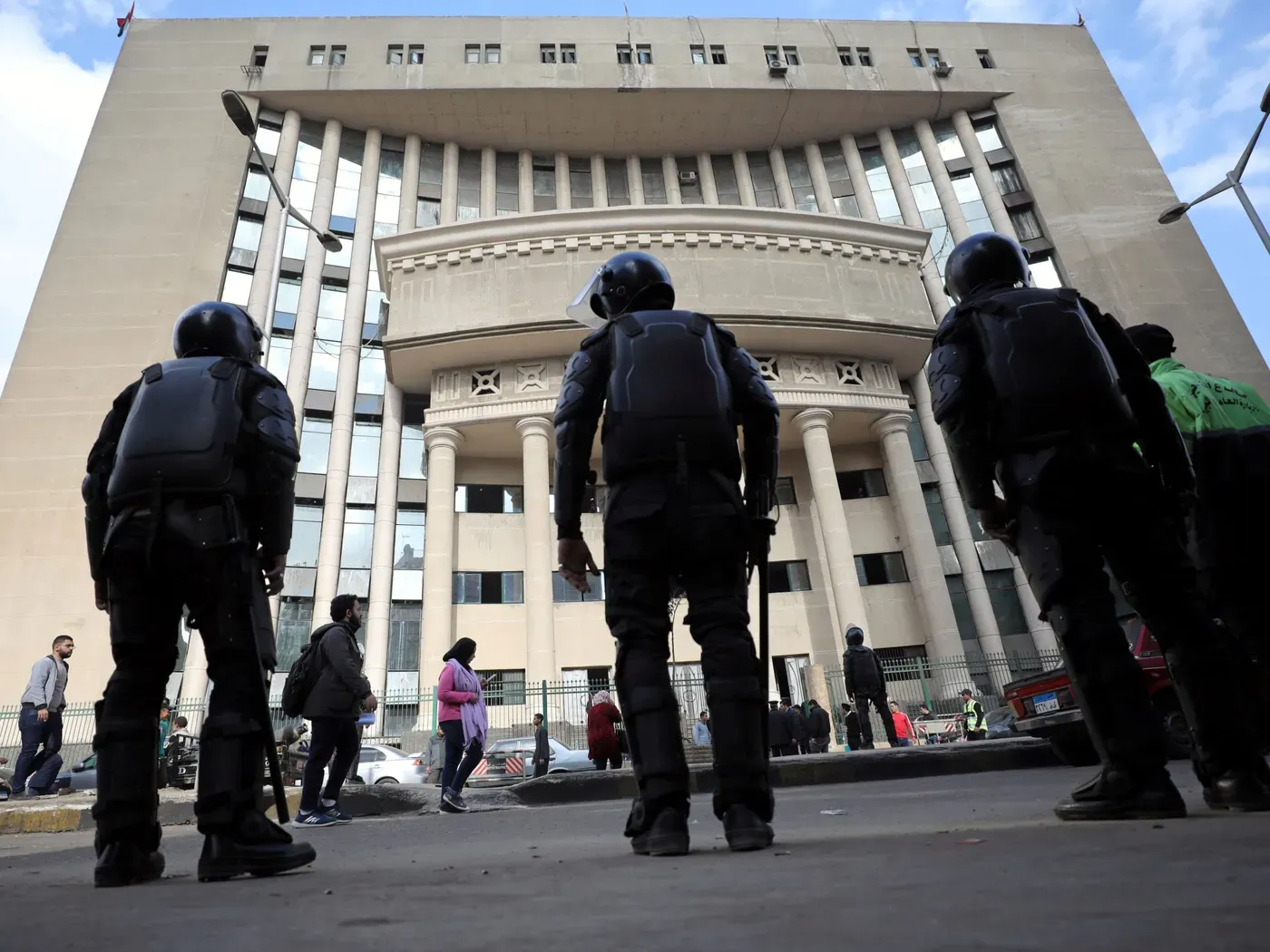
Egypt's Journalists Syndicate has come under fire from pro-government commentators for defending six detained journalists who are facing charges of joining a "terrorist group.
The syndicate's chief, Khaled Elbalshy, insists that the organisation will continue to fight for press freedom and protect its members. In a statement on Sunday, he highlighted the importance of standing together as colleagues in the face of threats to their profession. What happens to one colleague affects us all," he said.
The controversy surrounding the detained journalists has sparked debate over Egypt's strict laws governing press freedom. The six men, who work for investigative website Matsadaash, were arrested on September 28 and 29 and have been ordered to be held in pretrial detention for 15 days pending investigations.
Egyptian authorities deny allegations that the detainees were tortured during their interrogation. However, the journalists' syndicate has filed a complaint with the public prosecutor over these claims, which it believes are crucial to the ongoing case.
Egyptian prosecutors have made serious allegations against six detained journalists, claiming they worked for a media organisation linked to the Muslim Brotherhood. This accusation has been a long-standing concern for Egyptian authorities, who view the group as a threat after the 2013 coup that ousted democratically elected President Mohamed Morsi, a member of the Muslim Brotherhood.
The Muslim Brotherhood has repeatedly denied being a terrorist organisation, and human rights groups have accused Egyptian authorities of suppressing freedoms. The Egyptian government's stance on the Brotherhood has been consistent since the coup, with the group officially designated as a terrorist entity.
Matsadaash co-founder Abdelrahman Mansour has categorically rejected any claims that his platform is affiliated with the Muslim Brotherhood. His denial underscores the complexity of the situation and raises questions about the basis for the allegations made against the detained journalists.
The Journalists Syndicate's representative noted during questioning that the principle of presumed innocence remains essential in cases like these, particularly when dealing with vulnerable individuals. This principle is enshrined in the law and serves as a safeguard against arbitrary detention or prosecution.
The six journalists were initially held for five days without access to their families or lawyers, sparking concerns about the treatment of detainees under Egypt's 2015 Counterterrorism Law. According to this law, suspects can be detained before appearing before prosecutors if there is a perceived risk of a terrorist crime and a need to prevent it.
The Egyptian Initiative for Personal Rights (EIPR) has criticized the public prosecution's handling of the detained journalists' cases, stating that the authorities should have identified a clear terrorist threat to justify denying them their right to appear before a judicial authority within 24 hours.
According to the EIPR, many of the six journalists claimed they were subjected to torture after their arrests, including beatings and electric shocks. Furthermore, several of the detainees were allegedly forced to record fabricated confessions. The allegations have been denied by Egypt's Interior Ministry, which has not provided any further comments on the matter.
Matsadaash, the fact-checking platform turned investigative journalism outlet, has faced significant pressure from Egyptian authorities in the past. Its website is currently blocked in Egypt, but it maintains a large following of over 1.3 million Facebook users. The outlet's history with the government includes the arrest of one of its journalists, Karim Asaad, who was later released after publishing an investigation into a suspected smuggling scandal involving a plane that had flown from Cairo to Zambia in 2023.
Facts based on reporting originally published by Al Jazeera.
You may republish this story, in full or in part, if you credit Noti Group and link to it (licence CC BY 4.0). Photos are not included.