






Data Centers Become Physical Foundation for Tech Companies' AI Ambitions
The expansion of massive new data centers is sparking intense debates over their impact on power grids, communities, and the environment worldwide.

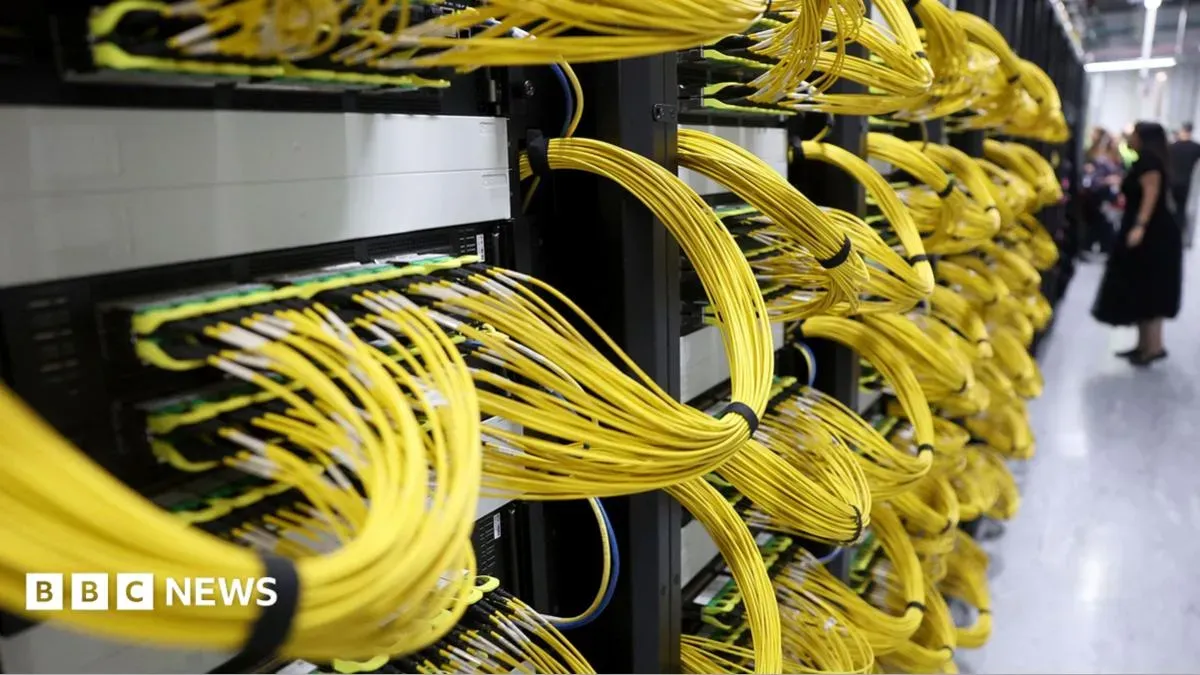
Massive new data centers have become the physical foundation for tech companies' ambitious plans for artificial intelligence (AI). However, this expansion has also sparked intense debates and conflicts worldwide over their impact on power grids, utility bills, nearby communities, and the environment.
The issue of data center expansion has transcended party lines in the United States, with voters largely opposing it ahead of the 2026 midterms. Data centers have become a major bipartisan concern, with both parties acknowledging the need for more sustainable solutions to their energy demands.
Tech giants like OpenAI and Amazon are attempting to address these concerns by promising greater collaboration with local communities and covering the costs associated with powering their data centers. However, this may not be enough to appease Democratic leaders, who are now calling for further restrictions on data center expansion.
The issue of data center development is becoming increasingly complex, with various stakeholders vying for influence. This includes audacious plans to build data centers in space, as well as heated local battles over the construction and siting of these facilities.
In recent weeks, several high-profile elections have highlighted the growing tensions surrounding data center expansion. For instance, Republican Senator Susan Collins conceded her seat in Maine to a Democrat who ran on an anti-data center platform.
OpenAI has been quietly rebranding its data centers as "compute campuses, while pitching the construction of power plants near these facilities as a way to mitigate their environmental impact. This move is part of a broader effort by AI companies to present themselves as more environmentally friendly and community-conscious.
As the debate over data center expansion continues, several states are poised to play a significant role in shaping the future of this industry. California's Proposition 45, for example, may contain a loophole that allows data centers to continue expanding without facing significant regulatory hurdles.
Data centers could erase decades of air quality gains by increasing emissions and potentially undoing efforts to reduce pollution.
A moratorium on new data centers in Texas has been largely ineffective, as permits continue to be issued despite the supposed ban.
In a surprising move, Microsoft has abandoned its plans for the UK's largest data center project, citing unspecified reasons.
Amazon is investing in a new nuclear power plant in Indiana, highlighting the company's growing interest in alternative energy sources.
A bipartisan bill aimed at holding data centers accountable for their energy use has been proposed, but it remains to be seen whether it will pass into law.
Google's data centers are among the largest consumers of electricity globally, and the company is now exploring nuclear power as a means to meet its increasing needs.
In an unusual move, a Japanese real estate company is building a data center in an underground tunnel, potentially reducing the facility's carbon footprint.
Nvidia has made a significant commitment to support OpenAI's data center operations by guaranteeing up to $105 billion in funding. This substantial investment will likely play a crucial role in powering OpenAI's large-scale AI systems.
Meanwhile, Amazon is facing scrutiny over its plans for a new data center that could potentially become the largest polluting power plant in the country. The project has sparked concerns about the environmental impact of such massive facilities.
The debate over data centers continues to polarize communities worldwide, with left and right-wing groups finding common ground in their opposition to these large-scale operations. Protests against data centers have been reported in various parts of the world.
AMD's data center business is experiencing rapid growth, outpacing its gaming division. This shift highlights the increasing importance of data center infrastructure for companies like AMD that are heavily invested in AI and cloud computing.
The number of people arrested for protesting data centers has reached at least 37, according to reports from various regions. These arrests underscore the growing tensions surrounding the construction and operation of large-scale data centers.
Texas has introduced new regulations requiring data centers to pass a comprehensive audit before connecting to the grid. This move aims to ensure that these massive facilities meet strict environmental and safety standards.
Country music legend Willie Nelson is leading the charge against data center development in his hometown, highlighting concerns about the impact on local communities and the environment. His efforts have sparked a wider conversation about the need for more sustainable and responsible data center practices.
Meta and BlackRock are collaborating to build a large-scale data center campus, which will likely be one of the most significant such projects in recent history. This joint venture underscores the growing importance of data centers in supporting AI research and development.
Utility companies have begun to take steps to mitigate the energy demands of AI data centers, promising to help reduce the strain on the grid. However, some experts argue that these measures may not be sufficient to address the scale of the problem.
New York has become the first state to enact a moratorium on new data center development, marking a significant turning point in the debate over the environmental impact of these facilities. This move is likely to put pressure on other states and local governments to follow suit.
The growing demand for AI data centers has led to concerns about their impact on local communities and the environment. A recent map created by Erin Brockovich highlights the proliferation of these facilities across the US, sparking debate about their presence in rural areas.
Critics argue that AI data centers contribute significantly to rising power bills, with 43 percent of Americans blaming them for this issue. This sentiment is likely to put pressure on states and local governments to reassess their policies regarding data center development.
A proposed 40,000-acre data center project in Utah has faced fierce opposition from the community, raising questions about the feasibility of such large-scale developments. The approval of this project highlights the complex relationship between economic growth and environmental concerns.
The expansion of AI data centers is also sparking a new front in the tech industry's ongoing battle for power supply. With electricity costs set to spike around these facilities, companies are seeking innovative solutions to mitigate their impact on local grids.
Seven major tech firms have pledged to keep electricity costs from spiking around data centers, but it remains to be seen whether this commitment will translate into tangible action. Meanwhile, Anthropic is taking a proactive approach by attempting to minimize its own data center's energy usage.
The spiraling conflict in Iran has raised concerns about the potential impact on global data center operations and electricity costs. With tensions escalating, companies may need to reassess their supply chains and contingency plans for disruptions.
In response to these challenges, Microsoft is exploring ways to optimize data center efficiency, including rewiring facilities to save space. This effort highlights the industry's growing awareness of its environmental footprint and the need for innovative solutions.
New York state is considering two bills aimed at reining in the AI industry's impact on local communities. These proposals reflect a growing recognition that the benefits of AI must be balanced against concerns about data center development and energy usage.
The tech industry's push to build massive AI data centers has led to an increase in electricity costs for communities near these facilities, with some areas experiencing a staggering 267 percent hike in energy expenses. This is largely due to the enormous power requirements of these data centers, which can strain local power grids and lead to concerns about rolling blackouts.
In response to these challenges, Microsoft is exploring new cooling methods that could enable more powerful chips and efficient data centers. The company believes this technology has the potential to significantly reduce energy consumption while allowing for greater processing capabilities.
Meanwhile, Amazon is investing billions of dollars into its Mississippi data center operations, fueling further growth in the region's tech sector. This expansion comes as Meta faces a Democratic probe into plans to power a giant data center with gas, sparking concerns about environmental impact and public health.
The scramble to build AI data centers has also led to increased scrutiny from lawmakers, who are investigating the industry's influence on electricity costs. Communities have been rising up against these projects, often successfully blocking or halting construction due to concerns about noise pollution, water usage, and property values.
Satya Nadella acknowledged that data centers are putting a lot of pressure on power grids, highlighting the need for more efficient solutions. The largest power grid system in the US is considering rolling blackouts due to energy-hungry data centers, further emphasizing the urgency of this issue.
In response to these concerns, Google has unveiled a 'moonshot' plan for AI data centers in space, aiming to reduce their environmental footprint and reliance on traditional power sources. This ambitious project reflects the growing recognition that data center development must be balanced against energy usage and other environmental considerations.
The tech industry is also exploring alternative methods of powering its data centers, with some companies investing in on-site power plants or renewable energy sources. However, these initiatives often require significant upfront costs and may not provide a quick fix for the current strain on power grids.
Anthropic has announced plans to invest $50 billion in building AI data centers across the US, further fueling growth in this sector. This investment highlights the ongoing competition among tech giants to establish themselves as leaders in AI development and deployment.
Nvidia is also expanding its presence in the data center market, partnering with Intel to jointly develop PC and data center chips. The company's $5 billion investment reflects the growing demand for high-performance computing solutions that can meet the needs of increasingly sophisticated AI applications.
The tech industry's push into space-based data centers is gaining momentum, with companies like Amazon and Google exploring opportunities for satellite-powered computing. However, this development also raises concerns about the feasibility and environmental impact of these initiatives, highlighting the need for careful consideration and planning.
The rapid development of artificial intelligence (AI) has led to a surge in the construction of massive data centers, with several major players announcing significant investments in this space. Mark Zuckerberg's Meta is among them, planning a $10 billion AI data center in Louisiana that will utilize renewable energy sources.
Meanwhile, other tech giants are also expanding their presence in the field, with OpenAI and SoftBank reportedly teaming up to launch a new Stargate project, which aims to create a massive AI data center company worth $500 billion. This partnership has sparked concerns about the environmental impact of such large-scale initiatives, as well as potential electricity price hikes for consumers.
The construction of these enormous data centers is also raising eyebrows over issues like pollution and energy consumption. For instance, xAI's Colossus" facility has been accused of polluting the air, while some residents in Memphis are protesting the company's new data center due to environmental concerns.
Facts based on reporting originally published by The Verge.
You may republish this story, in full or in part, if you credit Noti Group and link to it (licence CC BY 4.0). Photos are not included.