





Neocloud Companies Face Financial Instability Concerns
Investors are voicing concerns about the financial stability of neocloud companies due to their high debt levels and reliance on major AI developers.
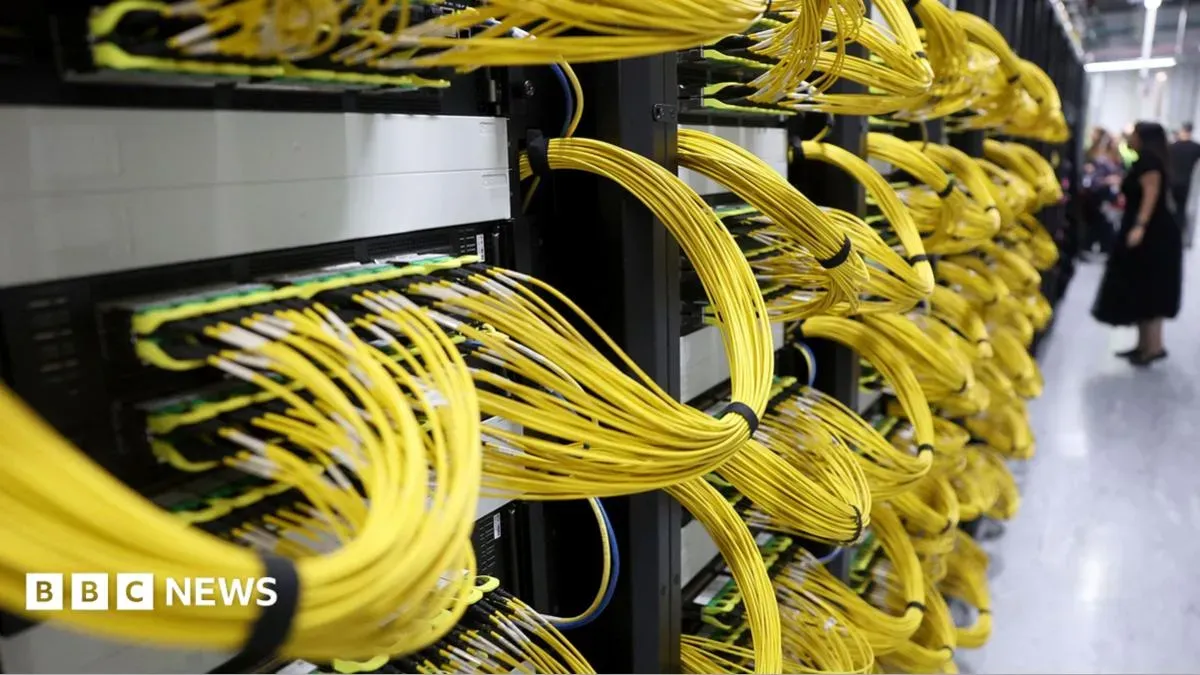
A growing number of investors are voicing concerns about the financial stability of data centre companies that provide computing power to major AI developers.
These firms, known as neocloud companies, operate large warehouses packed with expensive computers and lease them out to top AI players such as Anthropic, OpenAI and Meta.
The sector has long been under the radar, but it is now at the centre of a heated debate in Silicon Valley.
Analysts from market research firms Gartner and Forrester are warning that many neocloud companies may struggle to stay afloat, predicting that by 2030, eight out of ten will cease independent operations.
Gartner analysts also foresee several acquisitions taking place as the financial situation of these companies becomes increasingly unstable.
CoreWeave, a leading neocloud firm, has accumulated $35.1bn in debt despite being significantly smaller than its clients, including tech giants like Microsoft and Meta.
Lenders often prioritize the creditworthiness of these large companies over CoreWeave's own financial standing when making lending decisions, which contributes to the firm's substantial debt burden.
This phenomenon is not unique to CoreWeave; other neocloud firms are also struggling with declining stock values. Over the past month, shares in Nebius, IREN, and Applied Digital have lost around a quarter of their value or more.
Debt investors are increasingly demanding higher returns from these companies as they become risk-averse due to concerns about the financial stability of the neocloud sector.
Several firms in this space, including CoreWeave, were initially founded with a focus on cryptocurrency mining and leveraged existing infrastructure to transition into AI development when ChatGPT exploded onto the scene in 2022.
Nebius stands out as an exception among neocloud companies, having previously operated under the name Yandex NV when it was affiliated with Russia's equivalent of Google before splitting off and rebranding in 2024.
The success of these firms is heavily reliant on the fortunes of major AI developers and hyperscalers, even larger data centre operators that neocloud companies often count as key customers. This creates a precarious situation, as any significant change in spending plans by their Big Tech clients could have far-reaching consequences for the neoclouds.
Melissa Otto, head of Visible Alpha Research at S&P Global, notes that there is currently an enormous amount of money flowing into the system, fueling what can be described as an arms race. This influx of capital has led to a surge in spending and investment in AI development.
However, this model comes with significant financial risks for neocloud companies, particularly if their Big Tech clients were to adjust their spending plans or experience any downturns in revenue. Forrester VP and principal analyst Charlie Dai points out that the greater financial risk is a direct result of being heavily reliant on the whims of these large corporations.
The recent forecast by Microsoft and Google that they will spend less on AI than initially expected sent shockwaves through the market, with shares in several neocloud firms plummeting.
The recent forecast by Microsoft and Google that they will spend less on AI than initially expected has sent shockwaves through the market, leading to a decline in shares for several neocloud firms.
Analysts at Yorkville Ives are optimistic about the future of neoclouds, however, stating that demand for computing power still outstrips supply. These companies are filling an important gap that larger data centre operators cannot meet. Their services allow businesses to access powerful computing resources without having to build or maintain their own infrastructure.
Despite this growth potential, some in the industry are concerned about the neocloud sector's recent wobbles. Microsoft has cancelled a deal with Nscale, a British neocloud outfit, due to ongoing power supply issues that could persist until 2030. Meanwhile, Australia's Firmus has put its plans to go public on hold.
The uncertainty surrounding the neocloud sector comes amid growing concerns about data centres and their impact on worker productivity. As more people question the value of AI, companies like Nscale and Firmus are facing increased scrutiny over their operations and business models.
Facts based on reporting originally published by BBC News Technology.
You may republish this story, in full or in part, if you credit Noti Group and link to it (licence CC BY 4.0). Photos are not included.