




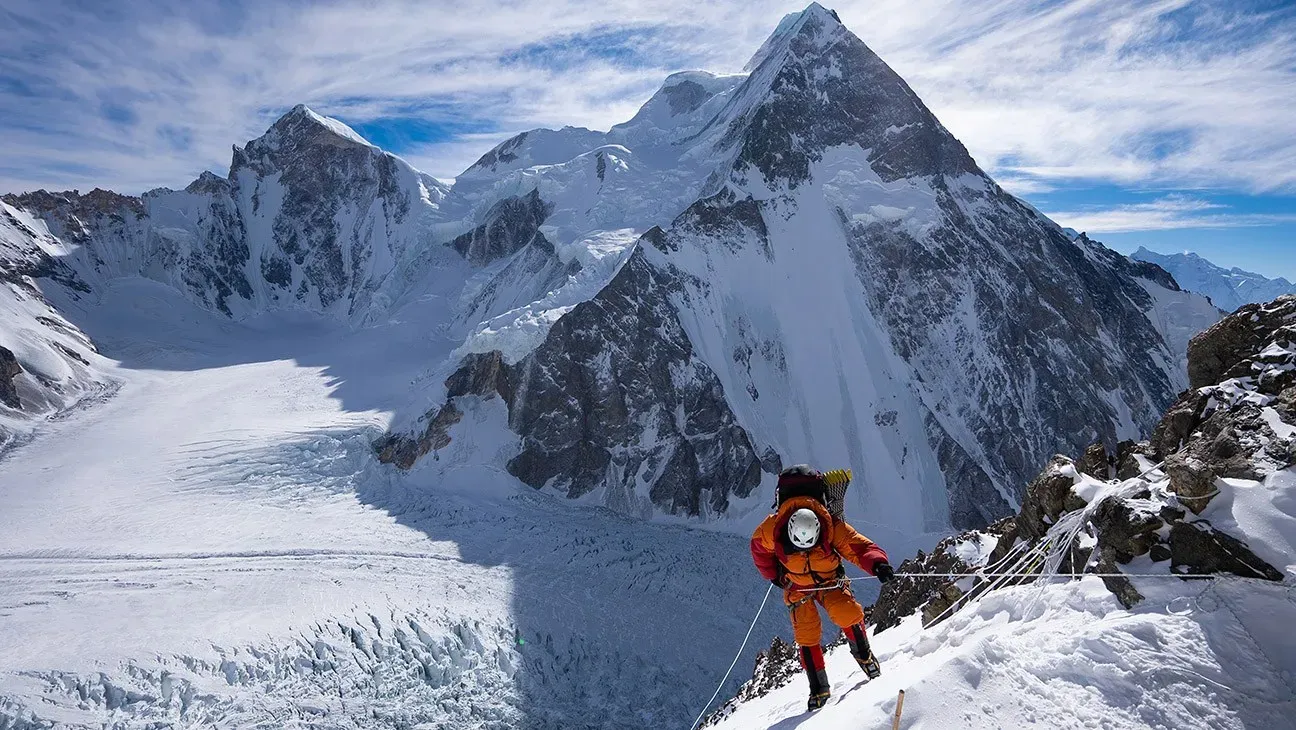


The Great Unconformity Puzzles Geologists
A mysterious gap in the Earth's geologic record has puzzled scientists studying the Grand Canyon.
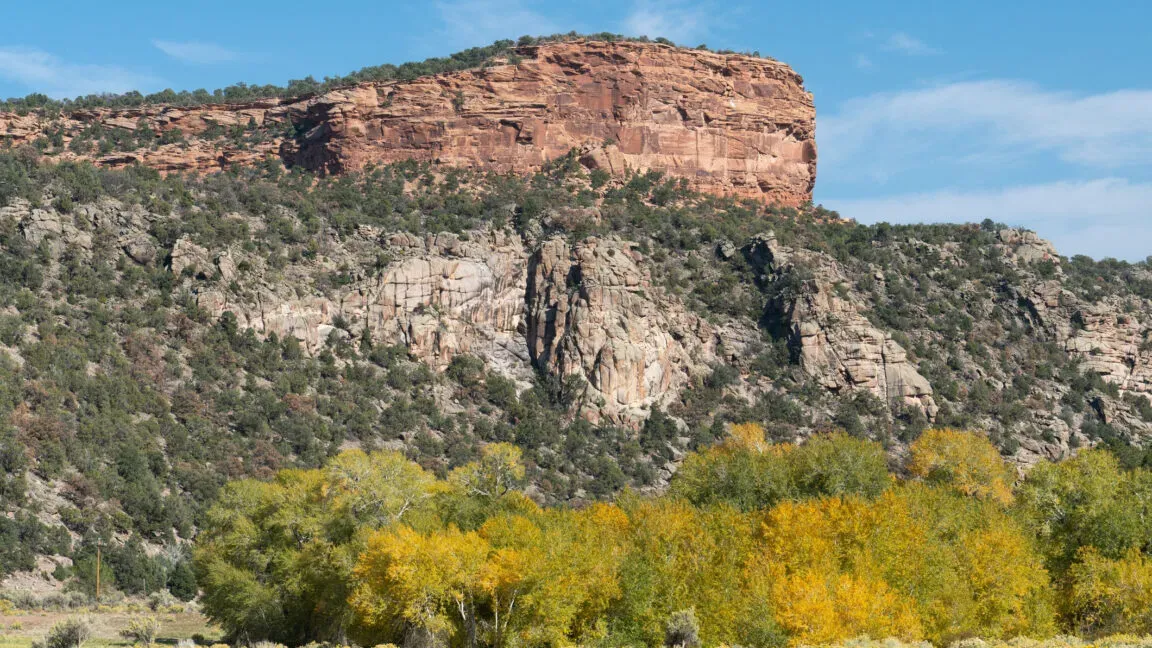
A mysterious gap in the Earth's geological record has long puzzled scientists studying the Grand Canyon. The Great Unconformity, as it is known, appears at a point where ancient crystalline rocks give way to sandstones deposited during the Cambrian explosion, when life on Earth began to diversify rapidly.
The geologic record shows that this gap can be anywhere from 200 million years to over a billion years long. Geoscientist Nicolas Flament of the University of Wollonging, Australia, has been studying this enigmatic phenomenon and believes it may hold clues about the Earth's internal dynamics.
According to Flament and his colleague Santosh Dhungana, who recently published their findings in Nature, the Great Unconformity was likely created by slow-moving currents of hot rock deep within the Earth's mantle. These currents pushed entire continents upwards for hundreds of millions of years, allowing glaciers to grind them down before they sank once more.
The process would have left behind a scar that was eventually buried under fresh sediments. This theory suggests that even the largest gaps in the geologic record may be connected to processes occurring deep within the planet's interior.
The Great Unconformity has been identified across most of North America, as well as parts of northern Europe and northern China. In North America, the oldest sediments resting on top of this gap date back between 635 and 482 million years.
The leading explanation for the Great Unconformity was that massive glaciers had scoured the Earth's surface between 720 and 635 million years ago. This theory, known as Snowball Earth, suggests that the entire planet froze over during this period. However, if this were true, the Great Unconformity should be a global phenomenon, found everywhere on Earth.
But it's not. The gap in sedimentary layers is only present in certain regions, leading scientists to question whether glaciation was the primary cause of this geological feature. Other theories have been proposed, including rifting and the pulling apart of continents, but these processes tend to affect the edges of continents rather than the entire planet.
Some researchers have suggested that a global drop in sea levels could be responsible for the Great Unconformity, but this would imply that all continents were affected equally. Given the patchy distribution of the gap in sedimentary layers, it's unclear whether such a sea level change was sufficient to create this phenomenon.
In an attempt to shed more light on the issue, Flament and his team turned their attention to another possible explanation: dynamic topography caused by movement within the Earth's mantle. This process involves continents being pushed up or down by convective forces in the mantle.
The Earth's mantle is a vast, slow-moving layer of rock that extends from about 100 kilometers beneath the surface down to nearly 3,000 kilometers depth. Imagine a lava lamp, where cold rock sinks and hot rock rises, creating a continuous cycle of movement.
The process of mantle convection involves the slow movement of rock between the Earth's surface and its deep interior over millions of years. This motion creates a tug on the surface, resulting in areas where the ground is pulled down due to sinking cold ocean floor slabs at subduction zones and pushed up by rising hot mantle.
Researchers Dhungana and Flament ran six simulations of mantle convection spanning 1 billion years, using reconstructions of tectonic plate movements during that time. They grouped regions experiencing similar patterns of uplift and subsidence to identify where the Great Unconformity should have formed and survived until today.
The starting configuration for these simulations is still uncertain, according to Flament. This uncertainty affects the accuracy of the results, making it difficult to determine the precise location and extent of the unconformity.
Magnetic records in ancient rocks provide valuable information about a continent's distance from the equator but not its longitude. This limitation means that some continents may have been placed in the wrong hemisphere during the simulations.
The simulations had to invent the ancient ocean floor, which has long since been recycled into the mantle, from scratch. Despite these challenges, the models produced a consistent story about the formation of the Great Unconformity.
The team's models suggest that Laurentia, the ancient core of North America, was subjected to long periods of uplift followed by sinking between 930 and 510 million years ago. This pattern is consistent across five out of six models, with northern Europe and North China showing similar results in four out of six models.
However, researchers found that this uplift alone was not sufficient to strip away enough rock to create the Great Unconformity. According to Flament, the uplift could cause a continent-wide tilt, but it is not effective at creating steep slopes necessary for significant erosion.
Glacial erosion played a crucial role in shaping the surface of the continents during this period. The models indicate that glaciers ground through rock on low-lying areas and gentle slopes, which would have been exposed as the ice sheets retreated. This process coincided with Snowball Earth events, when the climate was extremely cold and ice covered much of the planet.
The team's findings also explain why the Great Unconformity is more pronounced in North America than elsewhere. By comparing sediment records on different continents, researchers found that North America and Eurasia show a consistent pattern of long-term uplift followed by sinking, which they believe contributed to the formation of the gap.
This pattern is not observed in other regions, where the geological record shows more complex and varied histories. The models suggest that the combination of gentle uplift and glacial erosion created the ideal conditions for the Great Unconformity to form, resulting in a distinctive gap in the rock record.
The team's research suggests that the unique combination of geological processes led to the formation of a single Great Unconformity in the rock record.
South America and Australia experienced two cycles of uplift and erosion, which would have created multiple unconformities, making it more challenging to identify the Great Unconformity. In contrast, Africa was isolated by mountain ranges at the time, resulting in distinct patterns of erosion and sedimentation that were influenced by its local geography rather than global mantle dynamics.
The fact that we see only one Great Unconformity is puzzling given the team's hypothesis about regular cycles of uplift and downwelling. The researchers propose that a combination of factors contributed to this singular event, including an extended rise-and-fall cycle lasting over 900 million years and a near-global glaciation.
Flament speculates that there may be evidence of an older unconformity tied to a glaciation 2.4 billion years ago, but the lack of fossils in rocks from that period makes it difficult to establish a clear timeline for these events. The presence of life in sediments is crucial for dating and understanding geological processes.
The intense erosion associated with the Great Unconformity is thought to have released rock material into the oceans, potentially enriching them with nutrients just before the Cambrian explosion. This event marked a significant milestone in the evolution of life on Earth, as it saw the emergence of complex organisms that could mobilize calcium and create skeletons and shells.
Flament acknowledges that mantle dynamics was likely not the sole driver of the Cambrian explosion, but rather one of several forces that contributed to this pivotal moment in Earth's history. The team's research highlights the complexity of geological processes and their interconnectedness with life on our planet.
The team's research suggests that the movement of tectonic plates and convection in the Earth's mantle could have played a significant role in shaping the planet's surface. This process may have led to the formation of the Great Unconformity, a geological feature characterized by a gap in the rock record.
The findings highlight the intricate relationships between geological processes and the evolution of life on our planet. By studying these interactions, scientists can gain valuable insights into the Earth's history and improve their understanding of the complex systems that govern its behavior, ultimately contributing to better prediction models for future geological events.
Facts based on reporting originally published by Ars Technica.
You may republish this story, in full or in part, if you credit Noti Group and link to it (licence CC BY 4.0). Photos are not included.