





Rohit Patel Leaves Meta After Eight Years Developing AI Technology
Meta senior executive Rohit Patel has left the company to launch his own startup, Ndoc, an AI-native solution aimed at replacing Microsoft Office and Google Workspace.
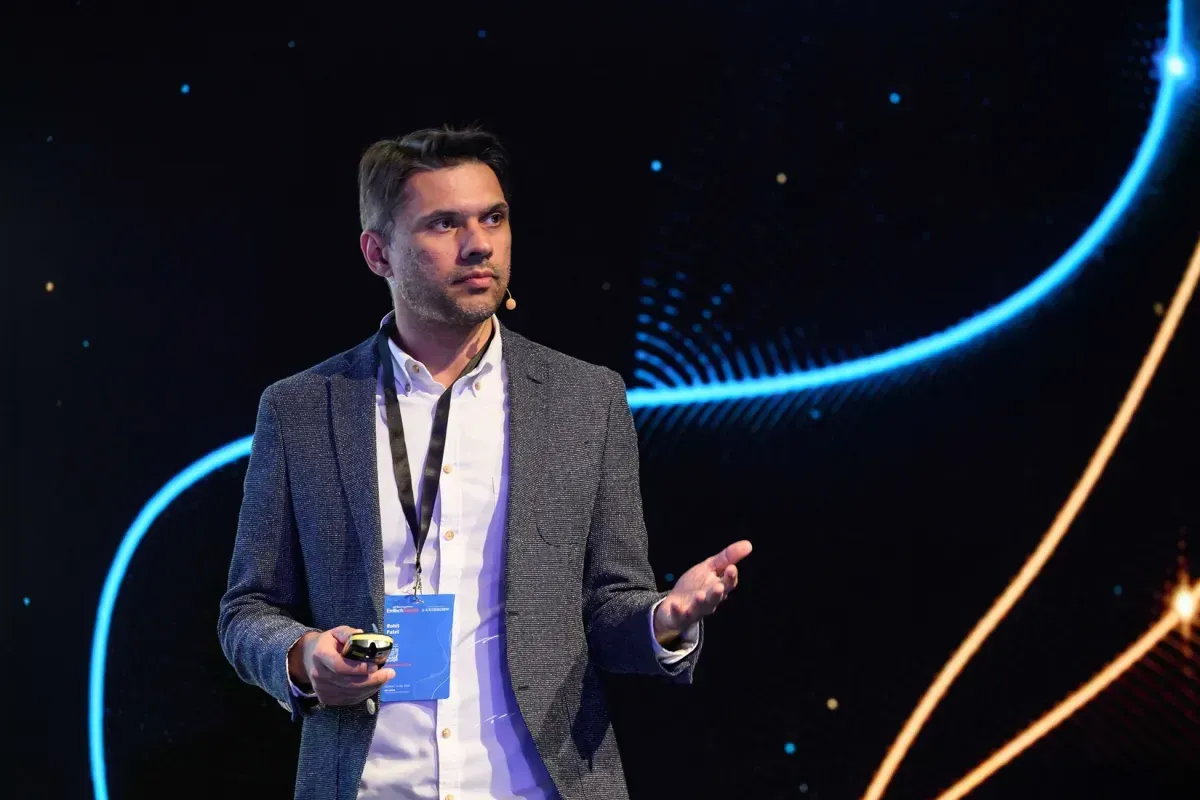
A senior executive is leaving Meta after eight years of developing AI for the company. Rohit Patel, a former director at Meta Superintelligence Labs, has launched his own startup called Ndoc, which he claims can replace Microsoft Office and Google Workspace with an AI-native solution.
Patel's departure from Meta follows other high-profile exits, including Chief Global Affairs Officer Joel Kaplan and Head of Product for AI-for-Work Emily Dalton Smith. The move is likely to be seen as a significant loss for the company, given Patel's experience in developing AI technology.
Ndoc aims to revolutionize the way people work by providing a unified workspace that integrates multiple tools and applications. Unlike other AI solutions that layer on top of existing workflows, Ndoc seeks to replace traditional productivity software with a more streamlined and efficient approach.
The startup offers three main components: the Stage tab for presentations and key findings, the Narrative tab for analyses and generated content, and the Model tab for underlying datasets and Python scripts. This design reflects Patel's background in reinforcement learning and his focus on ensuring AI output is trustworthy.
As part of Ndoc, users can access the Python scripts used to create documents, allowing them to verify the accuracy and reliability of the information presented. This feature is likely to appeal to companies that require high levels of transparency and accountability from their data and analysis tools.
The AI-powered analysis tool, Ndoc, allows users to upload datasets and receive detailed explanations of their findings in a narrative format. This feature is designed to provide transparency and accountability by allowing users to verify the accuracy of the data and results.
Users can also add context to their documents, including information about the intended audience, tone, and memory settings that allow Ndoc to maintain a record of changes made to the document over time. This ability to track changes and updates is seen as a key benefit of using Ndoc.
Ndoc's architecture is unique in that it was built from scratch using open-source models, which allows for cost savings compared to other alternatives that rely on frontier AI models. This approach also gives developers greater flexibility in terms of customizing the platform to meet their specific needs.
The tool's creator, Rohit Patel, has stated that his early users were more interested in seeing all their data and analysis in one place than in the technical details behind Ndoc's architecture. This suggests that the platform's ability to provide a comprehensive view of complex data sets is its most compelling feature.
Patel's long-term vision for Ndoc involves reimagining the file format itself, with documents exportable as a single ".ndoc.html file that can be opened in any browser. He plans to open-source this format to allow other developers to build applications that work seamlessly with Ndoc without being locked into its proprietary ecosystem.
Patel's decision to leave Meta was motivated by his desire to open-source his project without being hindered by the input of hundreds of people and opinions on its format.
By going it alone, Patel aims to move quickly and capitalize on the pace at which AI can process information, rather than being limited by human constraints.
The founder acknowledges that entering the enterprise AI market is a daunting task, especially with established players like OpenAI, Anthropic, Meta, SpaceXAI, and Google already vying for dominance.
These companies have developed tools that enable users to connect their AI models directly to workplace apps such as Google Workspace and Microsoft 365, raising concerns about Patel's own venture being overshadowed by the likes of OpenAI's newly launched Space.
The approach taken by AI labs to integrate their models into existing workflows has been driven by a desire to minimize disruption and maximize adoption. By allowing users to connect their AI models directly to workplace apps like Google Workspace and Microsoft 365, these companies have made it easier for people to incorporate AI into their daily work.
Patel's own experience with building connectors that enable customers to import data from existing tools reflects his understanding of the importance of seamless integration. He has stated that he wouldn't release a tool unless he loved using it himself, and has even spoken about having a graveyard" of underperforming products in the past.
The same principle is at play when it comes to gaining customer traction before seeking funding. Patel has expressed his desire to have proof of customer love for his product before taking on investors, suggesting that he values user satisfaction above all else.
As Ndoc continues its development journey, the company is currently conducting an enterprise pilot and opening up access to a limited number of customers who have signed up for the wait list. This alpha version is free to join, but users will be charged for usage and tokens once they start working with the platform.
The plan is to release a beta version in the coming weeks, after which Ndoc will officially launch next year. For Patel, speed is more important than perfection, suggesting that he's willing to iterate and improve his product as it gains traction with customers.
The approach Patel has taken to product development is one of speed and iteration, rather than perfection.
He emphasizes the importance of execution over perfect planning, suggesting that it's better to start making progress on a plan and then refine it as needed.
This mindset allows for rapid testing and adaptation, which can be crucial in a competitive market where companies are constantly innovating.
By focusing on getting something out the door quickly, Patel is able to gather feedback from customers and make improvements over time.
In doing so, he's able to prioritize the most important aspects of his product and address any issues that arise during its development.
As Rohit Patel transitions out of his role at Meta AI, he's taking on new challenges that involve competing products. Specifically, he'll be working on Microsoft Office and Google Workspace, two major productivity suites.
His departure from Meta AI marks a significant change for the company, which has been investing heavily in its AI research and development division. Patel's expertise in this area will undoubtedly be valuable assets to his new employers.
Facts based on reporting originally published by TechCrunch.
You may republish this story, in full or in part, if you credit Noti Group and link to it (licence CC BY 4.0). Photos are not included.