





Microsoft AI Diagnostic System Outperforms Human Physicians
A recent study published in Science found that Microsoft's MAI-DxO system correctly diagnosed 83% of complex medical cases.

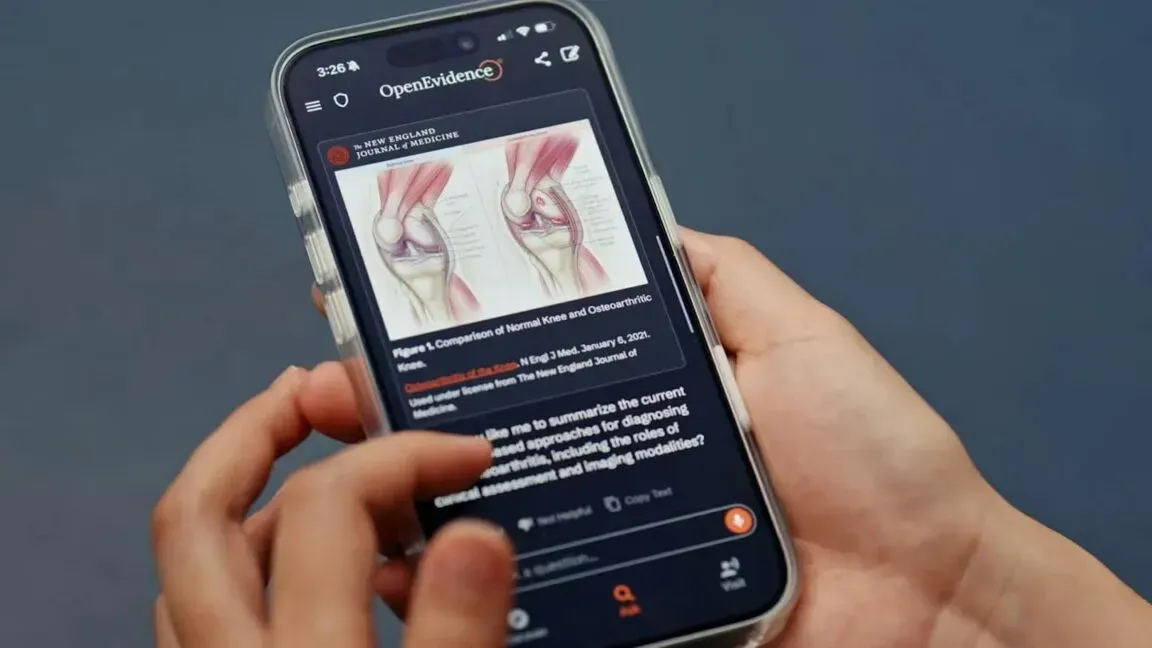
A recent study published in Science has found that Microsoft's AI diagnostic system, MAI-DxO, outperforms generalist physicians in diagnosing complex medical cases. According to the study, MAI-DxO correctly diagnosed 83% of the time in a simulation using real-world case studies from the New England Journal of Medicine.
The system, which coordinates multiple AI agents, functions like a panel of doctors, questioning patients, ordering tests, and debating diagnoses. This approach allows MAI-DxO to consider various perspectives and arrive at more accurate conclusions.
In comparison, primary care doctors and general internists working individually with reference materials were correct only 36% of the time. It's worth noting that complex cases are typically handled by specialists or teams of physicians, who were not included in this study.
Microsoft AI's CEO, Mustafa Suleyman, has hailed the results as a step towards "medical superintelligence." He believes that AI can help bridge the gap between medical expertise and demand for healthcare services. This is particularly relevant given the growing mismatch between the two, according to Dominic King, vice president of Health at Microsoft AI.
The study suggests that MAI-DxO's success is largely due to its reliance on powerful underlying AI models, with Microsoft's orchestration system contributing additional gains. The company tested MAI-DxO with various AI models from other companies, including OpenAI and Google, but achieved the best results with OpenAI's GPT-5 and GPT-5.5.
The cost-effectiveness of DxO was also taken into account by Microsoft when measuring its performance. The estimated cost of running the AI on each case was compared to its accuracy score. On complex cases, GPT-5 scored 78.9% with a hefty price tag of around $8,400 per case.
However, when paired with DxO, this cost decreased by approximately $3,000 while only increasing the accuracy score by about four percentage points. In contrast, emergency department cases saw little to no improvement in either accuracy or cost reduction, regardless of whether GPT-5 was used on its own or assisted by DxO.
The performance of GPT-5.5, a newer model released in April 2026, told a different story when paired with DxO. On complex cases, the AI's accuracy score jumped from 72% to nearly 87%, all while reducing costs slightly. Yet again, emergency department cases failed to show any notable improvements.
Interestingly, DxO seems to have more of an impact on less capable AI models and complex cases rather than emergency situations. For instance, Gemini 2.5 Flash scored a mere 46.4% on its own but nearly 69% with the assistance of DxO. However, this boost was not as pronounced when compared to stronger models.
Microsoft's researchers pointed out that accuracy gains naturally plateau as AI models approach their theoretical maximum. They also noted that DxO helps tackle the broader challenge of optimizing both cost and accuracy.
The company's efforts to build its own frontier AI are being led by Mustafa Suleyman, who is working with Mayo Clinic to train a foundation model for healthcare. This project, set to be released next year, aims to enable significant breakthroughs in healthcare.
Microsoft's Mustafa Suleyman envisions a future where AI surpasses human clinicians in complex medical cases.
Suleyman's extensive experience in leveraging AI to address healthcare challenges dates back to his time as co-founder of DeepMind, which was acquired by Google in 2014.
As part of his role at Microsoft, Suleyman has been working on a project that aims to enable significant breakthroughs in healthcare. This initiative involves the development of advanced medical records systems and clinical decision support tools.
Suleyman believes that within the next two to three years, healthcare models will experience a substantial improvement in capability, driven by the deployment of generative AI in the field. He cites the rapid progress seen in coding and chat technology as precedents for this expected advancement.
Microsoft's partnership with Beth Israel Deaconess Medical Center in Boston is set to evaluate the clinical reasoning capabilities of its AI-powered diagnostic tool DxO across various hospital settings.
The study will involve patients receiving standard treatment, including triage, specialist consultations, and investigations, while also engaging with DxO for parallel recommendations. Microsoft and its partners will then compare these recommendations against those made by human doctors.
In a similar effort to evaluate the effectiveness of AI in medical diagnostics, Google recently published a clinical study alongside Beth Israel Deaconess Medical Center in The Lancet. This study focused on Google's AMIE conversational diagnostic AI during real-world urgent care visits, with human physicians monitoring interactions in real-time.
Microsoft's study is expected to be one of the largest of its kind, spanning not only emergency settings but also urgent care environments. By the end of the study period, it aims to provide compelling evidence for the deployment of these systems at a larger scale in the future.
The research coincides with Microsoft's ambitions to move beyond benchmarking individual tasks, such as answering medical exam questions or generating diagnoses. Instead, the company hopes to integrate its AI tools with clinicians and healthcare systems to improve patient outcomes.
Microsoft's vision for "medical superintelligence" involves surpassing human-led health systems in medical reasoning and coordination across all aspects of care. This goal is seen as a crucial step towards achieving better healthcare outcomes through technology integration.
Microsoft's efforts to accelerate the introduction of artificial intelligence (AI) technology in healthcare are driven by its potential to revolutionize medical care worldwide, according to Mustafa Suleyman, a key figure at the company.
This goal is reflected in Microsoft's existing product offerings for clinicians, which include dictation and radiology tools. The company sees DxO as an expansion of these efforts, aiming to provide top-notch clinical decision support products to healthcare professionals.
Microsoft's commitment to advancing medical AI technology sets it apart from other frontier labs, Suleyman noted. The focus on accelerating the introduction of this technology is a key differentiator for the company.
To achieve its goal of becoming a leader in medical AI, Microsoft must develop and deploy cutting-edge clinical decision support products within the next few years. This requires significant investment and innovation in the field.
The development of advanced medical AI tools has far-reaching implications for healthcare outcomes, with potential benefits including improved patient care and more informed treatment decisions.
Microsoft's development of advanced medical AI tools has significant implications for healthcare outcomes, with potential benefits including improved patient care and more informed treatment decisions.
The company is pushing to create "medical superintelligence," a term coined by Mustafa Suleyman, who leads the initiative at Microsoft. This ambitious goal aims to harness the power of artificial intelligence to revolutionize medical diagnosis and treatment.
Facts based on reporting originally published by TechCrunch.
You may republish this story, in full or in part, if you credit Noti Group and link to it (licence CC BY 4.0). Photos are not included.