





Amazon Raises E-Reader Prices Amid Supply Pressures
The latest Amazon Kindle models have seen significant price increases, making last year's options look like good deals.
Tech prices have continued to rise in recent years due to supply pressures and inflation, making it difficult for consumers to find affordable options. Even basic gadgets like e-readers are not immune to these price hikes, resulting in a more expensive market overall.
The cheapest Amazon Kindle released in 2026 costs significantly more than its mid-range counterpart from previous years. This shift in pricing is part of a broader trend where even small upgrades come at a substantial cost. The idea that new products should offer better features for the same price is no longer a reliable expectation.
In contrast to previous years, the latest Kindles have seen significant price increases, making last year's models look like a good deal by comparison. For instance, the 2024 Kindle Paperwhite offered more features and a larger screen size at a lower price point than its 2026 counterpart.
The new $150 Kindle is outpaced in many areas by its predecessor, the $160 Kindle Paperwhite from two years ago. The older model boasts better front light quality, waterproofing, and a larger screen size, making it an attractive option for those considering purchasing a used or refurbished e-reader.
Amazon has expanded its monochrome Kindle lineup to five models, with the flagship being the $250 2026 Paperwhite Signature Edition. This premium device takes the core specs of the standard $200 Paperwhite and puts them in a sturdy aluminum case reminiscent of an iPad.
The result is a high-end e-reader that offers exceptional performance and features, including the return of page-turn buttons for those who value this functionality. However, the removal of wireless charging from the Signature Edition compared to its 2024 predecessor raises some concerns about the device's overall value proposition.
One notable change in the new Kindles is the relocation of power buttons from the bottom to the left side of the devices. This design adjustment may not be immediately noticeable but could have a significant impact on user experience over time.
The $250 Paperwhite Signature Edition boasts several features that set it apart from its more affordable counterpart, including a larger 7-inch screen and a sturdy aluminum case. However, this premium device comes at a substantial cost, making it essential to weigh the added value against the increased price tag.
Despite offering some significant upgrades, the new Kindle Paperwhite doesn't bring any major advancements in terms of screen or lighting technology compared to its predecessors. Upgrades from older models will still receive benefits, but the 2026 Paperwhite falls short of pushing the category forward with innovative features.
Amazon has been emphasizing speed improvements in their marketing materials for previous e-reader releases, but this year's Paperwhite doesn't seem to be following suit. However, the base Kindle does boast a notable 30 percent increase in opening book speeds compared to its predecessor.
The $200 Paperwhite offers a range of upgrades and features that make it an attractive option for those looking for a high-end e-reader experience. With its improved performance and sleek design, this device is sure to appeal to fans of the Kindle brand who are willing to invest in the latest technology.
The design tweaks on this year's Kindle models may not be immediately apparent, but they are worth noting nonetheless. One change is the relocation of the power button from its previous position at the bottom edge to the top-right corner, a move that I appreciate for reducing accidental presses when placing the device on an edge.
This shift in the power button's location is just one of the subtle changes made to comply with upcoming right-to-repair regulations. Another significant change is the introduction of user-replaceable batteries, which will likely appeal to environmentally conscious consumers and those who prefer to have more control over their devices' maintenance.
The display on this year's Kindle models remains a highlight, boasting a 7-inch screen with 300 PPI resolution and adjustable front light color temperature. This feature not only enhances the overall reading experience but also makes it easier on the eyes compared to older Kindles and the standard 2026 model.
In terms of build quality, the plastic-backed Paperwhite is slightly lighter than its predecessor, while the aluminum Signature Edition has a marginally increased weight due to its premium casing. The difference in weight is not substantial, making both models suitable for extended reading sessions.
The performance of this year's Kindle models has seen an improvement over their predecessors, with snappy and fluid interactions observed during testing. Although the E-Ink screen still imposes some limitations on responsiveness, the gap between touch input and device response time is less noticeable compared to older devices.
Performance benchmarking revealed that this year's Kindle models are capable of handling demanding tasks with ease, although one test, the Google Octane 2.0 benchmark, failed to complete a run in both the 2026 Kindle and Paperwhite's browser for reasons unknown.
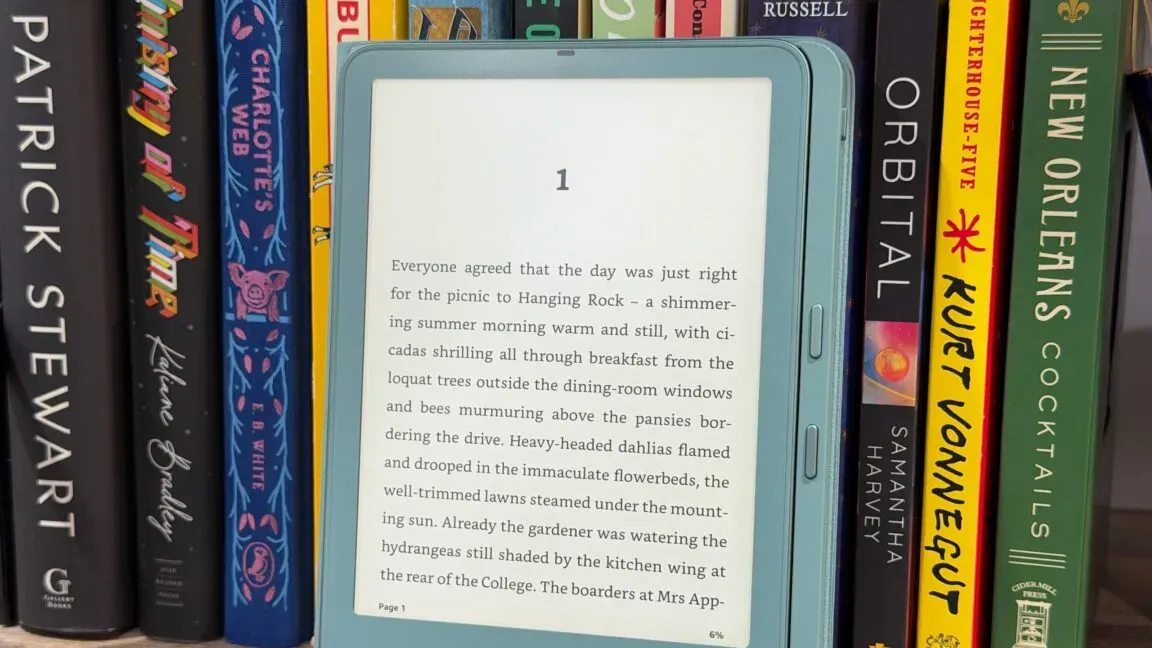
The 2026 Kindle's redesign has resulted in a sleeker and more compact device compared to its predecessors. The screen and bezel are now flush, giving it a more modern look. This streamlined design is particularly noticeable when placed alongside the current Paperwhite model.
One of the notable changes in the new Kindle is its reduced size and weight. Despite retaining the same 6-inch screen size as older models, Amazon has managed to shrink the overall dimensions of the device. The result is a more portable e-reader that's easier to carry around.
However, it's essential to note that this upgraded design comes with a price tag. When compared to previous Kindle models, such as the 2024 or 2022 versions, the 2026 model seems to offer only incremental improvements. It's clear that Amazon is now prioritizing premium features over affordability.
The reality of buying technology today is that consumers are no longer getting more for their money. The industry has shifted towards a "pay more for more" model, where buyers must shell out extra cash for upgraded features or newer devices.
A comparison between the 2026 Kindle and its predecessors highlights this trend. For instance, the 2021 Paperwhite offered essential features like warm light and waterproofing at a lower price point than the current Kindle.
The cost of the new Kindle is also worth considering. At $150, it's clear that buyers are paying more for a device that, while improved, lacks some key features found in previous models.
As technology continues to evolve, consumers must be aware of these changing dynamics and factor them into their purchasing decisions. By understanding what they're getting for their money, readers can make informed choices about which e-reader best suits their needs.
The new Paperwhite Signature Edition has a significant upgrade in store for those willing to pay extra: page-turn buttons. This addition comes at a cost, as the Signature Edition itself starts at $250.
To get the buttons, you'll need to spend an additional $80 on top of the base price. Alternatively, you can buy a Kindle Page Turn Cover in various colors that connects to copper contacts on the back of the device via pogo pins. The cover is what actually adds the page-turn buttons.
Amazon also offers a $60 charging stand that uses these same contacts and pogo pins, providing a way to charge your device without having to remove it from its case. This option is reminiscent of the wireless charging feature that was previously available on Kindles.
When equipped with the Page Turn Cover, the new Paperwhite takes on a more premium look and feel, somewhat mirroring the design of the Kindle Oasis. The asymmetrical edge added by the button area gives the device an interesting aesthetic.
The page-turn buttons themselves are well-designed and responsive, providing a satisfying click when pressed. Turning multiple pages quickly can still be a bit sluggish, however.
In terms of functionality, one drawback to using the Page Turn Cover is that it adds bulk and weight to the reader. Additionally, the power button on the case doesn't feel as good as the page-turn buttons.
The power button on the cover itself feels somewhat unreliable due to inconsistent contact with the device's built-in button. This issue can be mitigated by opening and closing the cover, which also wakes or puts the device to sleep.
For those who prefer a more affordable solution, Amazon offers the Kindle Click remote control-style accessory for $35. While this option allows users to interact with their device in a new way, it's not necessarily an ideal substitute for physical page-turn buttons.
The new Kindle Click feature requires a specific version of the Kindle operating system - at least 5.20.1.0.2 - which currently supports the 2024 and 2026 Kindles, as well as the 2022 Kindle Scribe.
This latest OS update is notable for its limited availability compared to previous years, when older models could run the same software. For example, in 2024, all Kindles from 2018 onwards were compatible with the same operating system version. In contrast, the 2018 Kindles are stuck at version 5.18.
The return of page-turn buttons on a Kindle device is a welcome feature for some users, but it comes at a price. The new Kindle Paperwhite Signature Edition costs $249, which is equivalent to the 2019 Kindle Oasis. However, buyers will also need to shell out an additional $80 for the case and buttons.
The high cost of the latest Kindles has left many feeling underwhelmed by their features compared to their predecessors. While they may offer some improvements in terms of performance and design, such as a USB-C port, they seem to be priced more like luxury items than affordable e-readers.
Third-party accessory makers are likely to play a crucial role in bringing down the cost of Kindles with buttons. If they can develop pogo-pinned accessories that work with these devices, it may become more feasible for users to purchase them without breaking the bank.
Ultimately, the decision to buy one of this year's Kindle releases comes down to individual needs and preferences - for those who require the latest features and design, the high price may be worth paying.
Facts based on reporting originally published by Ars Technica.
You may republish this story, in full or in part, if you credit Noti Group and link to it (licence CC BY 4.0). Photos are not included.