



How a football team rebuilt after 19 players died in plane crash
The shocking news of a plane crash into a mountain sent shockwaves through the football world at 2am when Ivan Tozzo received a frantic call from his club's secretary.
The shocking news of a plane crash into a mountain sent shockwaves through the football world at 2am when Ivan Tozzo received a frantic call from his club's secretary.
A team carrying the Chapecoense players had crashed, resulting in a devastating loss of life with seventy-one people confirmed dead, including nineteen out of twenty-two Brazilian footballers who were on their way to compete in the biggest game in their history.
The tragic accident occurred on 28 November 2016, and it would later be revealed that the plane had run out of fuel due to an insufficient fuel load for the flight. The investigation found that the airline and pilot were to blame for this critical error.
As Tozzo watched the news unfold on TV in the changing room at the club's stadium, he couldn't help but think about the players who would never return to their teammates.
The thought of mourning his colleagues weighed heavily on him as he sat alone in the club's boardroom after the funerals, one of the few directors still alive. He broke down in tears during this difficult time.
Tozzo's sense of unease before the trip had made him reconsider joining the team in Colombia for the Copa Sudamericana final against Atletico Nacional of Medellin. This was Chapecoense's first-ever continental final, a milestone achievement for the Brazilian club.
In an interview with BBC Sport, goalkeeper Jakson Follmann shared his thoughts about the team's motivation to reach this historic moment: "The team was very motivated, knowing that we were engraving our names inside the history of the club."
Follmann had also been looking forward to his wedding at the time and was instead forced to spend two months in hospital recovering from injuries sustained in the crash.
The LaMia 2933 flight's tragic fate was sealed when it failed to make a critical refueling stop on its journey from Bolivia to Colombia. The pilot, Miguel Quiroga, had been warned of a "total electric failure" and "lack of fuel in a leaked recording, but he did not issue a distress call.
The investigation into the crash found that the pilot and airline were directly responsible for the disaster. A separate inquiry by Colombian authorities concluded there was no technical fault with the plane, instead placing blame on the pilot, the airline, and Bolivian regulators.
Jakson Follmann's own harrowing experience of surviving the crash has left him with a deep sense of injustice. He had to undergo a partial amputation of his right leg in order to save his life, an ordeal that still weighs heavily on his mind.
Follmann's anger towards those responsible for the tragedy is palpable as he reflects on the role of greed and negligence in the crash. He points to the airline's failure to refuel as a critical error that ultimately led to disaster.
Despite the overwhelming evidence pointing to gross negligence, no one has been held accountable for their actions in relation to the crash. This lack of accountability is all the more shocking given the severity of the crime committed.
The Bolivian government's decision not to introduce laws covering corporate liability until 2021 meant that those responsible could operate with impunity. Even then, the new legislation failed to address negligent homicide or air disasters, creating a gaping loophole in the justice system.
In a remarkable testament to their resilience, many of the survivors have continued to fight for truth and justice, refusing to let the tragedy be forgotten.
The city of Chapeco, in southern Brazil, was shaken to its core on that fateful night as the full extent of the tragedy began to unfold on TV screens at the stadium.
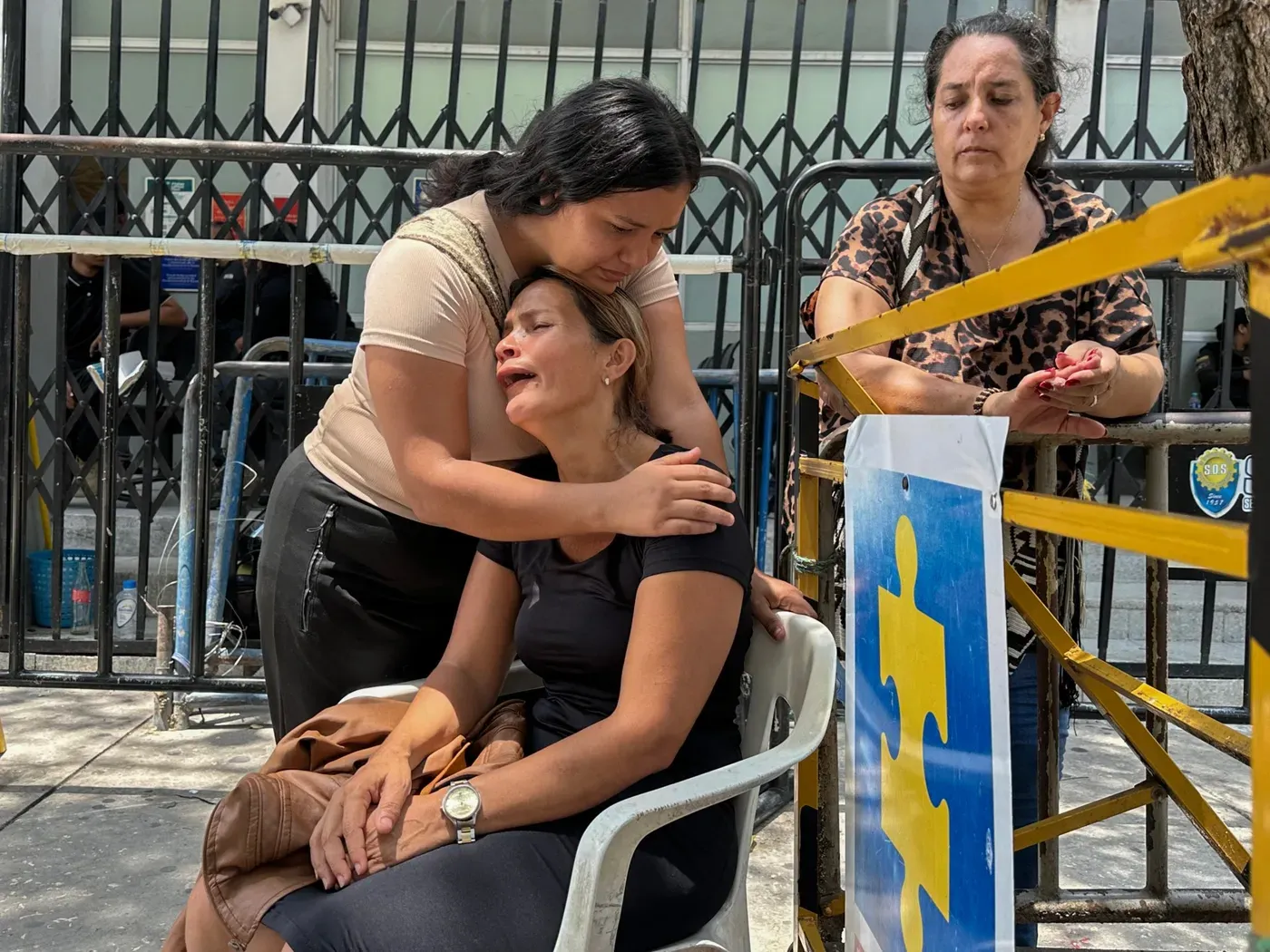
The players' wives started arriving at the stadium around 5 am, and it was a scene of utter despair. People were overcome with emotion, throwing themselves onto the ground and crying uncontrollably.
Tozzo, a local entrepreneur who had joined the club in 2009 as vice-president, had a unique perspective on the events that led up to the crash. He had been due to travel to Medellin for the match but changed his mind just two days earlier.
The reasons behind Tozzo's decision were rooted in intuition and a sense of foreboding. He claims he felt an inexplicable urge to stay away from the trip, which he attributed to divine intervention.
Tozzo's sister tried to persuade him to go, reminding him of all the hard work he had put into getting to that moment. But Tozzo was resolute in his decision, and he stayed behind at home.
In hindsight, it seems clear that fate had other plans for Tozzo. After the crash, he felt a strong sense of purpose and responsibility to carry on with the club's work.
Tozzo took over as interim president, becoming one of the key figures in the club's recovery efforts. He played a crucial role in arranging flights for doctors, relatives, and pastors to identify and recover the remains of those who had perished.
The days that followed were marked by a sense of chaos and grief, but Tozzo remained focused on the task at hand, working tirelessly to support the survivors and their families.
The gesture of goodwill from Atletico Nacional was a poignant reminder of the devastating loss suffered by Chapecoense. In a move that would have been unthinkable in any other circumstances, they requested that the Copa Sudamericana trophy and winners' prize money be awarded to their grieving opponents.
The days ahead were filled with immense challenges for Tozzo as he tried to rebuild the team. With only two squad members who hadn't traveled to Medellin due to injury, and a handful of young players from the academy, the task seemed daunting. The surviving players themselves were in no shape to take the field.
Rui Costa, who had recently left his role as football director at Gremio, was persuaded to join Chapecoense in the same position. Vagner Mancini was appointed coach, and together they set about assembling a new team. Over the course of just a few weeks, 22 new players were signed, most of them on loan.
Tozzo's message to these newcomers was clear: they had a responsibility not only to themselves but also to the fans who were still grieving. Our fans were very sad, Chapecoense was very sad," he said, "and playing again with joy was not easy."
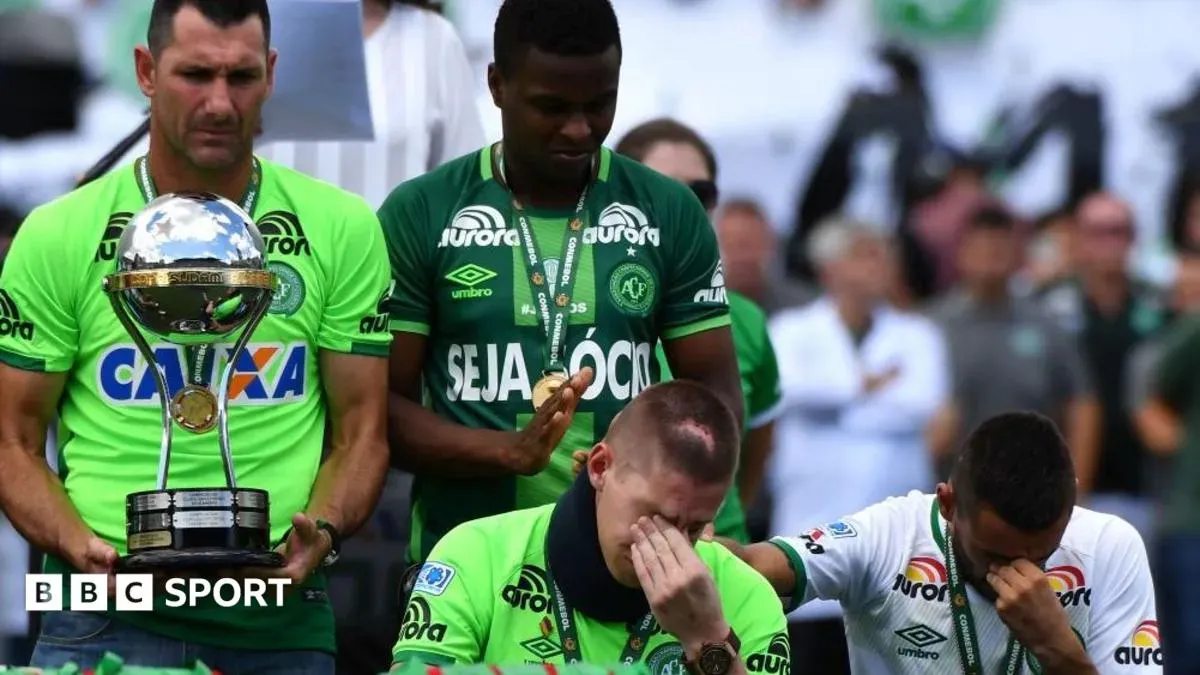
The club's first match back was a friendly against Palmeiras, a team they had last played just before the tragedy. The game took place at the Arena Conda, where Follmann, one of the survivors, was joined by Neto and Alan Ruschel to receive the Copa Sudamericana trophy.
The significance of this moment wasn't lost on Follmann. "It was the first time I had gone back to the arena," he recalled, "the first time I really had contact with people, because I was still hospitalised." The memory of their captain Cleber Santana, who should have been holding the trophy surrounded by his teammates, was a poignant one.
Chapecoense went on to play an astonishing 80 matches in 2017, only five of them friendlies. There were offers of help from the Brazilian Football Confederation, including immunity from relegation for three seasons, but Tozzo rejected this out of hand. "How can you psych up the players to play their best," he asked, "if they know that their classification is guaranteed?"
The club's resilience was put to the test once again in 2017 as they faced Atletico Nacional in the South American Super Cup, a rematch of their previous encounter just months after the devastating plane crash that claimed the lives of 19 players.
The match meant another grueling flight to Medellin for the team, and this time Tozzo was among them. He recalls visiting the site of the crash, still struggling to comprehend its proximity to the airport. "We went to see the exact location," he says, his words a testament to the emotional toll of the experience.
Despite being outmatched by Atletico Nacional, Chapecoense demonstrated remarkable grit and determination in their 6-3 aggregate loss. Later that year, they emerged victorious in their state championship and finished as high as eighth in the national league, a testament to the team's unyielding spirit.
The following season saw the arrival of defender Bruno Pacheco, who would go on to make nearly 150 appearances for the club in two separate stints. For Pacheco, stepping onto the pitch at the arena was an emotional experience that left him feeling both honored and humbled. "I was representing those who are no longer with us," he says, his words a poignant reminder of the team's enduring bond.
As Chapecoense navigated the highs and lows of their post-crash journey, they continued to inspire with their resilience. They won the Serie B title in 2019, securing promotion back to the top flight after being relegated from Serie A just the year prior.
However, their return to the top tier was short-lived, and they spent the next four seasons in the second division before returning to Serie A this year. Despite their struggles on the field, the team remains a beacon of hope for their fans and the families of those who lost their lives in the crash.
The legacy of the victims continues to be felt, with some relatives seeking justice through compensation and criminal convictions. Neto, one of the few players to survive the crash, has become a Christian evangelist, using his voice to support those affected by the tragedy.
Chapecoense's former coach, Follmann, has spoken about the aftermath of the plane crash that changed his life forever.
He referenced the tragedy in a video announcing his retirement this November, just as he was helping his new side, Juventude, win promotion to Serie A.
Follmann revealed that he had been preparing for his wedding before the crash, but it did eventually take place and he became a father.
Facts based on reporting originally published by BBC Sport.
You may republish this story, in full or in part, if you credit Noti Group and link to it (licence CC BY 4.0). Photos are not included.