




US President Donald Trump Aligns with Baghdad on Oil Smuggling Efforts
The United States President has unexpectedly expressed support for Iraq's efforts to curb oil smuggling, a move that comes as tensions between the Iraqi government and Kurdish region escalate.
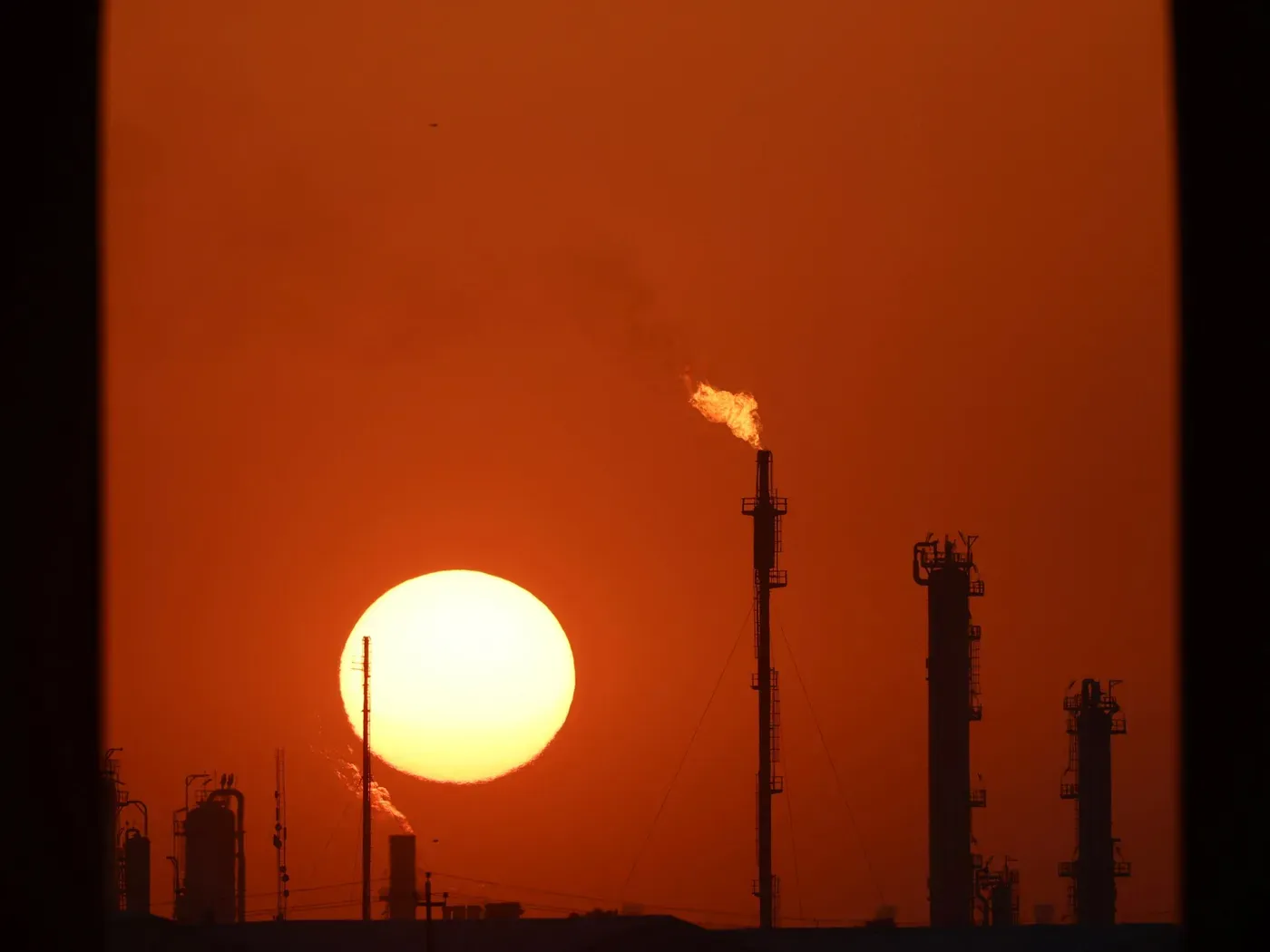
United States President Donald Trump has unexpectedly aligned himself with Baghdad's efforts to curb oil smuggling in Iraq. This move comes as tensions between the Iraqi government and the semi-autonomous Kurdish region escalate. At the heart of these tensions are border crossings and oilfields, which have been a source of contention.
Baghdad has taken decisive action, moving to assert control over several key locations. The Iraqi government claims that oil smuggling is severely impacting its economy, and it's clear that they're determined to put an end to this practice. Prime Minister Ali al-Zaidi's administration has confronted Kataib Hezbollah, Iran's powerful ally in Iraq.
The endorsement from Trump was made via a post on Truth Social, where he expressed support for the Iraqi prime minister's efforts to consolidate state authority throughout the country. He emphasized the need to stop oil smuggling and end corruption, as well as bring all weapons under the central government's control. This marked Washington's first official comment on the ongoing tensions between Baghdad and Erbil.
Iraqi Prime Minister Ali al-Zaidi has been working tirelessly to build a unified Iraqi state. His efforts have not gone unnoticed by Trump, who praised his commitment to creating a prosperous, strong, and united Iraq that makes its own decisions without external influence. This message is being interpreted as a significant development in the region.
The timing of Trump's endorsement is also noteworthy. It comes after Baghdad took control of key border crossings and oilfields, including those with Syria and Iran. Additionally, the Iraqi government has closed two crossings in the Kurdish region, further tightening its grip on these strategic locations. This move has not gone unchallenged, with some questioning the authority of Baghdad to make such decisions.
The significance of Trump's endorsement should not be underestimated. It sends a clear message of support for the federal government and its efforts to assert control over the country's borders and resources. The authorities in the Kurdish region have taken notice, and it remains to be seen how they will respond to this development.
As talks between Baghdad and Erbil are set to take place on December 1, Trump's backing has added a new layer of complexity to these negotiations. Analysts say that his endorsement is both a show of support for the federal government and a warning to Kurdish leaders in the region. This could have far-reaching implications for the future of Iraq's politics.
The campaign against oil smuggling in Iraq has been gaining momentum, with government forces entering Jurf al-Sakhar, a town in Babil province south of Baghdad. The area has been under the control of Kataib Hezbollah since 2014, when Iran-backed groups took it from ISIL.
Senior Iraqi officials have alleged that Kataib Hezbollah has been running an oil smuggling network in the region, siphoning off state-owned crude worth hundreds of millions of dollars since 2021. This claim has been denied by Kataib Hezbollah, which is designated as a "terrorist" organisation by the US.
The government has given Kataib Hezbollah until November 20 to leave Jurf al-Sakhar, but a compromise was reached after direct intervention from Esmail Qaani, head of Iran's Quds Force. Under the deal, government forces will enter the town and set up a joint operations centre, while Kataib Hezbollah units are due to withdraw gradually.
Kataib Hezbollah is not the only group resisting Baghdad's push to bring weapons under state control. Other groups like Harakat al-Nujaba and Kataib Sayyid al-Shuhada have also refused to disarm.
The government has been trying to bring these armed groups under its control, but they have missed several deadlines to hand over their weapons. The latest deadline was set for June 2027, after the previous one expired in September.
Baghdad has also extended its campaign against oil smuggling to the Kurdish region. According to government spokesperson Haider al-Aboudi, Iraq has lost an estimated $100bn between 2008 and 2025 due to oil smuggled through this region.
The measures have been met with resistance from Kurdish officials, who have called them unconstitutional and rejected them outright. Thousands of Kurds protested on Thursday, but Kurdish leaders say they want to avoid clashes with Baghdad and are open to talks.
Baghdad's decision to target Shia armed groups in Jurf al-Sakhar has left many questioning its motives, particularly in light of the prime minister's recent actions against smuggling operations.
The operation in Jurf al-Sakhar was just one part of a larger effort to tackle corruption and organized crime in Iraq. However, critics argue that the government's approach is misguided and may have unintended consequences.
A senior researcher at the Al Jazeera Centre for Studies noted that Baghdad had turned to the Kurdish region before the Jurf al-Sakhar operation was even finished. This move has sparked concerns about the potential for further instability in the region.
According to experts, the prime minister's actions are not just driven by a desire to tackle smuggling but also by a need to assert his authority and demonstrate his commitment to rooting out corruption. By targeting Shia armed groups, he is also trying to show that he is tough on everyone, regardless of their background or affiliations.
The move has been seen as an opportunity for the prime minister to exploit existing divisions within the Kurdish region between the Patriotic Union of Kurdistan in Sulaimaniyah and Erbil. This could potentially allow him to gain an upper hand in his dealings with the Kurds.
Despite the complexities surrounding the issue, it is clear that the federal government has a significant role to play in managing border crossings with the Kurdish region. In fact, the Federal Supreme Court has already settled the legal question about borders, ruling that control of these crossings should be joint between federal and local forces.
The court's decision reflects Iraq's complex history and its ongoing struggle to balance competing interests and identities within the country.
Iraq's energy sector is intricately linked to its relationship with Iran, with data from the US Energy Information Administration showing that Iranian gas fuels power plants generating 30-40 percent of Iraq's electricity.
This reliance on Iranian gas has created a significant channel for Iran to circumvent sanctions imposed by the international community. In 2024, Reuters revealed that a fuel oil smuggling network in Iraq was generating at least $1 billion annually for Iran and its allies.
The pressure on Tehran has increased significantly since the US launched military operations against it. As a result, Washington has implemented measures such as imposing a naval blockade on Iranian ports used for exporting oil, threatening sanctions against countries and groups that continue to do business with Iran.
Iraq's economic situation is further complicated by the fact that its oil revenues are held in an account at the Federal Reserve Bank of New York. In April, the US halted a $500 million cash payment to Iraq in an effort to press Baghdad into taking action against Iran-backed groups.
Experts suggest that one of the most well-documented schemes involves Iranian oil being relabelled as Iraqi. This claim is supported by US Treasury designations since July 2025, which describe the blending and forging of papers involved in this process.
A newer accusation has emerged, suggesting that crude from Kirkuk and Sulaimaniyah provinces is being transported into Iran via tanker truck. However, this claim relies on a single intelligence document viewed by AFP, which cannot be confirmed, and is rejected by Erbil authorities.
An Iraqi intelligence document cited by the state news agency INA suggests that crude oil is indeed being moved from oilfields in Kirkuk and Sulaimaniyah provinces into Iran. There, it is reportedly blended with Iranian oil before being sent to Afghanistan, allegedly as part of an effort to help Tehran evade sanctions.
Washington has made similar accusations for some time, including sanctioning Iraq's deputy oil minister, Ali Maarij al-Bahadly, in May. The US Department of the Treasury accused him of abusing his position to divert oil for the benefit of Iran and its allied armed groups in Iraq.
Iraq is seen as a crucial component of the US strategy to isolate Iran's economy, according to security experts. The country has become a key battleground in the economic war between Washington and Tehran.
The US backing of Baghdad's anti-smuggling campaign has been interpreted by some as an attempt to limit Iran's access to oil revenue. This move is seen as a way for Washington to exert pressure on the Iranian regime without having to deploy troops.
Iraq's shift towards a more centralized decision-making system is also being driven by the US, according to analysts. The country's new approach is aimed at creating a single point of contact for foreign investors and oil companies, reducing the likelihood of disputes.
This change in Iraq's governance structure is being seen as a means to secure American interests in the region. Washington's envoy to Iraq and Syria, Ambassador Tom Barrack, has been instrumental in pushing for this shift towards centralization.
The US support for Baghdad's anti-smuggling campaign has emboldened its allies, allowing them to take on their rivals with greater confidence. Al-Zaidi is now free to pursue his objectives without fear of American reprisal.
Al-Daami downplayed the significance of US backing for al-Zaidi, arguing that it was part of a domestic agenda aimed at fighting corruption and controlling national wealth. He claimed that this agenda aligned with Washington's interests but should not be seen as a reason to compromise on Iraq's sovereignty.
Iraq has been spared the presence of US troops since September 30, but experts warn that the situation is becoming increasingly volatile. The risk of conflict between the US and Iran remains high, despite the ceasefire agreement in June.
The breakdown of the memorandum of understanding between the two sides has led to a resurgence in attacks, with both parties exchanging blows in recent weeks. This heightened tension has raised concerns about the potential for violence on Iraqi soil, particularly given the country's strategic location in the region.
The threat of violence in Iraq has intensified following the recent escalation in tensions between the US and Iran.
Several Iraqi armed groups have already pledged their support for Iran's war effort since the start of the conflict, and Baghdad has acknowledged that attacks on neighboring countries have been launched from its territory.
In a bid to avoid being drawn into any new round of fighting, Iraq is trying to maintain a neutral stance, with Foreign Minister Fuad Hussein warning Iraqi armed groups against joining any Iranian retaliation.
The dispute between Baghdad and Erbil also carries significant economic implications for the region, as control over oil exports could potentially leave the Kurdish region reliant on transfers from the central government.
Iraq's fragile situation has been shaped by external factors, with outside powers inevitably influencing its outcome.
Facts based on reporting originally published by Al Jazeera.
You may republish this story, in full or in part, if you credit Noti Group and link to it (licence CC BY 4.0). Photos are not included.