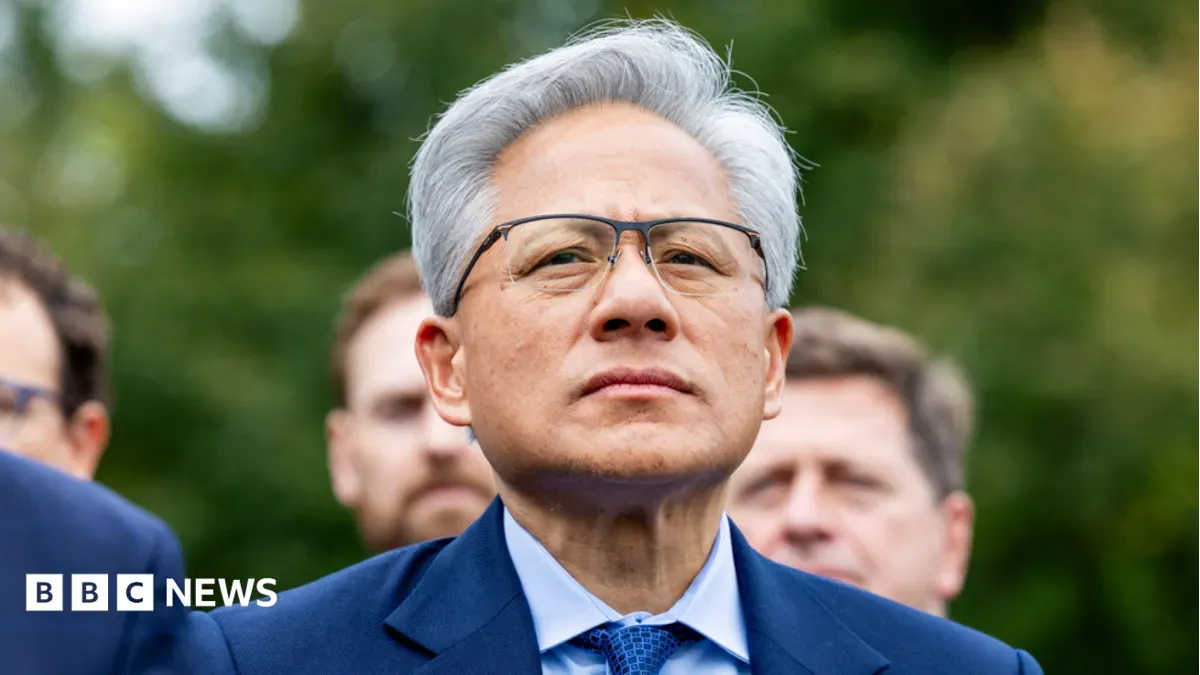







Nvidia Acquires Mellanox, Boosting Israeli AI Capabilities
Israel is making significant strides in its bid to become a major force in artificial intelligence, with the government announcing a comprehensive plan to accelerate AI development nationwide.
As the global AI landscape continues to evolve, a new player is emerging in the field. Israel, long considered a key hub for technology innovation, is making significant strides in its bid to become a major force in artificial intelligence.
The country's prime minister, Benjamin Netanyahu, has set his sights high, vowing to turn Israel into a global AI superpower. To achieve this goal, the government has announced a comprehensive plan aimed at accelerating AI development nationwide. This ambitious initiative is expected to have far-reaching implications for the country's economy and its role in the international tech community.
Nvidia, one of the world's leading semiconductor companies, has played a pivotal role in Israel's AI success story. In 2020, the US-based giant acquired Mellanox, an Israeli company specializing in computer networking products, for nearly $7bn. This acquisition marked a significant turning point for Nvidia, enabling it to expand its reach and capabilities in the field.
The deal has yielded impressive results, with Nvidia's networking business generating over $21bn in revenues in the third quarter of 2026, accounting for approximately 18 percent of the company's total quarterly revenue. As a result, Israel has become a critical location for Nvidia's research and development operations outside the US, with the company doubling its workforce there to around 6,000 employees across seven centres over the past three years.
Israeli leaders have set an ambitious goal to make their country a leading player in artificial intelligence within five years, according to Prime Minister Netanyahu's recent remarks.
His vision for Israel's AI roadmap has sparked significant interest among analysts, who see it as a crucial step towards expanding the nation's high-speed data-processing capabilities and enhancing its military strength and geopolitical influence.
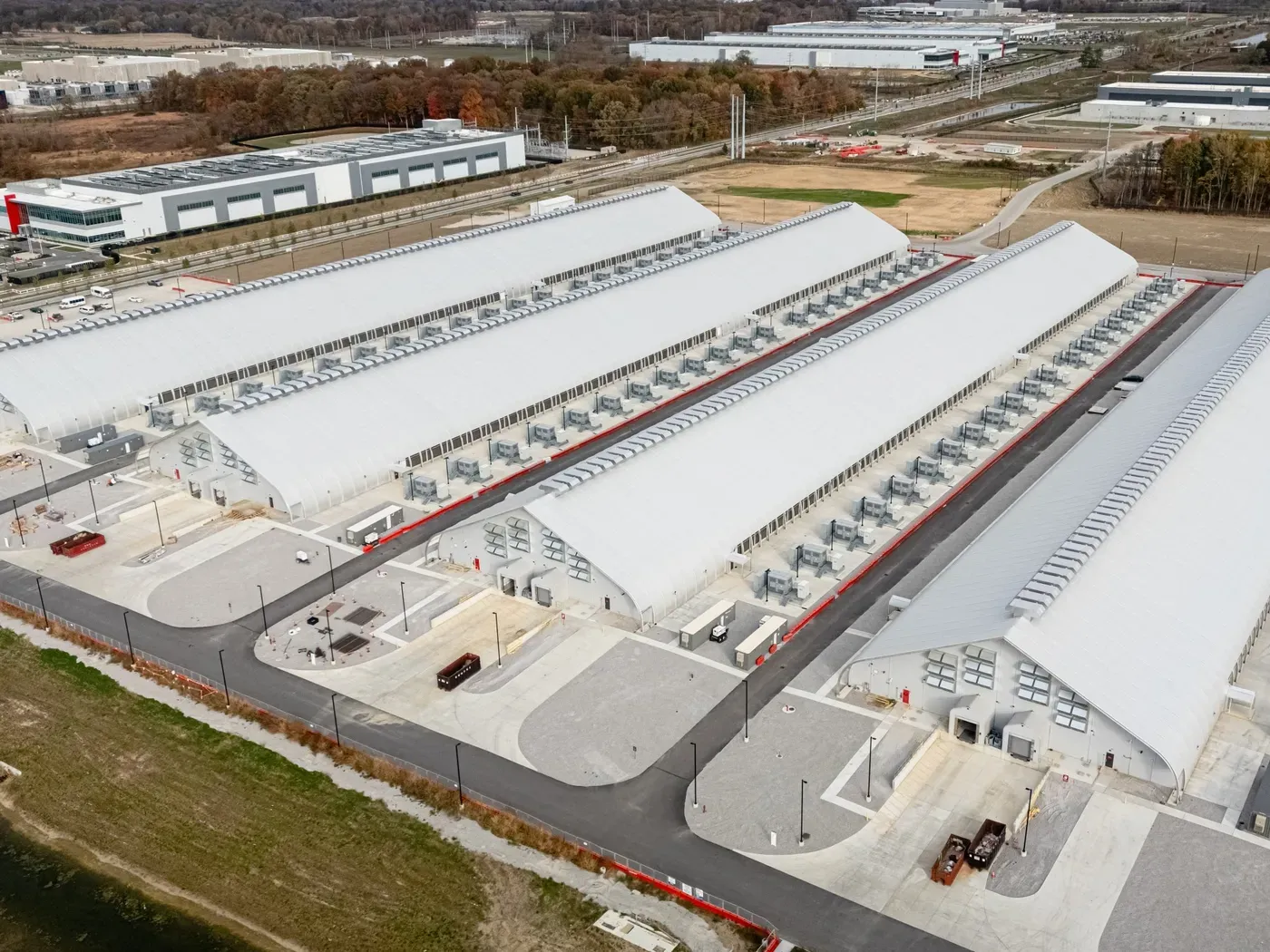
A major component of this effort is the planned Ofek Data Center, set to become Israel's largest data centre once completed in 2029. Located north of the port city of Ashdod, the facility will serve as a hub for data processing and storage, with significant implications for the country's digital infrastructure.
The project has attracted substantial investment from a consortium led by US-based Serverfarm and the Israel Infrastructure Fund (IIF), which is expected to spend $1.5 billion on the initial phase of construction, with an additional $5 billion planned for future upgrades and expansions.
When operational, the Ofek Data Center will connect directly to European markets via a high-speed underwater fibre-optic cable, allowing for seamless data exchange between continents. The facility will also utilize advanced Nvidia data centre GPUs to accelerate server workloads, boasting an initial capacity of 130MW that can be expanded to 200MW.
The rapid expansion of Israel's data centre infrastructure has not been without its challenges, however, as the country's grid connection demand has led the Israeli Electrical Authority to cap new data centres at a maximum capacity of 200MW.
Israel's push to become a leading artificial intelligence (AI) nation has sparked concerns about its ability to meet the massive energy demands required for this vision.
The country is struggling to balance the rapid expansion of its data centre infrastructure with its limited grid capacity, forcing the Israeli Electrical Authority to impose strict caps on new centres.
This challenge stems from Israel's geographical characteristics, it is a small, grid-constrained nation reliant on imported hardware. To achieve superpower status, however, requires significant resources, including gigawatt-level capacity and steady access to advanced chips.
The country has identified several potential power sources to meet this demand, including developing nuclear energy and leveraging natural gas from the Eastern Mediterranean offshore fields. Minister of Energy and Infrastructure Eli Cohen has emphasized the need for these alternatives to ensure reliable electricity supply.
Construction is underway on an 850MW gas-fired power station adjacent to Ashdod's port, which will directly power the Ofek Data Center.
The fast-tracking of data centers in Israel is expected to draw in a range of supporting industries, creating an ecosystem that fosters collaboration between talent, capital, and data. This concentration of resources will enable the country to reinforce its position as a leader in artificial intelligence. The analyst's prediction highlights the strategic importance of these facilities in driving national innovation.
Prime Minister Netanyahu's approval of the plan to expedite AI data centers was motivated by concerns over national security. However, the government's move is also aimed at gaining significant advantages on the global stage. As a small and vulnerable country, Israel seeks to establish itself as a major player in the AI era. The prime minister emphasized that this endeavor will be crucial for maintaining the country's power.
The head of Israel's National AI Directorate, Erez Askal, echoed Netanyahu's sentiments. He warned that countries failing to develop their own AI infrastructure risk being left behind and forced to rely on foreign technologies and capabilities. This stark warning underscores the significance of localizing AI infrastructure in determining a nation's geopolitical and economic standing.
According to Harvard expert Esposito, artificial intelligence has evolved from a software-centric field to a critical component of national infrastructure. The distinction is crucial, as it highlights AI's role in shaping global power dynamics. Countries with domestic AI capabilities will enjoy greater bargaining power in trade negotiations, security alliances, and access to technology. This asymmetry will have far-reaching consequences for the next decade.
The localization of AI infrastructure allows governments to shield parts of the AI value chain from foreign disruptions and supply bottlenecks. Raw materials, chips, foundation models, AI applications, and cloud infrastructure all play vital roles in supporting the development and deployment of AI technologies. As a result, these components are becoming increasingly interconnected, underscoring their importance in driving national innovation and economic growth.
The development of local inference capabilities is crucial for Israel's AI ambitions, as it enables faster and more stable processing of data through trained AI models.
According to Mark Muro, a senior fellow at the Brookings Institution, stable local inferencing will become essential in supporting the country's economic, military, and infrastructure needs. He emphasizes that this capability is vital for "keeping the lights on" and ensuring continued AI use.
Israel has been leveraging AI as part of its military arsenal in Gaza and the West Bank, highlighting the strategic importance of developing robust local inference capabilities. By building smaller facilities to support local inference, rather than relying on large data centres for training AI models, Israel aims to secure its position as a leader in AI innovation.
In contrast to Israel's efforts, Europe is facing significant challenges in developing its own data centre infrastructure, including severe power grid bottlenecks and slow permitting processes. These obstacles are hindering the continent's ability to support local AI development and deployment.
The European Union's heavy reliance on external data centres and cloud infrastructure raises concerns about data security and sovereignty. Analysts warn that this dependence is increasing, with potentially far-reaching consequences for EU citizens, businesses, and governments.
Shifting computing workloads to cheaper or idle data centres outside the EU can provide flexibility during periods of high demand or power consumption, but comes at a significant price premium, estimated by the European Commission to be 30 percent or more.
Keeping sensitive information within EU borders is crucial for military and intelligence agencies, as it prevents foreign powers from intercepting communications.
For applications that require discretion, having domestic data centres is essential to avoid potential security risks, according to experts.
The need for secure computing infrastructure is especially pressing in the era of AI, where sensitive computations can be vulnerable to cyber threats.
As countries increasingly rely on external powers for computing power, they risk creating new geopolitical vulnerabilities and potentially sacrificing their sovereignty.
Facts based on reporting originally published by Al Jazeera.
You may republish this story, in full or in part, if you credit Noti Group and link to it (licence CC BY 4.0). Photos are not included.