





Meta Unveils AI-Powered Muse Charm Device
Meta's latest AI offering has been making headlines this holiday season, with its cute face and charm-based design drawing comparisons to the classic Tamagotchi toy.
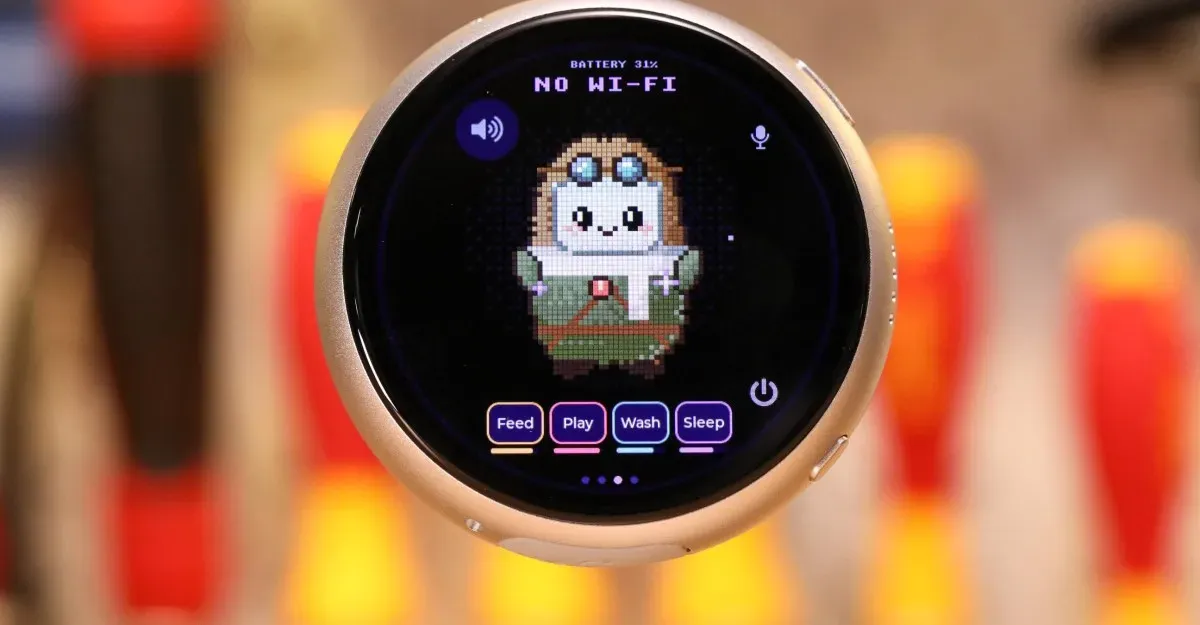
Meta's latest AI offering has been making headlines this holiday season, with its cute face and charm-based design drawing comparisons to the classic Tamagotchi toy.
However, one person who won't be buying into Meta's Muse Charm is myself, as I've already built a similar device at home using open-source code from the company.
My own creation, which doubles as a pocket watch and remote camera viewfinder, was relatively inexpensive, costing just $50 to build.
The learning experience has been worth it, despite some limitations - for example, my device doesn't have cameras or a cellular radio like the Muse Charm, but it can still interact with Meta's AI in various ways.
One key feature of my device is its ability to control smart home devices using extra code, although this requires injecting a significant amount of "vibe" into the system.
The initial interactions with Muse were marred by confusion, as it initially thought it was receiving audio clips for transcription rather than commands.
After clarifying the purpose of the input, Muse's responses remained sluggish, and it failed to provide spoken answers, instead displaying only a few words on screen at a time. This made it difficult to comprehend its output, requiring a separate device with the Muse app to access full messages.
The limitations were not limited to communication; Meta's build also came with restricted features for smart home integration. Unlike Amazon Echo or Google Home devices, which can automatically discover compatible gadgets, Meta's Muse required manual configuration.
A significant improvement was achieved by using Claude Code, a tool that allowed reprogramming of various aspects, including the lack of a remote shutter button in the sample app.
A conversation history page was created by Claude to address issues of not being able to properly read or hear responses from Muse, which had been a problem for others as well. This new feature allows users to swipe right and view previous conversations.
Claude's capabilities extended beyond text-based interactions, enabling the addition of a high-quality live preview feature that allows users to take pictures remotely using their phone's camera. Furthermore, Claude resolved an issue where the front-facing camera displayed upside down.
The integration of Bluetooth functionality also enabled the creation of a low-quality camera preview, allowing for photos to be taken from different angles without requiring Wi-Fi connectivity. This flexibility opens up new creative possibilities for users.
Claude was then instructed to generate various avatars similar to those showcased by Meta during their Meta Connect event. Additionally, it was asked to incorporate a Tamagotchi-style mini-game where the digital pets require food, play, sleep, and bathing to thrive.
As I continued to interact with Claude, I found that it was able to make adjustments to the pendant's functionality on the fly. This included fixing issues related to audio playback, such as sending audio clips only when they were at least one second long.
The fixes were implemented quickly and efficiently, demonstrating Claude's capabilities in real-time programming. However, I did notice some lag in response times, which seemed to be caused by Meta's servers rather than the pendant itself.
To further test Claude's abilities, I asked it to build a few specific features for this video, including a working pocket watch face with three hands that display the current time. To my surprise, Claude was able to create and install this feature seamlessly.
I must note that I have no coding experience, so I'm not in a position to evaluate the quality of the code used by Claude. It's possible that it may contain flaws or vulnerabilities that could compromise the pendant's security.
After nearly dropping the pendant a couple of times due to its bulkiness, I have started questioning whether the Muse functionality is indeed the main reason to invest in this dedicated hardware device. The reality is that my phone already offers similar capabilities with the added benefit of being more compact and convenient.
The true value of a dedicated piece of hardware like the Muse Charm lies in its ability to perform tasks that cannot be done on a smartphone, such as customizing the gadget's code to achieve specific goals. This raises questions about whether the final product will allow for this level of customization or if users would be better off with a development kit, catering specifically to those who want to experiment and innovate.
Facts based on reporting originally published by The Verge.
You may republish this story, in full or in part, if you credit Noti Group and link to it (licence CC BY 4.0). Photos are not included.