






Yemen's Government Launches New Military Offensive Against Houthis
The Yemeni government has launched a new military offensive, dubbed Dawn of Yemen, against the Houthis, but success depends on whether powerful tribes will join forces with them.
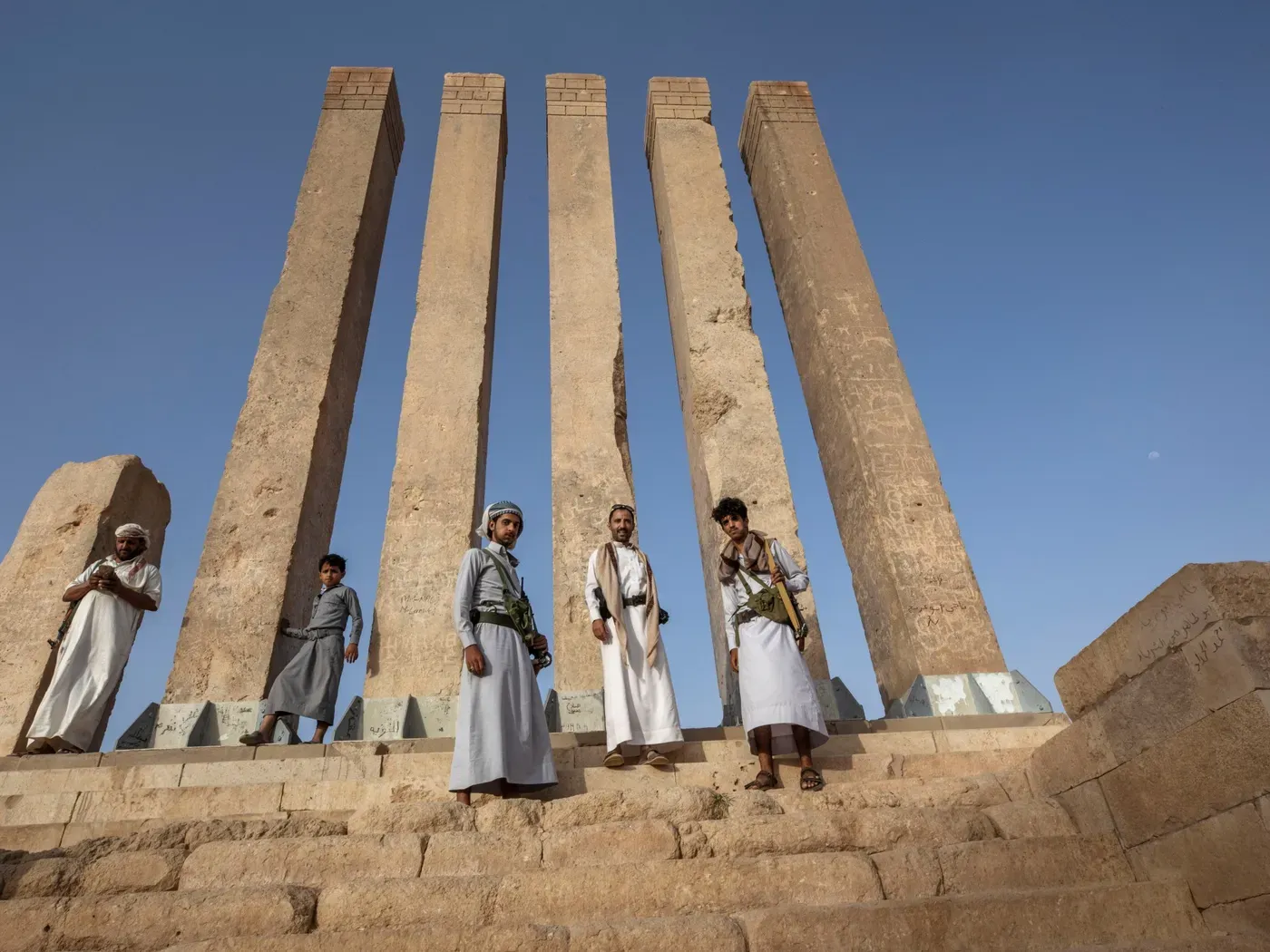
Yemen's government has launched a new military offensive against the Houthis, but success depends on whether powerful tribes in Houthi-controlled areas will join forces with them.
The government's efforts to enlist tribal support have been met with caution, as many of these tribes have previously been deterred by the Houthis' military strength and previous failed uprisings. Despite their hostility towards the Houthis, they have stopped short of openly confronting the movement until now.
The current offensive, dubbed Dawn of Yemen, has made limited advances on the Red Sea coast, in Marib and al-Jawf regions, since its launch this week. The government is banking on these early gains to convince tribes that the balance of power is shifting in their favor.
The Houthis had a significant victory last month when they captured key trade corridors along the country's Red Sea coast, including the strategic port city of Mocha and territory surrounding the Bab al-Mandeb Strait, a vital shipping route.
As government forces attempt to regain lost ground, they are counting on winning over local tribes in Houthi-controlled areas to provide crucial support. If successful, this could mark a significant turning point in the conflict, but for now, it remains uncertain whether these tribes will join forces with the government.
The Yemeni government's efforts to defeat Houthi forces are being hindered by its inability to push towards strongholds such as Sanaa, Saada, and Amran, where the group has been entrenched since 2014.
Government officials have pledged to recapture Sanaa, but tribal distrust of the government remains a significant obstacle. Experts believe that this distrust may begin to wane if the government can demonstrate its commitment to supporting tribes in their fight against the Houthis.
A large rally was held on Monday in Marib governorate, where tribal sheikhs and local anti-Houthi fighters from various tribes attended. The gathering announced a general mobilisation to support the armed forces in their battle to "restore the state" and topple the Houthi coup.
The potential involvement of tribes could be crucial in helping government troops advance towards Houthi-controlled areas, including Sanaa. According to Adel Dashela, a researcher at the Sana'a Center for Strategic Studies, if tribal support translates into actual mobilisation and sustained participation in the battle, it could pave the way for significant gains.
Tribes have previously shown willingness to mobilise against the Houthis at a local level, but their efforts have been hindered by deep divisions and a lack of sustained outside backing. Nevertheless, tribes remain a key source of manpower and influence that the government can potentially tap into in its fight against the Houthis.
Tribal fighters are crucial to any future military campaign against the Houthi rebels in Yemen. However, for these forces to be effective, they must operate under formal state and coalition command structures rather than as independent units.
Many tribes in Yemen are hesitant to engage with Houthi forces without adequate support, choosing instead to wait for a more opportune moment to act. This cautious approach is driven by past experiences where tribes have revolted against the Houthis only to be crushed due to inadequate government backing.
Tribal leaders seek a strong central authority that they can rely on before committing their resources and manpower to any military campaign. Once they perceive the state as trustworthy, they are more likely to side with it in its fight against the Houthi rebels.
The Hajoor tribe's experience in northwest Yemen serves as a stark reminder of what happens when tribes underestimate the Houthi forces or fail to receive sufficient support from the government. In 2019, the Houthis overran the Hajoor areas after several weeks of intense fighting that began in January of that year.
Even in areas where the Houthi rebels have significant local support, there is a possibility for some tribes to switch their allegiance towards the Yemeni government if they perceive it as serving their interests. This gradual shift could potentially be triggered by the government's ability to demonstrate its effectiveness and reliability.
The Yemeni government's efforts to defeat the Houthis have been hindered by its inability to win over key tribal leaders. According to some analysts, not all tribes fighting for the Houthis are ideological loyalists, but rather motivated by practical considerations.
Over the past decade, the Houthis have systematically eroded traditional tribal power structures in areas under their control, replacing some leaders with loyalists and co-opting others through a combination of persuasion and coercion. This has led to a perception among tribes that the Houthi military is virtually invincible.
A northern Yemeni tribal leader, who spoke on condition of anonymity due to security concerns, observed that the Houthi military's dominance over a decade-long war has significantly diminished the tribe's influence in the country. He noted that before the Houthis took control, the government was seen as a friend and ally to the tribes.
However, since the Houthi takeover, the tribal leader said the relationship between the tribes and the government has become one of subordination. The Houthis have effectively used military force, financial incentives, and their public support for the Palestinian cause to consolidate control over territories under their sway.
The tribal leader attributed the Houthis' success in part to their ability to win popular and tribal support through their backing of Palestine, as well as their willingness to use military force when negotiations or financial incentives failed to yield desired results.
The Houthi movement's rapid rise to power has left many questioning whether Yemen's government can defeat them without tribal support. Tribal leaders believe that their groups acting alone cannot match the Houthis' military and financial strength.
A concrete government advance on the battlefield is seen as a crucial factor in convincing anti-Houthi tribes to join the fight against the group, allowing them to feel confident enough to confront the Houthi movement.
Facts based on reporting originally published by Al Jazeera.
You may republish this story, in full or in part, if you credit Noti Group and link to it (licence CC BY 4.0). Photos are not included.