




Stellantis and Renault Support UK Bid to Limit Chinese Car Imports
UK officials are considering limiting imports of Chinese cars as part of a broader effort to shield domestic manufacturers, according to sources close to the discussions.
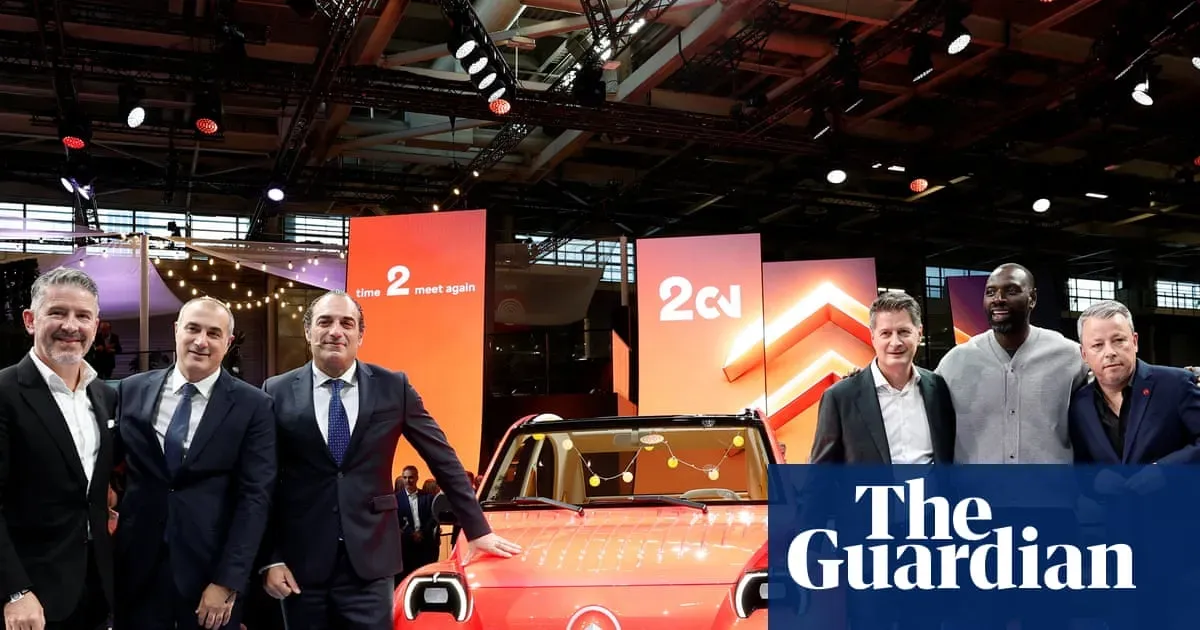
Stellantis and Renault have thrown their weight behind the UK's bid for protection from EU rules that aim to safeguard Europe's car industry.
The bosses of Citroën and French carmaker Renault have urged the British government to consider limiting imports of Chinese cars as part of a broader effort to shield domestic manufacturers. They argue that the UK should be treated as an integral part of the European Union when it comes to implementing new "Made in Europe" legislation, which would help prevent EU subsidies from benefiting non-EU companies.
The proposed rules aim to ensure that government procurement and subsidies primarily benefit European industry rather than foreign competitors. According to sources close to the discussions, Stellantis' Emanuele Cappellano and Renault's François Provost made their views known at a recent meeting with UK officials.
Chinese carmakers are increasingly expanding into Europe, with several brands exhibiting at the Paris motor show, including Li Auto, GAC, and Chery. These manufacturers have ambitious plans for European expansion as they seek to capitalize on growing demand for electric vehicles (EVs).
As the European car industry grapples with lower sales and a massive investment in EV production, Chinese competitors are gaining ground. The transition to electric vehicles has opened up new opportunities for non-European companies to break into the market, further complicating the picture for traditional manufacturers.
The EU's move to limit hybrid electric vehicle imports from China is a significant step in protecting its domestic car industry.
As part of this effort, the EU will impose a quota on Chinese imports, capping them at 350,000 cars per year. This measure is expected to reduce China's market share in the EU from 6% to just 3%.
The quota will come into effect in December and marks a key development in the EU's strategy to safeguard its manufacturing base.
This move is part of a broader effort by the EU to counter the rise of Chinese manufacturers in industries like carmaking and chemicals.
The European automotive lobby groups have thrown their weight behind the UK's bid for protection from EU car industry rules. ACEA and Clepa are supporting the UK's inclusion in the European Union's efforts to safeguard its manufacturing base against Chinese competition.
Industry minister Provost emphasized that the UK must take decisive action to join the European ecosystem, which includes making significant investments in various aspects of the automotive value chain. This would involve not only final manufacturing but also suppliers, research and development, technologies, and more.
Provost noted that if the UK wants to operate within Europe, it cannot simply allow unlimited Chinese car imports without restrictions. He stated this as a condition for the UK's inclusion in the EU's industrial ecosystem, but made clear that he is not demanding anything from London.
The UK's inclusion in the EU's industrial ecosystem has been made contingent on certain conditions, including the imposition of tariffs on Chinese imports.
Cappellano emphasized that it is crucial for the UK to prioritize its goals and decide whether to focus on defending its industrial footprint or allowing a completely open market to import goods. He noted that these two objectives are difficult to balance simultaneously.
The proposals suggest carmakers should be allowed to source up to 30% of their materials from outside the EU, but Cappellano expressed reservations about expanding the scope of European regulations to include countries like Japan, Turkey, and Morocco.
Cappellano also advocated for a longer timeframe until 2030 for manufacturers to start sourcing batteries from within Europe.
Facts based on reporting originally published by The Guardian Business.
You may republish this story, in full or in part, if you credit Noti Group and link to it (licence CC BY 4.0). Photos are not included.