






Data centers criticized for significant environmental impact and local resistance
A new book by journalist Paris Marx highlights concerns about sustainability and material presence in communities due to large-scale data centers.

Data centers have become a focal point of criticism for Big Tech companies due to their significant environmental impact and growing resistance from local communities.
The issue has reached a boiling point, with data center construction being met with fierce opposition in many areas. A new book by journalist Paris Marx sheds light on the controversy surrounding these facilities, highlighting concerns about their sustainability and material presence in communities.
Marx's investigation into the world of hyperscale data centers reveals that they are fundamentally unsustainable and incompatible with a livable planet. The sheer scale and energy consumption of these facilities make them an obvious target for criticism, especially when considered alongside broader anger towards the tech industry.
Data center construction is often met with significant community resistance due to concerns about noise pollution, water usage, and power bills. Marx notes that even those on opposing sides of the political spectrum will feel the effects of a data center in their quality of life.
The buildout of data centers has become a lightning rod for public discontent, with many communities pushing back against what they see as an unwelcome presence. Marx argues that this backlash is not just about data centers, but also represents a broader movement targeting the physical manifestations of the tech industry.
In our conversation, Marx described the process of gaining access to a hyperscale data center and taking a tour of its facilities. The experience was notable for Marx, who highlighted the challenges of getting inside these normally restricted areas.
Despite initial difficulties in securing access, Marx eventually gained entry to a data center and was able to see firsthand the inner workings of these massive facilities. The author's account provides a unique glimpse into the often-hidden world of hyperscale computing infrastructure.
Marx's observations raise important questions about the environmental impact and community effects of data centers, highlighting the need for greater transparency and accountability from tech companies operating in this space.
Visiting a hyperscale data center is no easy feat. Researchers who have been studying these massive facilities for years told me that getting inside was significantly easier before the recent surge in attention on data centers and the advent of generative AI.
I sent emails to various companies requesting access to their data centers, but most often received no response or a flat-out rejection. After scouting out some exterior locations in northern Virginia, Ireland, and other places, I traveled to New Zealand to gain firsthand experience inside a data center.
The level of security at these facilities is nothing short of impressive. You'd expect high levels of protection given the sensitive nature of the data stored within, and indeed, large fences and security cameras are ubiquitous around data centers.
However, gaining entry to the interior required more than just a cursory glance at my ID. I had to send my passport ahead of time, which was then verified upon arrival. Even after clearing this hurdle, every door leading into the server room remained locked unless I possessed a key card.
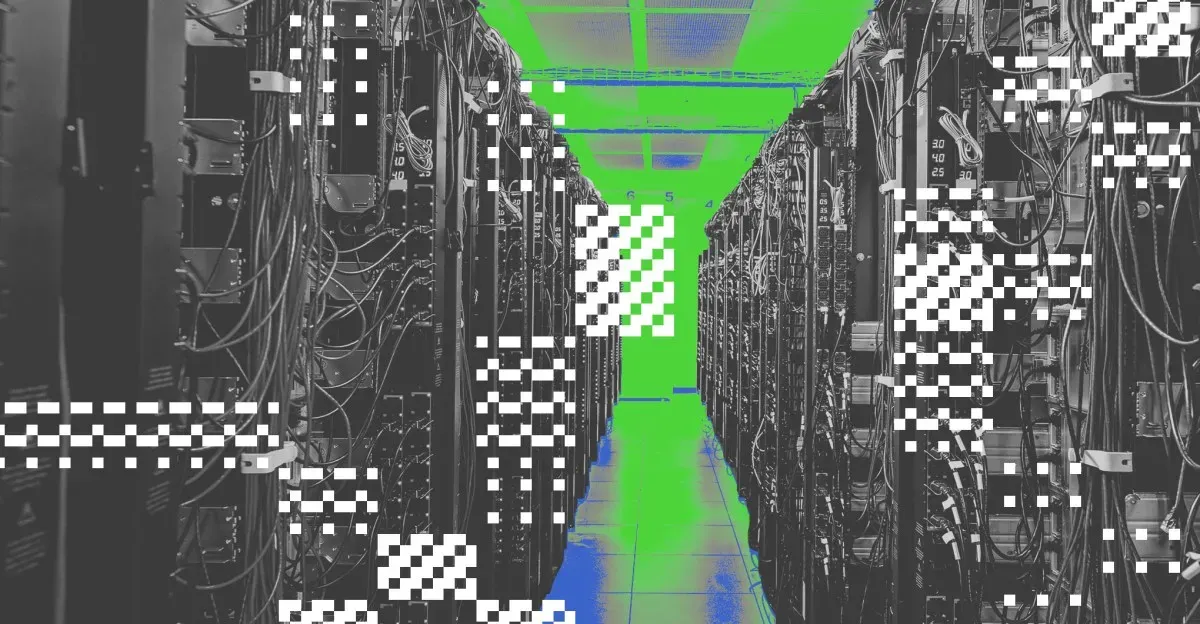
Upon entering the server room itself, where rows of computer hardware are stacked in towering racks, one might expect an eerie atmosphere with dim lighting and an air of foreboding. Instead, the space is surprisingly utilitarian, with warm temperatures and air conditioning vents blowing cool air directly onto the servers.
The cacophony created by the fans humming from all directions was almost deafening, making it clear that ear protection would be essential for anyone planning to spend extended periods inside this room.
Data center security measures extend far beyond visual deterrents like fences and cameras. The physical barriers in place are designed to prevent unauthorized access, with each door locked unless a key card is present.
The interior of the server room itself is an environment that's both functional and noisy, with air conditioning vents and fans generating a significant amount of noise that would be distracting for anyone spending time inside.
Data centers have long been viewed as mundane infrastructure, but recent revelations have sparked growing concerns and questions about their impact on local communities.
Several stories caught my attention, highlighting issues surrounding data centers that warranted further exploration.
In Chile, near the capital Santiago, companies like Google and Microsoft were building large data centers, putting a strain on water resources. Local communities began organizing to address this issue, expressing worries about access to water for their own needs.
The situation in Ireland is equally alarming, with data centers consuming over 20% of the country's electricity. This has led to increased power prices and put pressure on the grid. As a result, the grid operator implemented a moratorium on new connections for data centers in the Dublin area as far back as 2022.
In Oregon, Google had built its first company-owned data centers about two decades ago in The Dalles. When the city's water deal with Google was up for renewal, residents began to ask questions about how much water the tech giant was using.
A local journalist from The Oregonian sought information on this matter, but instead of receiving an answer, he faced a lawsuit. Only later did it come out that Google was using 29% of the city's water, sparking further concern.
The growing unease surrounding data centers is not limited to these specific instances. As awareness about their impact grows, more questions are being raised about their role in shaping local communities and environments.
A closer examination of data centers reveals complex issues related to resource consumption, community relationships, and environmental concerns that warrant attention from both the public and policymakers.
The spotlight on data centers has intensified in recent times, coinciding with the emergence of generative AI technologies like ChatGPT.
As these cutting-edge systems began to gain traction, it became clear that their infrastructure was putting pressure on local communities, prompting a backlash against Big Tech's operations.
Data centers are not just environmental concerns; they also serve as entry points for examining the broader tech landscape and its impact on society.
Hyperscale data centers, in particular, have raised eyebrows with their sheer scale of construction, both in terms of facility size and number of units being built out.
The cumulative effect of these demands is staggering, with communities struggling to meet the electricity and water needs of these massive facilities.
When considering the long-term sustainability of such operations, it becomes clear that they are unsustainable and incompatible with a livable planet.
At the heart of this issue lies the hubris of the tech industry, where companies prioritize their own ambitions over the well-being of local communities and the environment.
The failure to deliver promised benefits from generative AI has added fuel to the fire, leaving many questioning the true value of these technologies.
Generative AI's supposed advantages in areas like healthcare and education have yet to materialize, further eroding trust in Big Tech's vision for the future.
The growing backlash against Big Tech has a tangible component that's hard to ignore: data centers. These massive facilities are not just abstract concepts; they have a direct impact on local communities, affecting everything from power bills to water usage.
When a data center is proposed for a community, it's no longer an abstract issue. The effects are felt in everyday life, making it difficult to dismiss as a mere technological advancement. The noise from air conditioning units on rooftops can be a significant concern, and the potential strain on local resources is undeniable.
The tech industry's reputation has been taking a hit for some time now. Product quality and societal impact have been major sources of frustration, with many people questioning the industry's values and collaborations with certain governments or groups. The introduction of data centers adds a new layer to this discontent, making it more concrete and personal.
Data centers are not the only aspect of the tech industry facing opposition. Other initiatives, such as Flock cameras, smart glasses from Meta, and self-driving cars from Waymo, have also sparked resistance. This growing trend suggests that people are increasingly aware of and critical about the physical presence of technology in their lives.
The data center backlash has brought together individuals from different walks of life, including politicians like Ron DeSantis and Bernie Sanders. Their shared concerns highlight the issue's broad appeal, transcending party lines.
This unified opposition is not surprising, given that data centers have a significant impact on local communities. The effects are not limited to environmental costs; they also include social implications, such as mental health impacts from chatbot dependence and the spread of misinformation through social media platforms.
The growing awareness about these issues has been a gradual process. As people become more aware of the consequences of data centers, their concerns have become more vocal and widespread. This shift in public opinion is a testament to the power of grassroots movements and community engagement.
Data centers are not just physical structures; they represent the culmination of Big Tech's vision for the future. However, this vision has yet to materialize in areas like healthcare and education, further eroding trust in the industry's promises.
The data center backlash serves as a reminder that technology should be designed with people in mind, not the other way around. By prioritizing community needs and concerns, we can create a more sustainable and equitable relationship between technology and society.
The backlash against Big Tech has been building for a while now, and it's clear that physical manifestations of the tech industry are among the main targets of criticism. People are frustrated because they can feel these issues more directly, but also because they can challenge them more effectively.
By deleting an app on your phone, you may not be making a significant dent in a company's operations. However, this minor action is often seen as a gesture towards change, albeit a limited one. The tech industry has responded to the backlash in various ways, with some companies taking steps to address community concerns.
Microsoft, Amazon, and OpenAI have all made public commitments to abandon non-disclosure agreements (NDAs) in their negotiations with local governments. This move is expected to make it easier for people to access information on projects located in their communities. Nevertheless, the impact of this shift remains uncertain.
The tech industry's efforts to address community concerns extend beyond transparency. Companies are now proposing to pay for more of the electricity infrastructure required for data centers, aiming to alleviate pressure on ratepayers who are increasingly vocal about these issues. This gesture is part of a broader effort to reduce the environmental footprint of their operations.
Ultimately, the tech industry's response to the backlash will be crucial in determining the direction of its relationship with society. By prioritizing community needs and concerns, we can create a more sustainable and equitable partnership between technology and humanity.
Facts based on reporting originally published by TechCrunch.
You may republish this story, in full or in part, if you credit Noti Group and link to it (licence CC BY 4.0). Photos are not included.