



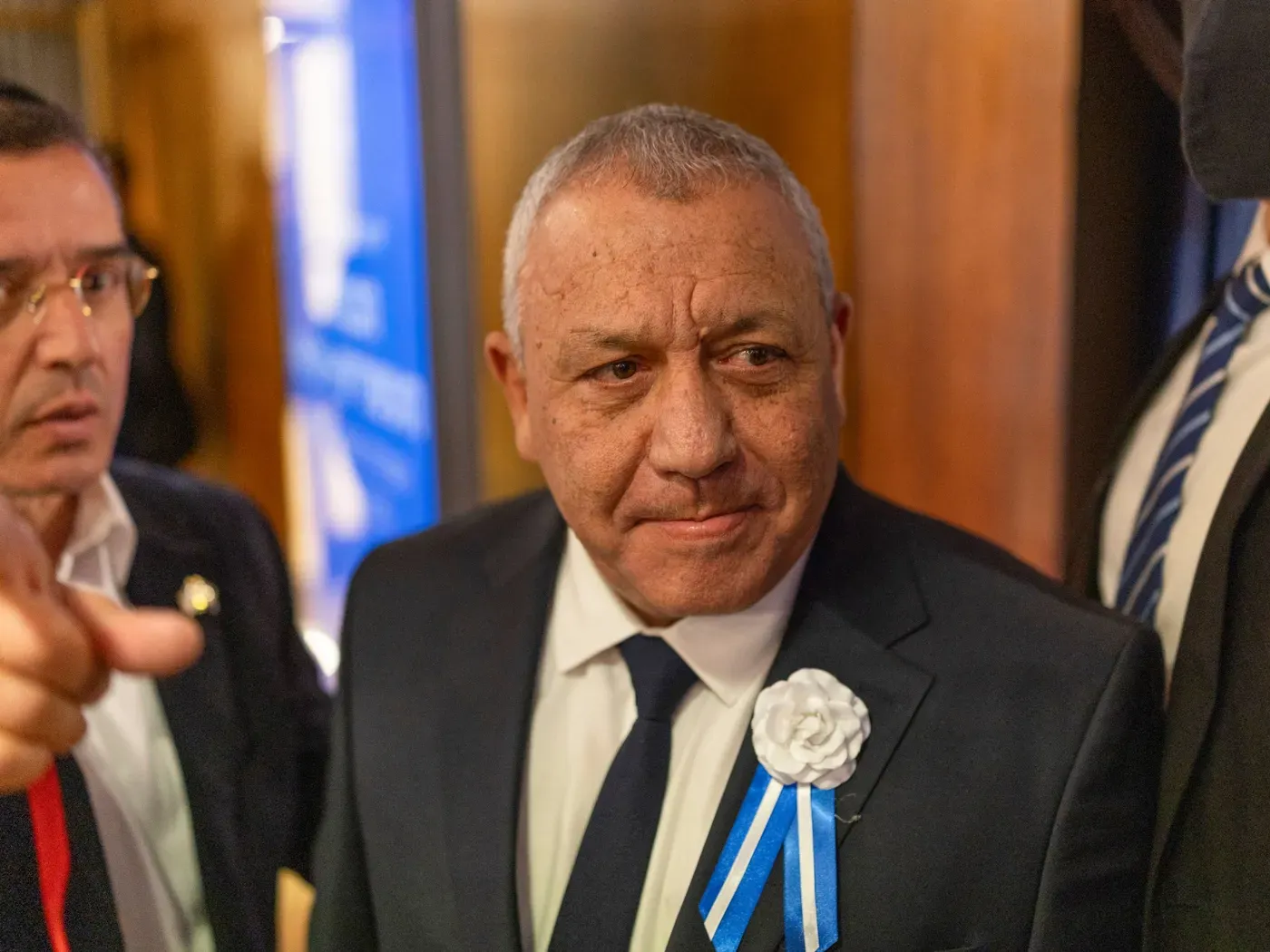


Intel Faced Ultimatum from Trump Administration Over Stake in Company
The Trump administration allegedly forced Intel to grant a significant stake in the company after threatening unspecified consequences if they refused.
Intel faced an ultimatum from the Trump administration: either grant a significant stake in the company or face unspecified consequences.
According to internal notes from a company call contained in a federal lawsuit, Commerce Department lawyer David Shapiro explicitly stated that this was not a negotiation. He told Intel's chief financial officer in August 2025 that President Trump expected to announce a deal on these terms by Friday.
Shapiro acknowledged that the Intel board could choose not to accept the offer but warned that rejection would have unforeseen consequences. The administration official emphasized that his words were not meant to be taken as an idle threat.
A few days later, the Intel board made its decision and agreed to give the Trump administration what it wanted. In a post on his social media platform, Donald Trump celebrated this development, boasting that the US government now fully owned and controlled 10% of Intel without paying a single dollar for these shares.
The value of these shares was estimated at around $11 billion dollars, according to Trump's announcement. He hailed the deal as a great success for America, implying it would have far-reaching benefits for the country.
This wasn't an isolated incident; it follows a pattern where the Trump administration intervened in the leadership decisions of major chipmakers. Court documents suggest that 15 months prior, the government had meddled with another major company's CEO, citing concerns about their close ties to China.
A former member of the Commerce Department revealed that this is part of a broader shift within the government towards prioritizing one overriding concern: whether companies are willing to provide financial benefits to the administration in return for favorable treatment.
The unredacted documents reveal a disturbing pattern of behavior by the Commerce Department and the White House in their dealings with Intel's board of directors. The allegations suggest that the government used coercion to extract concessions from the company.
According to the lawsuit, the Board caved to the government's demands despite knowing it was not in the best interest of the company or its shareholders. This decision-making process has raised eyebrows among experts who fear it sets a precedent for other companies.
"It's just straight-up coercion," said Scott Lincicome, a vice president at the libertarian Cato Institute. The company starts making decisions based on what the government demands rather than what's best for the company or its shareholders.
Lincicome warned that this kind of behavior is particularly problematic when it comes to companies involved in advanced technologies with significant economic and national security implications.
Representatives from Intel declined to comment on the allegations, while the White House, Commerce Department, and Nvidia did not respond to requests for comment.
The parallels between Nvidia's situation and Intel's alleged forced sale are striking, despite some differences in their circumstances. In both cases, the government appears to have used its influence to extract concessions from companies.
Intel received significant funding under the CHIPS Act, which aimed to boost domestic semiconductor manufacturing and research. However, there was initial skepticism within the Commerce Department about funding a "failing incumbent like Intel.
Despite this concern, Intel had secured around $2.2 billion in grants by March 2025. But President Trump then publicly denounced the CHIPS Act as a horrible, horrible thing, putting further funding on hold until certain milestones were met.
The government's actions have raised questions about the relationship between private enterprise and public office. It is unclear what other companies may be affected by this trend or how far it will go in altering the business landscape.
Intel's new CEO, Lip-Bu Tan, found himself at the center of a storm after his ties to China were exposed in August.
Tan's history as CEO of Cadence Design Systems had raised red flags when it emerged that the company had sold semiconductor designs to a restricted Chinese military university, leading to fines over $140 million. Although he was not personally charged with any wrongdoing, Tan's involvement in these dealings sparked concerns about his suitability for the top job at Intel.
The controversy surrounding Tan reached the Oval Office just two weeks after Reuters published its investigation into his investments in hundreds of Chinese tech firms. The president was briefed on a letter sent to Intel by a senator highlighting Tan's China ties and expressing concerns about the CEO's ability to lead the company effectively.
Intel's CEO, Lip-Bu Tan, met with President Trump in August 11, seeking to address the growing controversy surrounding his background. During their meeting, which lasted 40 minutes, Tan argued that his experience in China was an asset rather than a liability, pointing out that he had invested in many companies and couldn't possibly be expected to know about every deal they made.
Tan claimed that he would put any proceeds from his Chinese investments into a blind trust and give up his holdings, as outlined in a letter shared with the company's board. This move was seen as an attempt to alleviate concerns about his ties to China and focus on Intel's business needs. However, there were also major financial issues facing the company at the time.
Intel was struggling with declining revenues, and Tan acknowledged that the company needed access to more funds to stay competitive. Despite these pressing financial concerns, no mention was made of a potential deal involving the government acquiring a stake in the company during the meeting between Trump and Tan.
However, according to President Trump's own account, he did discuss the possibility of the US government taking a 10% stake in Intel with Tan during their meeting. The president claimed that Tan had expressed willingness to consider this proposal, which would have given the US a significant shareholding in one of its leading technology companies.
The details of the proposed deal remain unclear, and it is not known what other terms might have been involved. What is certain, however, is that Tan's meeting with Trump marked an attempt by the president to exert his influence over one of America's most prominent tech firms.
Tan's ability to navigate this complex situation was put to the test as he sought to balance the competing demands of Intel's business needs and the concerns about his own background.
Intel's internal documents reveal that Shapiro made a verbal offer on August 18, proposing a deal in exchange for $8.9 billion US government grants already won by Intel.
The Trump administration wanted about a tenth of Intel's stock for free, but ultimately the two sides agreed to a cut of the company's shares in exchange for Washington keeping its commitment to provide the grants.
Shapiro emphasized the benefits of having a friend in the administration during a call with Intel officials, highlighting what the administration could do to help the company, including assisting with customers.
Intel's board met to discuss the offer and expressed reservations about the economic terms proposed by the Trump administration, describing them as not attractive in their current form.
Despite these concerns, the board decided to proceed with the deal, taking advantage of the administration's offer, according to court documents filed by Paisner's lawyers.
Intel's attorneys dispute this account, arguing that there was a back-and-forth negotiation process that improved the terms of the agreement for the company, making it more favorable.
As part of the deal, the $8.9 billion in grants became immediately available, aligning the interests of Intel's stockholders with those of the US government.
The stakes were rising for Nvidia as it navigated its complex relationship with the US government.
Nvidia's investment in Intel was a notable move, coming in at $5 billion and drawing attention from President Trump.
He took to social media to express his enthusiasm for the deal, saying I love seeing their stock price go up, making the USA RICHER, AND RICHER.
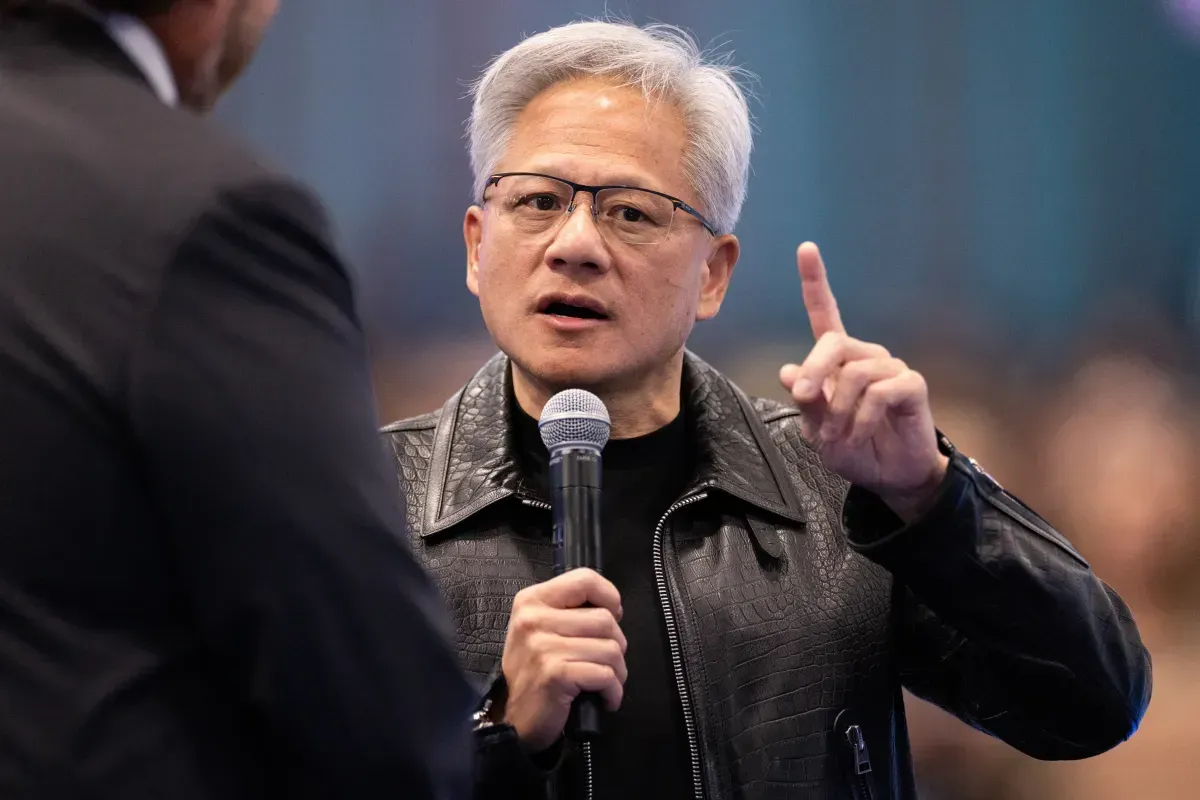
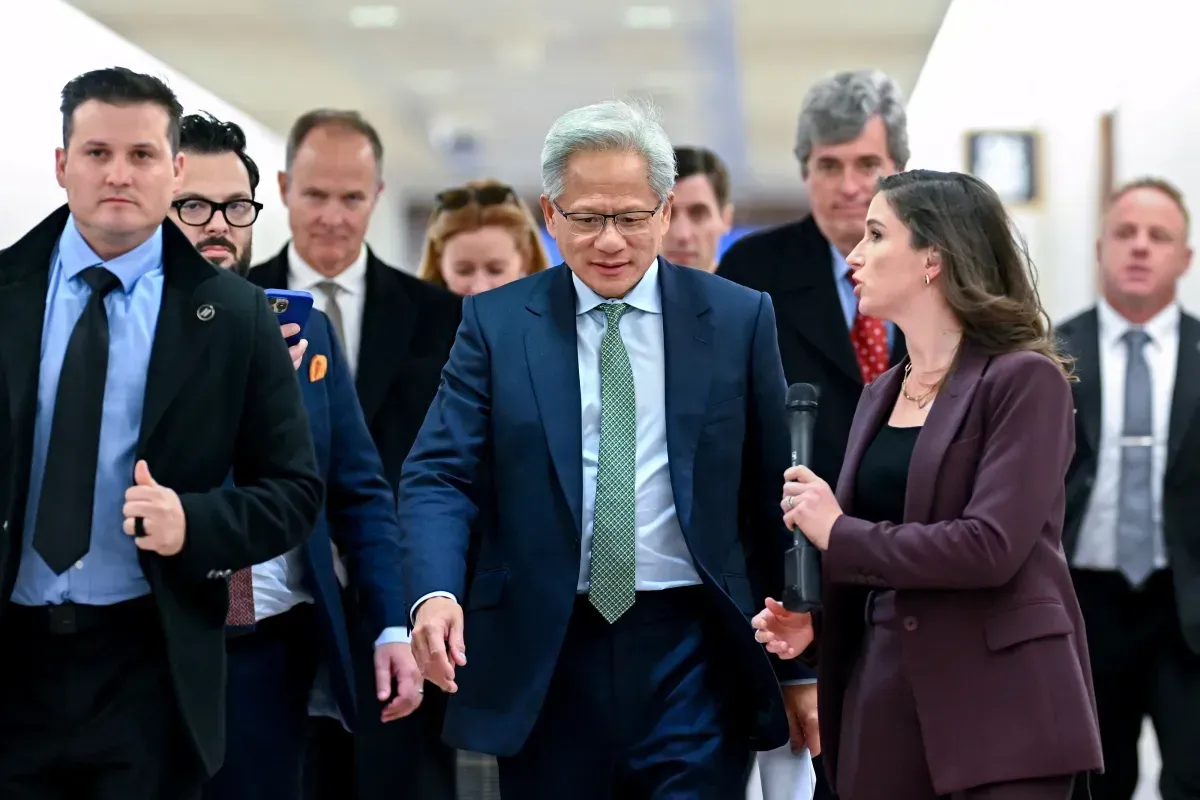
Meanwhile, behind closed doors, Trump's administration was negotiating with Nvidia's CEO Jensen Huang over a separate agreement.
Huang was eager to increase sales of Nvidia's semiconductors in China and sought a deal that would benefit his company.
The two sides eventually agreed on a 15 percent surcharge on all sales of the H20 model chip.
This was just one part of a larger arrangement, as they also cut a deal for a 25 percent bounty on sales of Nvidia's more advanced H200 chips.
Paisner's lawsuit against Nvidia claims that these surcharges amount to unlawful taxes" and are the result of mismanagement by the company's board.
During his first company-wide meeting after rejoining Intel, Huang emphasized that politics play no role in the company's decision-making process.
He urged employees to keep political discussions outside of work, but was clear about what he values: a workplace focused on professional pursuits rather than partisan debates.
Facts based on reporting originally published by Ars Technica.
You may republish this story, in full or in part, if you credit Noti Group and link to it (licence CC BY 4.0). Photos are not included.