



Manchester City Owners Face Potential Share Sale Penalty
Senior officials at several top-tier clubs believe Manchester City owners should be forced to sell their shares as part of the punishment.
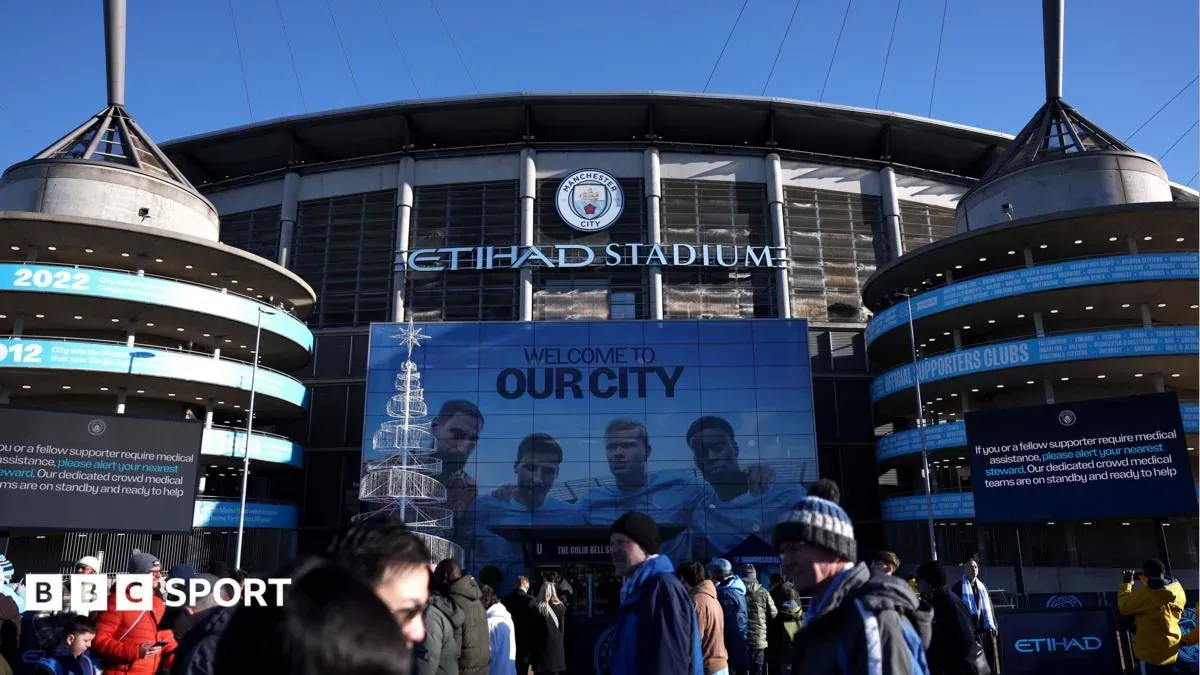
Manchester City's owners may face a drastic penalty in the wake of their financial misconduct. Senior officials at several top-tier clubs have made it clear that they believe the owners should be forced to sell their shares as part of the punishment.
The Independent Football Regulator (IFR) has been investigating Manchester City for breaching Premier League financial regulations between 2009 and 2018. The regulator's chair, David Kogan, has stated that he is willing to take decisive action against the club.
Manchester City have denied any wrongdoing and have appealed the findings of the investigation. However, executives at several top-flight clubs are now calling for a more severe punishment than just fines or points deductions.
The IFR has the authority to remove directors from their positions if they are deemed unsuitable, and in extreme cases, even force the sale of a club. Some Premier League clubs believe this should be the outcome for Manchester City's owners, who have been accused of failing to cooperate with the investigation.
The Premier League has been left reeling from the gravity of Manchester City's wrongdoing, with some clubs now calling for drastic action against the club's owners.
Their argument is that by allowing Abu Dhabi United Group to maintain control, the league would be undermining its own credibility and making it impossible to move forward from this scandal. This is because the owners were found guilty of inflating revenues and concealing losses through complex commercial arrangements, a breach of Premier League rules worth £900m.
Clubs have been asked by the Premier League to keep their views on sanctions private, but some have made it clear in private meetings with IFR officials that they want the harshest punishment possible. This includes the unprecedented step of forcing Abu Dhabi United Group to sell its stake in Manchester City.
The fact that some clubs are willing to go public with their opinions will add pressure on Kogan and the independent commission panel to deliver a severe penalty, as the Premier League's new watchdog is put to the test just over a year after its establishment.
With no comment forthcoming from other clubs approached by the BBC, it remains to be seen how many share the views of those who want Manchester City's owners to face consequences for their actions.
The investigation into Manchester City's owners has raised concerns about the potential impact on UAE trade and investment in UK projects.
Critics argue that the scandal could lead to a reevaluation of business relationships between the two nations, but it remains unclear what specific consequences may follow.
In September, Prime Minister Andy Burnham sparked controversy when he expressed reservations about the potential sale of Manchester City due to the club's significant contributions to the city's development.
The UK government has been tight-lipped on the matter, with one official declining to comment when approached for a statement.
Manchester City's owners have consistently maintained that they will not be swayed by political pressure in their decision-making process.
The Independent Football Review (IFR) has outlined its plan for financing potential litigation costs associated with Manchester City's situation, should it escalate into a lengthy and costly court battle.
To build up a litigation reserve of £2m over the next two years, the IFR will charge a levy to clubs in the top five divisions of English men's football. This levy is expected to generate sufficient funds to cover the initial costs of building up the reserve.
However, Richard Monks, chief executive of the IFR, acknowledged that there could be cases where the £2m reserve would not be enough to cover litigation expenses. In such instances, the government has agreed to provide financial assistance in terms of cash flow, with the expectation that the costs will be reimbursed if the litigation is successful.
Monks explained that if the IFR were to win a major lawsuit, it would claim costs and repay the government accordingly. Conversely, if they were to lose such a case, the costs would be added to the levy and repaid through this means.
Last month's revelation of the £20.3m annual cost of the IFR has raised concerns among top-tier clubs, while last week's decision by Premier League clubs to cover legal expenses for its board directors has sparked further debate.
Two UAE-based commercial partners, Etihad and Etisalat, have expressed their intention to consider taking legal action against the Premier League.
The Independent Football Regulatory (IFR) has the power to force a sale under Section 34 of the Football Governance Act, which allows it to investigate an owner's suitability standards for honesty, integrity, and financial soundness.
If an owner fails this assessment, the IFR can direct them to take steps to relinquish ownership within a specified period before issuing an ownership removal order. This process is based on clear guidelines that aim to ensure responsible ownership in football.
Manchester City has previously disputed the commission's ruling, calling it "unsafe" and arguing that it contained material errors of law, principle, and fact, with the club stating they had presented irrefutable evidence in support of their positions.
Facts based on reporting originally published by BBC Sport.
You may republish this story, in full or in part, if you credit Noti Group and link to it (licence CC BY 4.0). Photos are not included.